
“I want to create my own clothing brand, but I don't know where to start.”
It's one of the phrases I hear most often. And I understand it perfectly: the dream of seeing your own creations worn by people, of building something unique that bears your name... it is a powerful dream. But between the dream and reality there is a path that can feel like a labyrinth.
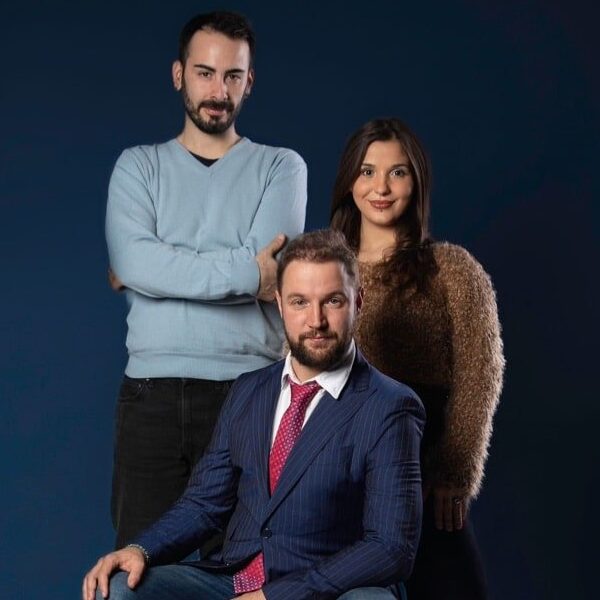
I am Corrado Manenti, founder of Be A Designer. For over 12 years, I have been helping aspiring fashion designers turn their ideas into real brands. I have seen more than 200 fashion brands come into being – some have become success stories, others have closed down after just a few months. The difference? It has never been just about creativity. It has always been the strategy.
In this article, I will guide you through the first steps to creating a clothing brand – the ones that really make the difference between an expensive hobby and a successful business. No abstract theory: just practical advice that you can apply right away.
First of all: The Right Mindset for Creating a Clothes Brand
I know what you're thinking: “Corrado, I want to create beautiful clothes, not hear about business.”. I understand. But let me tell you an uncomfortable truth that could save you years of frustration.
Here is the number one mistake I see people making: treating the brand as a hobby rather than a business. Creativity alone is not enough. You may have the best eye in the world for fabrics and innovative ideas that would be the envy of many established designers, but if you don't know how to turn all this into a sustainable business, you will always remain at square one.
❌ Hobby Approach
- I create when I have time and inspiration.
- I don't calculate the costs, then I see.
- First I create the collection, then I think about selling it.
- The brand is my clothes.
- I'm waiting for the world to discover me
✓ Entrepreneurial Approach
- I dedicate regular hours to the project.
- Financial plan before starting
- First the brand, then the collection
- The brand is a system of values
- I actively build my audience
⚠️ Reality check: Treating your brand as a business from day one is essential to giving it credibility. This means registering the trademark, structuring the company, planning budgets and marketing, as well as dedicating regular working hours to the project each week.
The 7 Essential Steps to Creating a Clothing Brand
Now that we have the right mindset, let's get down to business. Here are the first steps to creating a clothing brand that really works:
Define Your Idea and Your “Why”
Everyone carries within themselves an idea, an intuition that has potential. But the idea alone is not enough: it must be refined and validated. Ask yourself: why do you want to create this brand? What makes you different? What problem do you solve for your customers?
- What is your vision? What do you want to communicate through your clothes?
- Why should someone buy from you rather than from others?
- What is your “WOW factor” – what makes you memorable?
Study the Market and the Competition
Before investing a single euro, you need to understand where you stand. Who are your competitors? What price range are they targeting? What are their strengths and weaknesses?
- Identify 5-10 brands operating in your niche
- Analyse their prices, sales channels, communication
- Find an unoccupied space – your unique positioning
Identify Your Ideal Customer
You cannot sell to everyone. You need to know exactly Who is your customer: age, lifestyle, values, how much they are willing to spend, where they shop, what they look for in an item of clothing.
- Create a detailed buyer persona
- Go where your ideal customer is (online and offline)
- Speak with potential customers before creating the product.
Build Your Brand Identity
The brand is the symbolic container of your values, products and expectations. You must define it. first to create the collection: name, logo, colours, tone of voice, story.
- Choose a memorable name and check its availability
- Create a professional logo (do not skimp here)
- Define your “brand code” – your non-negotiable values
- Prepare your storytelling: what is your story?
Develop the Business Plan
If the term “business plan” scares you, take a deep breath. You don't need a 100-page document – you need clarity on numbers, costs, objectives, timelines.
- How much do you need to get started? (Realistic budget)
- What are the fixed and variable costs?
- At what price will you sell? With what margin?
- How and where will you sell? (E-commerce, shops, both?)
Design the First Collection
Only now – with your brand, positioning and business plan defined – can you start designing your garments. And remember: your first collection must be strategic, not an endless portfolio.
- Start with a capsule collection (8-15 designs)
- Use the Pyramid™ Collection: entry-level, core and aspirational garments.
- Create mood boards and narrative concepts consistent with the brand
- Develop prototypes and test the fit
Find Suppliers and Produce
Italian manufacturing districts offer Made in Italy excellence even for small production runs. Look for suppliers who work with accessible minimum orders (from 30 to 50 pieces per model).
- Currency: minimums, quality, price, timing, payment terms
- Register for VAT (suppliers only deal with companies)
- Plan production in line with fashion trends
Why the Brand Comes Before the Collection
This is a concept that may seem counterintuitive. Fashion schools almost always start with the collection. But in the real world of business, it is almost impossible to sell a collection without a brand that conveys authority.
The Brand Provides Direction
Without a brand, every collection is a leap in the dark. With a defined brand, you know exactly what to create and for whom.
The Brand Justifies the Price
A dress is sewn fabric. A brand is a system of values. The difference between €50 and €500 is all in the brand.
The Brand Opens Its Doors
No shop or showroom buys a collection without a brand name. The brand makes you “marketable”.
The Brand That Lasts Over Time
Collections come and go, but the brand remains. Consistency over time builds recognition and trust.
Big brands don't sell clothes: they sell a way of being. Chanel does not sell jackets, it sells Parisian elegance. Nike does not sell shoes, it sells a winning mentality. What is the “way of being” that you sell?
How Much Does It Cost to Create a Clothing Brand?
The million-pound question. And the honest answer is: depends. But I can give you realistic ranges based on my experience with hundreds of brands:
- Capsule collection 8-12 models
- Made in Italy production (minimum 30 pieces)
- Basic branding
- Simple e-commerce
- Minimum launch marketing
- Collection of 15-25 models
- Full size development
- Professional branding
- Lifestyle + product photography
- E-commerce + social media strategy
- Complete collection of 30+ models
- Sample collection for buyers
- Premium branding + PR
- Wholesale distribution
- Presence at trade fairs
✓ The good news: There are non-repayable loans that cover up to 75-90% of the investment. Smart&Start, Resto al Sud 2.0, ON Nuove Imprese... With these instruments, a €30,000 project can cost as little as €7,500 out of your pocket. Read our complete guide to financing for fashion start-ups.
⚠️ Mistake to avoid: Under-capitalise. It's the fastest way to fail. Every euro invested wisely is a seed planted for the future. A brand needs nourishment to grow – don't starve it at the beginning and hope it survives anyway.
How Long Does it Take to Create a Clothes Brand?
From initial idea to market launch: here is a realistic timeline:
📊 In summary: From the initial idea to launch, it takes on average 6-12 months. It is possible to speed things up, but be careful not to rush things – each stage has its own importance.
Do you need a VAT number to create a clothing brand?
Short answer: yes. Suppliers are companies that, in most cases, only deal with other companies. Without VAT number:
- You will pay much higher prices as you will not be able to deduct VAT (22%).
- Many suppliers will not work with you.
- You will not be able to issue invoices to your B2B customers.
- You will not be able to access subsidised loans.
The most common legal form for starting a business is the sole proprietorship (low costs, simple management) or the simplified limited liability company (greater asset protection). A good accountant will help you choose based on your situation.
Do not register for VAT “blindly”. First check whether there are any calls for proposals that you can access as a natural person (e.g. Resto al Sud allows you to set up a business). after approval). Structure the company in the most strategic way possible.
🚀 Want to create your own clothing brand?
Arrange a free consultation with our team. We will analyse your idea together and build the right path for you.
Book your free consultation →How Be A Designer Can Help You Get Started
Be A Designer It is Italy’s first independent style consultancy specialising in supporting emerging designers. Over the past 12 years, we have launched over 200 brands, developing a method – the BAD Method – covering every aspect of the journey.
📋 What we can do for you:
- Strategic Consulting: Definition of concept, positioning, business plan
- Brand Design: Name, logo, visual identity, brand code
- Collection Design: Mood boards, concepts, drawings, prototypes
- Made in Italy production: Sourcing suppliers, samples, production (minimum order quantity 30 pieces)
- Shooting & Communication: Photographs, videos, social media strategy, public relations
- E-commerce & Sales: Set up an online shop, go-to-market strategy
- Funding Support: Identification of tenders, business plans, documentation
Our approach is what I call “turnkey service”We accompany you from the initial sketch to the market launch. You don't have to do everything yourself.
FAQ: Frequently Asked Questions on How to Create a Clothes Brand
For a full professional launch With lifestyle photography, adequate stock and a structured marketing strategy, the budget rises to 30,000–50,000 euros.
For a premium launch with a complete collection, samples for buyers and attendance at trade fairs, you need 50,000–100,000 euros.
The good news: There are non-repayable grants such as Smart&Start Italia (up to 1.5 million at zero interest), Resto al Sud 2.0 (75% non-repayable grant for under 56 in the South) and ON Nuove Imprese (up to 90% for women and under 35). With these instruments, a €30,000 project can cost only €7,500 out of your own pocket.
• I suppliers deal almost exclusively with companies
• Without a VAT number, you would pay prices +22% higher unable to deduct VAT
• Couldn't you issue invoices to B2B customers (shops, showrooms)
• Couldn't you access funding subsidised
• Couldn't you register the trademark on behalf of the company
The most common legal forms for starting a business are:
• Sole proprietorship: low costs, simple management, but unlimited liability
• Simplified limited liability company: greater asset protection, low set-up costs
Tip: Some calls for proposals (e.g. Resto al Sud) allow for the establishment of a business. after approval of the financing. Discuss the timing with an accountant.
1. Define your idea and the “why”: What makes you unique? What problem do you solve?
2. Study the market: Who are your competitors? Where can you position yourself?
3. Identify your ideal customer: Age, lifestyle, budget, values, where they shop
4. Create the brand identity: Name, logo, colours, tone of voice, storytelling
5. Develop the business plan: Budget, costs, prices, margins, sales channels
6. Designing the first collection: Mood boards, concepts, prototypes (capsule collections of 8–15 designs)
7. Finding suppliers: Sourcing Made in Italy, minimum requirements and quality assessment
Common error: Start with the collection, skipping the first five steps. Without a brand and strategy, even the most beautiful clothes will remain unsold.
• One clear vision what you want to create and for whom
• Entrepreneurial skills: management, marketing, figures
• A team or partner covering technical skills (design, pattern making)
• Passion and determination to tackle the challenges
None of the funding Start-ups require specific qualifications in the fashion sector. Requirements are typically related to age, gender, location and project quality.
The method and strategy matter more than the diploma. You can always collaborate with professionals for the technical side, while you focus on the vision and the business.
Month 1-2: Brand design and strategy (concept, positioning, business plan)
Month 3–4: Collection design (mood board, concept, drawings, fabric selection)
Month 5-6: Prototypes and fittings (samples, fit testing, corrections)
Month 7-8: Production (first print run, quality control)
Month 9–10: Pre-launch (shooting, e-commerce, social media setup)
Months 11–12: Launch (go-live, marketing campaign, first sales)
Can you speed up? Yes, but be careful not to rush things. Each stage is important, and skipping it means paying the consequences later.
• Tuscany: Leather goods, footwear, knitwear (Prato, Florence)
• Veneto: Sportswear, jeans, footwear (Montebelluna, Verona)
• Brands: Footwear, leather goods (Fermo, Macerata)
• Emilia-Romagna: Knitwear, clothing (Carpi, Bologna)
• Lombardy: Fabrics, silk, ready-to-wear fashion (Como, Milan)
Criteria for evaluating a supplier:
• Minimum production quantities: ideally 30-50 pieces per model
• Quality: of the packaging and materials
• Prices: competitive and in line with your business plan
• Delivery times: certain and respected
• Payment terms: flexible (30/60/90 days after the first orders)
Tip: Always visit the workshop in person before confirming a major order.
Advantages of e-commerce:
• Much lower initial investment (€2,000–5,000 vs. €50,000+ for a shop)
• Reduced fixed costs (no rent, no staff)
• Ability to sell anywhere, even abroad
• Data and analytics to understand what works
• Higher margins (no intermediaries)
When to consider wholesale (sales to shops):
• When you already have a recognised brand
• To increase visibility and credibility
• If you have production capacity for higher volumes
The winning strategy: Start with direct e-commerce, build your brand and community, then consider expanding into wholesale or physical retail.
Characteristics of a good name:
• Memorable: easy to remember and pronounce
• Unique: distinguishable from the competition
• Available: web domain, social media, registrable trademark
• Consistent: with brand positioning and values
• International: also works in other languages (if you plan to export)
Types of names in fashion:
• Name of founder: Armani, Versace, Ferragni (creates personal brand)
• Fictitious name: Gucci, Prada, Zara (more flexible)
• Descriptive name: The North Face, Foot Locker (immediately communicate what you do)
• Acronym: DKNY, H&M, CK (synthetic but requires notoriety)
Before deciding: Check the availability of the .com and .it domains and the main social media accounts, and conduct a trademark search on the UIBM (Italian Patent and Trademark Office).
Advantages of a smaller collection:
• Manageable budget: fewer models = lower development and production costs
• Focus: you can take care of every garment down to the smallest detail
• Market testing: understand what you like before investing more
• Clear identity: a collection that is too vast dilutes the message
How to structure it (Collection Pyramid™):
• 2-3 aspirational items: statement pieces, high price, limited availability
• 5-8 core garments: the core of the collection, average price, main volume
• 2-4 entry-level garments: accessible, to attract new customers
Mistake to avoid: Creating 30+ models thinking “more choice = more sales”. In reality, it means more costs, more unsold stock and a confusing message.
1. Calculate the production cost:
Fabrics + tailoring + accessories + packaging + labels = unit cost
2. Apply the minimum markup:
Cost × 2.5–4 = minimum sustainable price
(The multiplier in premium fashion ranges from 2.5 to 4)
3. Check the positioning:
Is the price consistent with your competitors? With your target audience?
Practical example:
• Sweatshirt production cost: €25
• Markup ×3.5 = £87.50
• Final price: €89
• Gross margin: 72%
Golden rule: The higher your margin, the more you can invest in marketing. Do not compete on low price – position yourself on value.
Our services include:
• Strategic consulting: idea definition, positioning, business plan
• Brand design: name, logo, visual identity, brand code
• Collection design: mood board, concept, drawings, prototypes
• Made in Italy production: supplier sourcing, samples, production (minimum order quantity 30 pieces)
• Shooting and communication: photos, videos, social media strategy, PR
• E-commerce and sales: online shop setup, go-to-market strategy
• Funding support: identification of calls for tenders, documentation, business plan
The first step? Book a free consultation: we will analyse your idea together and build the right path for you.
Your Journey Begins Now
Creating a clothing brand is a journey – not a sprint. It takes patience, investment and strategy. But if done well, it can be the most rewarding path of your professional life.
Remember: there is no such thing as improvisation and creativity for its own sake. There is only one strategy to follow consistently throughout the journey. And the only thing that pays off in the long run is consistency.
If you would like to learn more about the method we use with our clients, I recommend two resources:
- "Do you also want to be a designer?" – The manual that guides you from A to Z in creating a fashion brand
- "The Stylist's Journey – The operational guide that translates the Be A Designer approach into a comprehensive method
Good luck with your brand – and remember: Be a designer, be an entrepreneur, be the next success story.
Corrado Manenti
Founder of Be A Designer – The home of emerging designers
IF YOU LIKED THIS ARTICLE WRITE ME A COMMENT BELOW AND SHARE IT, IT WILL BE A PLEASURE TO REPLY 😉












 Italian
  English
  French
  German
  Spanish


