

Are you dreaming of launching your own fashion brand and want your garments to proudly bear the label “Made in Italy“Or perhaps you already have a project in mind but don't know where to start to find the right manufacturers who can transform your sketches into real garments, made with that artisan quality that the whole world envies us for?
If you recognise yourself in any of these situations, you're in the right place.
I am Corrado Manenti, founder of Be A Designer, the first independent Italian style agency specialising in supporting emerging designers. For over 14 years, I have been accompanying aspiring designers on their journey to create authentic fashion brands, and in this article, I will guide you step by step through the world of Made in Italy clothing production.
If this is the first article you're reading, welcome to Be A Designer: the home of emerging designers. Here you'll find practical, no-nonsense information to help you turn your passion for fashion into a real business.
In this article, you will discover what it really means to produce Made in Italy, what options are available to you, how to choose the right production partners, and above all, how to avoid the most common mistakes I see novice designers making every day.
What does “Made in Italy” really mean in fashion?
Before delving into the practical details, let's clarify a fundamental point: what exactly does “Made in Italy” mean when we talk about clothing?
It is not just a phrase to be printed on a label. The Made in Italy represents a wealth of craftsmanship, a production chain of excellence and a perceived value that consumers around the world recognise and are willing to pay for. When a garment bears this label, it communicates quality, attention to detail, sartorial tradition and stylistic innovation.
⚠️ Legal notice: From a legal standpoint, a product can be labelled as Made in Italy when the substantial processing stages take place on Italian territory (cutting, packaging, finishing). Misusing this label constitutes a criminal offence!
The value of Italian-made products in the global market
Why should you focus on Italian production instead of looking for foreign suppliers with seemingly lower costs? The answer lies in brand positioning.
Made in Italy allows you to:
- Justify a higher price than the competition
- Attracting a more knowledgeable clientele willing to invest in quality
- Building an authentic narrative around your brand
- Stand out in a market saturated with fast fashion
The different options for producing clothing in Italy
When it comes to Made in Italy clothing production, There is no single path to follow. Depending on your budget, your skills and the type of product you want to create, you can choose from a range of solutions. Let's take a closer look at them.
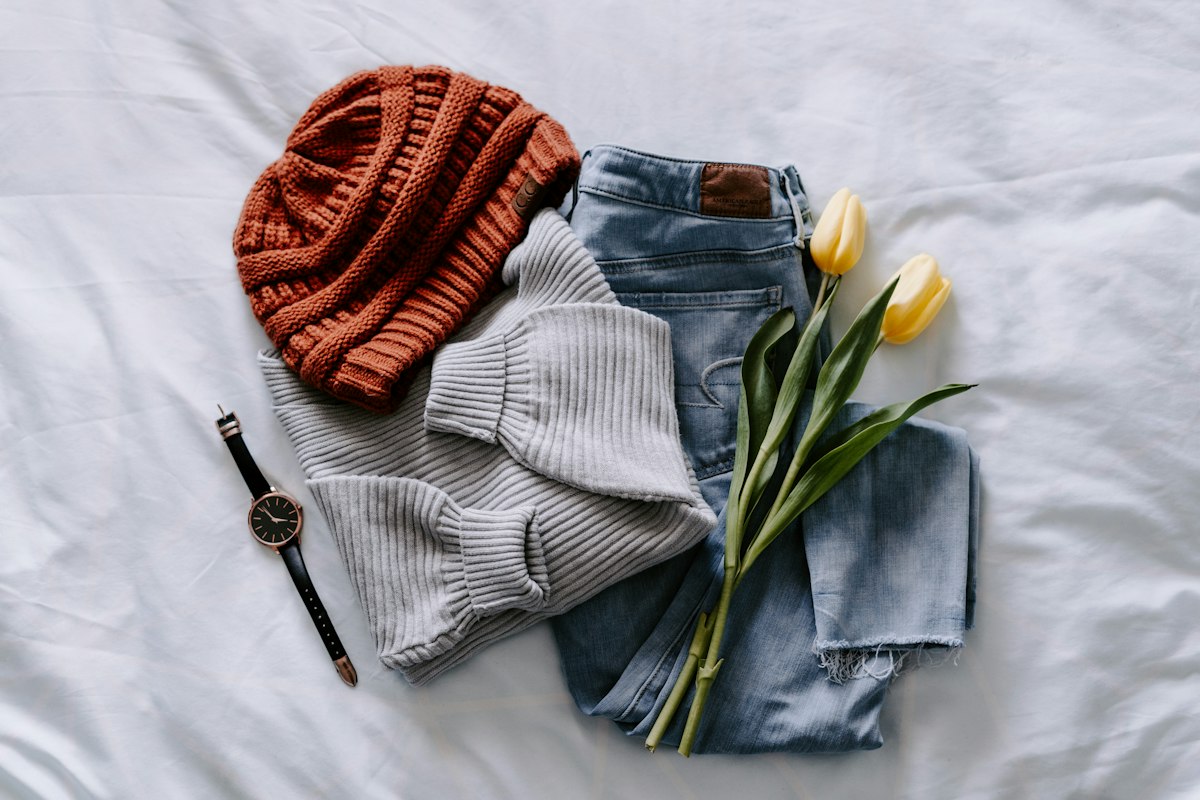
1. Self-production: when it makes sense to do it yourself
If you have cutting, sewing and tailoring skills, you could consider making the first prototypes yourself. This is by far the cheapest solution, but it has some drawbacks that are worth considering.
Producing your own content is advantageous in some ways (and is often the only option), allowing you to reduce costs, but you cannot risk being seen as too “artisanal” in the negative sense of the term. Details must be carefully considered and never left to chance.
Even in the case of self-production, you should still provide a professional misconduct with a freelance pattern maker. When making a garment, you always start by creating a paper pattern, which will also be useful if you want to have it manufactured by a third party in the future.
2. Customisation and Private Label
If design is not a fundamental and distinctive element of your brand, you can start with existing garments and customise them. Most brands focused on T-shirts and sweatshirts start from this point. If you want to explore this avenue further, read our guide on how to create a T-shirt brand.
Personalisation is also an option if you want to start with a “white label” or “private label“, i.e. with ready-made garments that are branded with your logo and customised only in certain aesthetic details.
3. Contract manufacturers are the most common solution
There are many industrial manufacturers who offer the possibility of creating a sample collection with a view to future production at their company. This is probably the most sought-after option for those looking for “Made in Italy clothing production“.
How it works: Normally, the price of the sample collection is increased by a percentage ranging from 50% to 100%, and sometimes there are start-up costs that may vary if printing frames or difficult processes are required on a single garment.
If you would like to learn more about this topic, I have written a comprehensive guide on contract clothing production for small quantities.
4. CMT (Cut Make Trim) manufacturers
There are specialist garment makers and small artisan tailors who deal exclusively with cutting and tailoring. They can work with all kinds of production, from the smallest to the largest.
The substantial difference compared to third-party manufacturers: Here, you will be responsible for procuring all the necessary materials, starting with the fabrics. They will only take care of what is known in the trade as “the way“, i.e. the cutting and packaging service.
Comparison: Full Package vs CMT
| Feature | Full Package (Third Party) | CMT (Cut Make Trim) |
|---|---|---|
| Who supplies the materials | The producer | You |
| Modelling | Included | To be procured separately |
| Management complexity | Low | High |
| Unit cost | Higher | Lower |
| Control over the supply chain | Limited | Total |
| Ideal for | Beginners, less experienced | Those with experience and a network of suppliers |
5. Style offices with complete package
There are style offices that specialise in creating capsule collections that can help you get started with a complete package. This is the recommended choice. if you want guidance in transforming your idea into patterns and elements on the garment and want to be guided through all the stages that will lead to the creation of your sample collection.

In my Be A Designer team, this is precisely what we do: We offer a turnkey service that supports emerging designers from the initial idea to the finished sample, managing all the complexities of the Italian production chain on their behalf.
Italian manufacturing districts: from north to south
Italy is not just any country when it comes to fashion. Our territory is dotted with specialised manufacturing districts, each with specific skills honed over decades (sometimes centuries) of tradition. Understanding this geography will help you find your way in your search for the right partners.
🏙️ Lombardy
Specialisation: High-end ready-to-wear
Milan and surroundings: outerwear, quality knitwear, elegant clothing. The nerve centre of Italian fashion.
🏛️ Tuscany
Specialisation: Leather and Leather Goods
Florence and Santa Croce sull'Arno: bags, belts, shoes, leather accessories. World-famous tanneries.
⛰️ Veneto
Specialisation: Footwear and Sportswear
Riviera del Brenta: luxury footwear. Sports and technical clothing for outdoor activities.
🧶 Emilia-Romagna
Specialisation: Knitwear and Underwear
Carpi (Modena): the knitwear district par excellence. High-quality knitwear and underwear.
👔 Campania
Specialisation: Men's Tailoring
Naples: tailoring excellence, jackets, suits and shirts with craftsmanship handed down through generations.
If you are considering a sportswear line, Veneto is a region to be considered for its technical expertise and experience in the activewear sector.
How to choose the right manufacturer: the fundamental criteria
Finding a manufacturer is relatively straightforward. Finding the right one for you is a completely different story. Here are the criteria that I recommend you carefully evaluate.
Minimum Order Quantities (MOQ)
This is often the first hurdle for an emerging designer. Many manufacturers require minimum quantities that can inflate the initial budget. Some impose MOQs of 100, 200 or even 500 pieces per model.
Look for smaller, more flexible laboratories, even if the unit cost will be slightly higher. At the beginning, it is better to produce small quantities to test the market, rather than end up with unsold stock.
Specialisation and skills
Not all workshops are the same. Some specialise in outerwear, others in knitwear, and others in denim. Look for a manufacturer that has specific experience in the type of garments you want to make. A workshop that excels in jackets may not be the best choice for your T-shirts.
Communication and reliability
Consider producers as business partner, not just as mere executors. A supplier who believes in your project can support you in critical moments: perhaps by speeding up an urgent delivery, offering you favourable payment terms, or recommending technical solutions.
It is better to spend an extra hour explaining a pattern clearly to the tailor than to end up with a whole batch of garments that are wrong due to a misunderstanding.
From Sample to Production: the stages of the process
Understanding the production process will help you better manage time, costs and expectations. Here are the main stages.
Prototype Development
Pattern, fabric selection, first prototype. It is normal to make 2-3 rounds of alterations.
Defect
Correcting defects and developing sizes to adapt the garment to your target audience.
Sample collection
1-2 garments per model in standard size. For photos, trade fairs, showrooms.
Production
Only after orders have been collected does mass production begin.
⚠️ Beware of costs: Do not invest all your money in samples! The cost of prototypes should be no more than 20-30% higher than the actual production cost, otherwise you risk eroding your profit margin.
The Costs of Made in Italy Production: What to Expect
I know what you're thinking: How much does all this cost? The answer, as is often the case, is “it depends”. But I can give you some general guidelines. For a comprehensive overview of this topic, I recommend reading our article dedicated to how much does it cost to create a clothing brand.
The main cost items
| Cost item | Approximate range | Notes |
|---|---|---|
| Fabric | €5 – €100+/metre | From basic cotton to fine silk |
| Modelling | €100 – €500+ | Per individual paper pattern, varies according to complexity |
| Packaging (façon) | €5 – €150+ | From simple T-shirt to structured jacket |
| Accessories | €2 – €30+ | Buttons, zips, labels, embroidery |
| Packaging | €1 – €15+ | Personalised bags, boxes, hangers |
The most common mistakes (and how to avoid them)
In over 14 years of business, I have seen emerging designers make the same mistakes over and over again. Here are the ones I recommend you avoid at all costs.
❌ Error #1: Producing too much before validating
Many designers, caught up in their enthusiasm, invest their entire budget in production before even knowing whether there is a market for their products. Result: Full warehouse and empty bank account. Always start with minimal quantities, test the market, then scale up.
❌ Error #2: Choosing a manufacturer based solely on price
The lowest price is not always the best choice. An unreliable laboratory can cause delays, quality issues, and ultimately much higher costs than you would have incurred with a reputable partner.
❌ Error #3: Underestimating time
Clothing production takes time. Between prototype development, sampling, production and delivery, it can take months. If you want to be ready for the summer season, you need to start working now. at least 6-8 months beforehand.
❌ Error #4: Do not overlook the details
Incorrect labels, crooked stitching, buttons that come off: these are details that ruin the perception of your brand. Invest in quality control and do not compromise on standards.
❌ Error #5: Doing everything yourself
Creating a REAL fashion brand in Italy from scratch, without any real help, is practically impossible. The supply chain is complex and requires a wide range of skills. Asking for help is not a sign of weakness, it is a smart strategic choice.
The Be A Designer Method: How we can help you
If you've come this far, you're probably wondering: How can I put all this into practice? How can I find the right producers, manage the supply chain, and avoid the mistakes you described?
It is precisely to answer these questions that I created Be A Designer. Our style office offers a turnkey service that accompanies you every step of the way, from defining your brand identity to creating your sample collection.

We use the Fashion Business Designer Canvas™, a visual methodological tool that allows you to design your brand in a structured way, considering all aspects: from identity to production, from marketing to distribution. If you want to learn more about how to structure your project, read our guide on how to create a clothing brand.
For over 14 years, we have accompanied over 200 brands along the way, building a network of reliable suppliers and producers throughout Italy. This experience is at your disposal.
🚀 Would you like to produce your own Made in Italy brand?
Book a free consultation with our team. We will analyse your project together and tell you exactly what you need to get started.
Book your free consultation →Frequently Asked Questions about Made in Italy Clothing Production
Conclusion: Your Journey Begins Here
La Made in Italy clothing production It is not just a logistical choice, it is a strategic positioning choice for your brand. It means embracing a tradition of excellence, accessing craftsmanship skills that are unique in the world, and being able to tell an authentic story to your customers.
It is not an easy path, and there are no shortcuts. But with the right method, the right partners and the necessary determination, it is absolutely possible to transform your idea into a successful Made in Italy fashion brand.
If you would like to explore these topics further, I recommend reading my books. "Do you also want to be a designer?" e "The Stylist's Journey, where you will find the complete Be A Designer method explained step by step.
Will 2025 be the right year to bring your project to life?
Book a free consultation with me and let's evaluate the future of your Made in Italy fashion brand together.
Book your consultation now →Good luck!
Corrado Manenti
Founder of Be A Designer
IF YOU LIKED THIS ARTICLE WRITE ME A COMMENT BELOW AND SHARE IT, IT WILL BE A PLEASURE TO REPLY 😉







 Italian
  English
  French
  German
  Spanish

