

Three months ago, in our style office in Gallarate, Matteo arrived. Twenty-eight years old, a precise dream in his head, two printed sheets in his hand with a summary of Shopify subscriptions and a palpable urgency in his voice.
“Corrado, I launched my fashion e-commerce eight months ago. I did it all myself. I opened Shopify the very afternoon the idea came to me, I uploaded twelve products that I had printed on demand, I spent two thousand euros on advertising on Meta, I had one hundred and twenty visits a day for a fortnight after the launch, three orders arrived in total, all returned as returns. Now the site is open but nobody comes in anymore. I don't understand where I went wrong.”
I sat him down, offered him a coffee and asked him one question: “Matteo, before opening the e-commerce, how much time did you spend defining the brand? Not the logo - the brand. The Collection Pyramid, the Brand Code, the positioning, the actual target audience. How much time?”
He lowered his gaze. “Zero. I thought the brand would build itself, with sales.”
Here's the point. Matteo was not wrong to start Shopify. Matteo was wrong to believe that an e-commerce can generate sales without a brand behind it. And this is the most widespread and most costly confusion I see every week - smart, motivated guys, often with non-negligible budgets, who treat e-commerce as if it were the project, instead of treating it as a tool to serve the project.
I am Corrado Manenti, founder of Be A Designer, Italy's first independent style office specialising in mentoring emerging designers. For over 14 years I have been accompanying those who want to turn their passion for fashion into a profession, and to date we have launched over 200 brands. I am part of a group with an aggregate turnover of around 25 million euros in the fashion production sector, and this allows me to see every day - from the supply chain to the end customer - what works and what does not work when an emerging brand opens an e-commerce. I have written two books on the designer's journey - "Do you also want to be a designer?" e "The Stylist's Journey - and I developed the Fashion Business Designer Canvas at the Polytechnic University of Bergamo, in the Textile Engineering and Processes course.
If you Google “how to open an e-commerce” you will find hundreds of guides. Almost all of them talk about Shopify, Stripe, Google Analytics and payment gateways. Almost none tell you that a fashion e-commerce is not like any other e-commerce. That selling clothes online has profoundly different rules from selling gadgets, supplements or digital courses. That the return rate in Italian fashion e-commerce is between 20% and 30% - as opposed to 5-8% in other categories - and that this figure alone overturns the business model.
This guide was created to fill that gap. And it is the guide that I would have liked to read, when I supported the first emerging brand to build its online shop. You will find the technical part - hosting, platforms, integrations - but you will find above all the strategic part: how to build the brand before the store, how to manage returns and size guides, how to plan the launch, how much it really costs to open a fashion e-commerce in Italian 2026.
I don't tell you fairy tales. I don't promise you that opening an online shop is easy or cheap. I tell you what I see every day in our style office - with real numbers and strategies that work for those who start from scratch and want to build something serious.
Let's start.

Why a fashion e-commerce is not like any other e-commerce
The first thing you need to understand, before even opening any browser and signing up to any platform, is this: fashion e-commerce is a separate category. It has different rules, different margins, different risks and different logic than any other area of online trade.
A fashion e-commerce is not managed like any other e-commerce: return rate of 20-30%, average conversion rate of 1-2%, management of dozens of SKUs per model, marked seasonality and mandatory photo investment. These are structurally different rules from any other sector of online commerce, and ignoring them is the number one cause of failure for emerging brands in digital.
Generic guides tell you that opening an e-commerce means choosing a platform, uploading products, connecting a payment system and doing advertising. This is partly true if you sell digital courses, food supplements or tech gadgets. It is not true at all if you sell clothes.
The reason is quickly stated. When a customer buys a supplement online, the decision is rational, the product is fungible - one tablet is as good as another, price and speed of delivery count. When a customer buys an item of clothing online, the decision is emotional, identity, strongly visual and - what changes everything - requires imagination. The customer has to imagine that garment on himself, he has to trust the fit, he has to hope that the picture corresponds to reality, he has to accept the risk of a return if the size does not fit.
This structural difference generates six unique fashion ecommerce challenges that you need to take into account before setting off.
The first challenge is size management. A garment has at least five to seven different sizes. Each size must have its own SKU, its own stock, its own photo if there are major differences. A collection of fifteen models turns into eighty to one hundred SKUs to manage - and this complicates the logistics, the accounting, the backend of the store.
The second challenge is the high return rate. In Italian fashion e-commerce, the average returns range between 20% and 30%. On Zalando or ASOS, we are talking about even higher percentages. This means that out of ten orders, two or three return. And the business model - margins, shipping costs, policy - must be built to support this reality, not to ignore it.
The third challenge is seasonality. Fashion lives in cycles: spring-summer, autumn-winter, pre-fall, resort. A fashion e-commerce does not sell the same product all year round like a cosmetics e-commerce would. It has to manage launches, sales, end of season, residual stock. The planning and cash flow metrics are completely different.
The fourth challenge is the required visual level. A customer buying a t-shirt is not satisfied with a picture on a white background. They want to see the fit on the model, the stitching details, the texture of the fabric, the garment worn in a lifestyle context. The visual of a fashion e-commerce is not a detail - it is the product itself. And it costs money.
The fifth challenge is the low conversion rate. The average conversion rate of a fashion e-commerce is between 1% and 2%. This means that out of every hundred visitors, one or two buy. This number has a direct impact on customer acquisition cost and advertising ROI. A B2B e-commerce of software can have conversion rates of 5-10%. In fashion, if you exceed 2.5% permanently, you are already above average.
The sixth challenge is cut-throat competition. The online fashion industry is saturated - the big marketplaces (Zalando, Amazon Fashion, YOOX) have marketing budgets that no emerging brand can match. The customer has endless alternatives just a click away. You have to give a strong reason why they should buy from you.
These six challenges do not make fashion e-commerce impossible. They make it different. And the first mistake I see every week is exactly this: people treating a fashion e-commerce like any other e-commerce, applying generic recipes and being surprised that they don't work.
“A fashion e-commerce does not sell clothes. It sells the desire to wear an identity. And that is the difference that changes everything: from the brand strategy to the individual product photo.”
- Corrado Manenti, The Stylist's Journey
The seven prerequisites before opening a fashion e-commerce
Here we get into the heart of the Be A Designer method. When Matteo came to our office, the first thing I showed him was a list of seven prerequisites. Seven things you must have ready first to open the platform. Not after, not in parallel. Before.
If you skip even one of these seven prerequisites, e-commerce will start lame and stay lame forever. You may compensate with higher advertising budgets, but you will never recover the fragile base on which you have built.
First prerequisite: the Brand Code. Not the logo. Not the name. The Brand Code - the 30-40 page strategic document that in the BAD method is the result of six consulting sessions dedicated to defining who you are, what you sell, who you sell it to, why you sell it, how you sell it, where you sell it. The Brand Code contains the positioning, the Collection Pyramid, the Aspirational Product, the Iconic Product, the tone of voice, the visual brand identity, the pricing strategy, the real target - not “25-45 women” but specific people with specific characteristics. Without Brand Code, your e-commerce will be a showcase of soulless garments. With Brand Code, every page of the site will speak the same language and build desire.
Second prerequisite: the photographed collection. And here I am talking about a real collection, not mockups generated by Midjourney. Whether it is a capsule of eight pieces or a complete collection of twenty models, the garments must physically exist, they must be produced, they must have been photographed in three types of shots: still life (on a neutral background for the product page), lifestyle (worn in context for brand imagery), detail (close-ups of fabrics and seams to convey quality). Without quality photos, the customer will never buy - because the photo is the product, in fashion e-commerce.
Third prerequisite: an active VAT number. You cannot sell online without a VAT number in Italy. Even occasional sales under EUR 5,000 per year, in the context of a systematic activity such as an e-commerce, require a regular opening. Opening a VAT number with an accountant costs between 150 and 300 euro, plus INPS gestione separata contributions, which under the flat-rate regime equate to about 26% of taxable income. If you are under EUR 85,000 in annual turnover, the forfetary regime allows you to pay a substitute tax of 5% for the first five years, then 15%. And the ideal regime for an emerging brand in the first years.
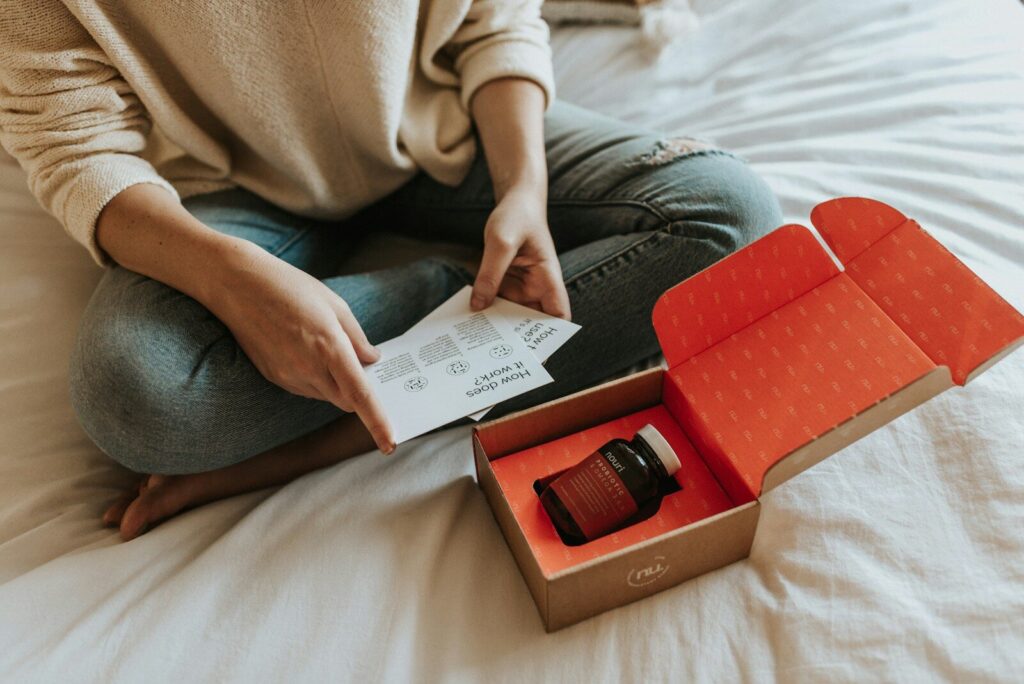
Fourth prerequisite: packaging. One of the most underestimated details of fashion e-commerce is the packaging. When a customer receives a garment bought online, the unboxing experience is an integral part of the brand. A premium garment delivered in an anonymous grey plastic bag loses 50% of its perceived value. Packaging includes branded outer envelope, inner tissue paper, possible box for more structured garments, thank you card with personal message, information on garment care and return. Minimum budget for branded packaging: 2-4 euro per piece, scalable with volume.
Fifth prerequisite: logistics. Where do you keep the stock? Who prepares the orders? Who ships them? Who handles returns? The answers to these four questions determine the actual scalability of your e-commerce. The three main options are: in-house management (in the first few months, with low volumes, even at home is fine), 3PL (Third Party Logistics, an external warehouse that manages everything for a fixed + variable fee), dropshipping (the supplier ships directly to the end customer, but this model doesn't work well in quality fashion because you lose control over packaging and timing). For an emerging brand with capsules of 200-500 pieces, self-management is often the best choice in the first 12-18 months.
Sixth prerequisite: return policy. A clear, fair and well communicated return policy is among the top five conversion factors of a fashion e-commerce. A customer who does not immediately find a readable return policy will abandon the shopping cart. You have to decide: how many days do you have for returns (legal minimum 14 days, market standard 30 days, premium 60 days)? Is the return free or charged to the customer? Do you accept automatic size exchange? Cash refunds or credit? These choices must be made before opening the store, not after the first complaint.
Seventh prerequisite: customer service. Fashion e-commerce generates constant questions: “How does this size fit? How long does it take to arrive? Can I change the size? Is the fabric stiff or soft?” Who answers these questions? In what timeframe? On which channels (email, WhatsApp, site chat, DM Instagram)? A fashion e-commerce that does not respond within 24 hours loses 30-40% of potential customers who had pre-purchase doubts. Customer service is not a plus - it is an integral part of the product.
Seven prerequisites. Before opening any platform. If you miss even one, stop. Work on that one. Then come back here.
This is the part that Matthew skipped. And this is the part that makes the difference between an e-commerce that sells and one that burns advertising budgets.
If you want to understand how to build the Brand Code and the collection photographed before the launch, read the in-depth guide on how to create a clothing brand and the specific article on selling clothing online.
WooCommerce vs Shopify: the real comparison
We come to the question everyone asks me. “Corrado, do I open on Shopify or WooCommerce?” The short answer is: it depends. The long answer takes a few pages.
Let's start with the objective facts, without sponsorship and without fans.
Shopify and a Canadian SaaS platform, the most popular e-commerce platform in the world. You pay a monthly subscription and in return you get everything: hosting, security, templates, shopping cart, checkout, payment gateway, app store, support. And a turnkey solution. Plans start from 36 euro/month for Basic, rise to 105 euro/month for standard Shopify, and arrive at 399 euro/month for Shopify Advanced. There are higher plans (Shopify Plus) dedicated to enterprise brands, over EUR 2,000/month.
WooCommerce and instead a free WordPress plugin. You pay nothing for the software itself, but you have to pay for the hosting (10-50 euro/month), the premium template (50-200 euro one-off), any paid plugins for advanced functions (100-500 euro/year), and above all the initial technical setup - which if you have it done by a professional costs between 1,000 and 3,000 euro. It is a self-hosted solution, with the full freedom and responsibility that comes with it.
The most important strategic difference, however, is not in the price. It is in the properties.
On Shopify, your shop is not yours. The code is Shopify's. The customer data is on Shopify's servers. If Shopify changes policy tomorrow, increases commissions, closes your account for ambiguous content, your ecommerce ceases to exist. You built your house on someone else's land.
On WooCommerce, your shop is literally yours. The code runs on your hosting, the data is on your server, you can export everything at any time, you can edit everything. You have full ownership of the project. You own the land.
This difference, for a brand that wants to build something lasting, is enormous.
There are pros and cons on both sides that must be honestly acknowledged.
I pros of Shopify: speed of launch (from scratch online in three days), 24/7 technical support, millions of templates and apps available, mature ecosystem, integrations with Meta and TikTok ready, zero technical maintenance (automatic updates), highly conversion-optimised checkout.
I cons of Shopify: subscription that grows with turnover, extra commissions if you don't use Shopify Payments (0.5-2% per transaction), limited customisation beyond a certain level, total dependence on the platform, additional app costs that accumulate quickly (an average Shopify e-commerce pays an extra 80-150 euro per month in apps), SEO less flexible than WordPress.
I pros of WooCommerceTotal ownership of the project, unlimited flexibility (you can do anything), better native SEO thanks to the WordPress ecosystem, no constraints on the payment gateway (you use what you want with the commissions you prefer), fixed costs in the long run, seamless integration with the blog (crucial for content marketing), 100% customer database of your own.
I cons of WooCommerce: more complex initial setup (a professional is needed), continuous maintenance required (WordPress updates, plugins, security), performance depending on the hosting chosen (cheap hosting leads to a slow site, with conversion killers), steeper learning curve, technical support distributed among several providers (hosting, templates, plugins).
In the Be A Designer method, for a brand that wants to build something serious and lasting, the recommendation and WooCommerce. Not by ideology, but by ownership. When we accompany a brand in its first two to three years, the theme of ownership of customer data, flexibility on SEO, deep integration with the blog and the ability to grow without plan wins out over Shopify's speed advantages.
There are exceptions. Shopify makes sense when: the brand wants to launch a quick test in 30 days to validate an idea, does not have a technical team and cannot afford a WordPress professional, sells mainly through social integrations (Shopify integrates with TikTok Shop and Meta much more smoothly than WooCommerce), or when starting with a limited budget and wants to postpone the technical investment.
In all other cases - and especially when you have a medium- to long-term perspective - WooCommerce is the serious founder's choice.
“Choosing the e-commerce platform is like choosing where to build your house. You can rent a ready-made studio apartment in a luxury condo, or you can buy the land and build stone by stone. The first approach gets you into the house tomorrow; the second gets you into owning something ten years from now.”
- Corrado Manenti, The Stylist's Journey
How to choose the right domain
The domain is your digital identity. It is an asset that, chosen well, is worth forever. Poorly chosen, it costs dearly with each passing year.
In 2026, the main options for an Italian fashion brand are three: .en, .com, .shop (or variants such as .store, .fashion, .it).
The .com remains the most authoritative and international domain. It is the one people type in by default, it is the one that conveys global credibility, it is the one you should buy if you have ambitions to expand outside Italy. It costs between 10 and 20 euro per year if you register it on Namecheap, GoDaddy or the like, and it goes up to astronomical figures if the domain you want is already someone else's and you have to buy it on the secondary market (already registered brand domains can cost from 1,000 to 50,000 euros and more).
The .en and the Italian national domain. It has the advantage of immediately communicating the Made in Italy origin - a crucial value in fashion - and of positioning itself slightly better on Google Italy in local searches. The cost is similar to the .com, around 10-15 euros per year. It is the ideal choice if your target is predominantly Italian and if you want to exploit geographical positioning.
The .shop (and similar ones such as .store, .fashion) and a more recent domain, often chosen when the brand's .com and .it are already taken. It works, but conveys a slightly less professional feeling than the classics, and in fashion - where the perception of quality counts for so much - this nuance can make all the difference.
The strategic choice I recommend in our style department is this: buy both the .it and the .com of your brand, and have one redirected to the other. The combined cost is insignificant (20-30 euros/year in total) and protects you both from the risk of cybersquatting (someone buying your domain after you have started to grow in order to resell it to you) and from the possibility that you might want to expand internationally tomorrow.
Practical rules for a good domain:
- Short - ideally under 15 characters, it must not be difficult to pronounce over the phone.
- Easy to write - no hyphens (they create confusion and make the brand look amateurish), no ambiguous double letters, no numbers.
- Pronounceable at once - if you have to explain it, it's no good.
- Memorable - evocative, short, distinguishable word.
- Available on social - check that Instagram, TikTok, Facebook usernames are free before registering the domain. Brand consistency between site and social is crucial.
Avoid buying domains with “shop”, “store” or “online” in the name (e.g. “mybrandshop.com”). These are clear signs of amateur branding and damage the perception of authority. The domain must be the brand name, full stop.
Technical setup: hosting, SSL, templates, essential integrations
Once you have chosen your domain and platform, you enter the technical setup phase. Here the difference between WooCommerce and Shopify is obvious - on Shopify this phase takes an afternoon, on WooCommerce you need a professional for one to two weeks of work.
If you choose WooCommerce, there are six technical components to be put in place.
The first and hosting. For a serious e-commerce, do not use cheap 2 euro per month hosting. Page loading speed is one of the top three conversion factors. Every extra second on the loading time leads to a conversion loss between 7% and 20%. Recommended hosting for fashion e-commerce are SiteGround, Kinsta, WP Engine, or SYS Cloud Italia to stay in Italy. Budget 20-50 euro/month.
The second and the SSL certificate. Not optional - without SSL (the green padlock in the address bar), browsers show security warnings and Google penalises in ranking. Most hosting today includes a free SSL via Let's Encrypt. Check that it is active before launching.
The third and the template. Don't save money here. A premium template for WooCommerce costs between EUR 60 and 200 one-off, and is the investment with the best ROI of the entire setup. Recommended templates for fashion: Flatsome, XStore, Woodmart, Blocksy Pro. Avoid the free templates - they have heavy code, compatibility problems and a generic aesthetic that immediately conveys amateurism.
The fourth and payment gateway. The main options are Stripe, PayPal, Scalapay (for instalment payments, widely used by Gen Z in fashion), Klarna and Nexi (for payments with Italian cards). I recommend activating at least three: Stripe + PayPal + Scalapay cover 95% of cases and reduce cart abandonment. Commissions vary between 1.4% and 3.4% per transaction.
Fifth and integration shipments. You cannot manage shipments manually when you reach 20 orders per day. You need integrations with couriers (BRT, GLS, DHL, Poste Italiane) via platforms such as Packlink, ShippyPro, Sendcloud. These platforms allow you to print labels, track shipments, manage returns from a single interface, with discounts on couriers due to aggregated volumes.
The sixth and electronic invoicing. In Italy, electronic invoicing to the SDI system is mandatory. You need software such as Fatture in Cloud, TeamSystem, Aruba Fattura Elettronica, which integrates with WooCommerce and automatically generates the electronic invoice for each order. Average cost: 100-300 euro/year.
If you choose Shopify, many of these components are already integrated into the platform. Hosting is included, SSL is included, the Shopify Payments gateway is pre-configured, and integration with couriers is available via app. The following remain to be configured: the template (Shopify has free templates of good quality, but the premium ones cost 180-350 dollars one-off), the apps for returns and customer service, the electronic invoicing integration (apps such as Fatture In Cloud or EasyCommerce Italia are needed, 15-30 euros/month).
Realistic budget for a professional technical setup:
There is no such thing as the right solution. There is the right solution for your budget level, your stage, your skills. But if there is one thing I would advise you never to skimp on, it is the checkout. Each percentage point of conversion gained on the checkout is worth, in the medium term, ten times the savings made on hosting.
The ten indispensable pages of a fashion e-commerce
A fashion e-commerce is not an Excel catalogue with a “buy” button next to each line. It is a narrative experience where the customer enters, expects to be transported into a world of brands, and decides within minutes whether that brand deserves his trust and money.
Ten pages are needed to build this experience. Not nine, not eleven. Ten. And each one has a different purpose.
1. Home page. The first impression. Must communicate in three seconds who you are, what you sell, why I should stop. Recommended structure: hero section with a large, impactful lifestyle image + brand tagline, “featured products” section (maximum of six pieces), “our story” section (short paragraph + link to About page), “news from the blog” section, footer with link to policies and newsletter subscription. Avoid carousel images that move on their own - they kill conversion.
2. Shop / Catalogue. The page where the customer explores the entire collection. It must have clear filters (size, colour, category, price), logical sorting (novelty, increasing/decreasing price, bestseller), pagination or infinite scroll, and each product must be immediately recognisable with a photo on a neutral or lifestyle background, name, price, and preferably an alternative photo that appears on mouseover.
3. Product Page. It is the most important page of the entire e-commerce. This is where the sale is decided. It must contain at least six photos of the product (still life, lifestyle, detail from three angles), size and colour selection clearly visible, “add to cart” button above the fold, articulated product description (composition, fit, garment history), size guide linked, shipping and return information visible, “related products” section, reviews. The average time a customer spends on a product page before deciding is 45-90 seconds - each element must earn that space.
4. Lookbook. The page that in emerging fashion e-commerce makes the difference. It is a narrative space where you present the collection as an editorial experience: a sequence of high quality lifestyle images, with the concept of the season, the inspiration, the visual identity of the brand. The lookbook does not sell directly (although you can tag products) - it builds desire. And the difference between a product catalogue and a brand that tells a story.
5. About / Our Story. The human brand page. Who is behind it? Why does this brand exist? What is the mission? What are the values? Where is it produced? The modern customer, especially in fashion, wants to know who is behind the brand before buying. A generic or absent About page loses 20-30% of customers who are sensitive to the human dimension of the brand - and they are the most loyal customers.
6. Size Guide. The page that saves lives. In fashion e-commerce, the size guide is the difference between a 15% of returns and a 30% of returns. It must contain: the brand's size chart (not copied from others), instructions on how to measure yourself at home (photos or video), fit advice for each model, possibly comparisons with other brands (“if you wear the S from Zara, take the M from our collection”). A well-made size guide is a direct investment in marginality.
7. Shipping & Returns. The policy that decides the cart. It must be crystal clear, written in comprehensible Italian, not in legalese. How much does shipping cost? How long does it take? Where do you ship from? How do you handle returns? How many days do I have? Who pays for the return? How do you refund? This information should also be in the footer of the site, visible from every page.
8. Contact / Customer Service. Not a page with only “write to info@...”. You need to offer more channels (email, WhatsApp, site chat, possibly phone), clear response times, more frequent FAQs, physical address (conveys trust). If you have a showroom, show it - the physical dimension increases credibility.
9. Blog. Not optional. The blog is the SEO engine of your e-commerce, the channel for positioning on the informative keywords that intercept customers in the search phase. A fashion e-commerce without a blog only ranks on the commercial keywords of the product - and these are the most competitive. With a well-done blog, you intercept organic traffic on keywords such as “how to match a blazer in summer”, “history of the Italian shirt”, “how to choose the right jeans for your body”.
10. Legal Pages. Compulsory by law in Italy: Privacy Policy, Cookie Policy, Terms and Conditions of Sale, Company Information (VAT number, company name, head office), Right of withdrawal, Information on international shipments if applicable. I recommend having these pages drafted by a lawyer or using services such as Iubenda (100-200 euro/year) that generate documents that comply with the GDPR and the Italian Consumer Code.
Ten pages. None negotiable. When a customer enters your e-commerce, he has to find all these ten pieces of information within two clicks. If even one is missing, trust is broken and the cart remains empty.
To learn more about how to structure product pages to maximise conversion in the clothing industry, read the guide on selling clothing online.
Product photography: why it makes a difference
If there's one area where I see emerging brands saving money in the wrong place every week, it's this one. “Corrado, I took the pictures with my iPhone against the wall at home”. Response: I just read your commercial death sentence.
In fashion e-commerce, the photo is not a complement to the product. And the product. The customer cannot touch the garment, cannot try it on, cannot feel the fabric. Everything he knows about that product comes through the image. If the image is mediocre, the product - whatever its real quality - is mediocre in the eyes of the customer.
In our style office, we work with a simple principle: three types of shot, always.
The first type and the still life. The garment photographed on a neutral background (white, light grey, beige), with professional lighting, from standardised angles for the entire collection (front, back, detail). This is the main photo of the product page. It serves to show the shape of the garment, the actual colours, the proportions. The cost of a professional still life day ranges from 80 to 200 euro per outfit, depending on the photographer and the complexity (difficult garments such as slip dresses or outerwear take longer). For a collection of fifteen models, you are between 1,500 and 3,000 euros.
The second type and the lifestyle. The garment worn by a model, in a real context (street, interior, landscape), with an aesthetic consistent with the brand. These photos build desire, they don't just inform - they show how the wearer feels, what aesthetic tribe the garment belongs to, at what moment in life it is worn. The cost of a lifestyle day with photographer, model, make-up artist and location scouting ranges from 300 to 800 euro per day for standard set-ups, and can go up to 1,500-3,000 euro for more structured productions. In one day you typically get 6-10 outfits photographed in a usable way.
The third type and the detail. Close-ups of fabrics, seams, buttons, labels, finishes. These shots tell the customer “this brand cares about details” - and in premium it is a decisive signal. Details are often done in the same session as the still life, so they do not add significant cost, but they do require specific attention.
For a capsule collection of 8-12 models, the realistic budget for the complete photo package is between 2,500 and 6,000 euro, depending on the level of production. It sounds like a lot - but spread over the lifetime of those photos (minimum six months, often a year), the cost per month is negligible compared to the return in conversion.
The three most common mistakes I see
- Photo with smartphone on home background. Result: the customer perceives the brand as amateurish. Zero conversion.
- Only still life, no lifestyle. Result: the customer understands the product but does not feel the brand. Low conversion, no emotional attachment.
- Models that do not represent the target. If you sell an urban streetwear brand and use catwalk models in size 38, the customer will not recognise you. The photo has to speak to your customer, not to 90s Vogue.
An investment in professional photography is not an expense. It is the founding asset of your e-commerce. If you have to cut the budget, cut back on apps, cut back on templates, cut back on launch promos - but don't cut back on photos.
“Your customer will never buy your garment. He will buy the image you give him of that boss. If the image is poor, the boss will be poor. If the image is powerful, the garment will be powerful. It is a rule without exception in fashion e-commerce.”
- Corrado Manenti, The Stylist's Journey
Size guide and returns management: the unique challenge of fashion e-commerce
Let us return to the figure I mentioned at the beginning. The average return rate in Italian fashion e-commerce and between 20% and 30%. Out of every ten sales, two to three return.
This fact alone is the number one reason why many fashion ecommerce stores close in the first two years. When you do the maths at the desk, the return is invisible. When you handle the real return - with the return shipping, the quality control of the returned garment, the re-stocking, the refund - the real margin collapses.
The apparent gross margin of a fashion e-commerce can be 60-70%. The real net margin, after you subtract customer acquisition cost, packaging, outbound shipping, return shipping, internal operations, platform fees, taxes - it drops to 15-25%. And if you handle returns poorly, it can drop below 10%.
How do you fight the return? With two precise weapons.
The first weapon and the size guide well done. I have already mentioned this, but it deserves a closer look. A mediocre size guide generates wrong size returns - the number one cause of returns in online fashion. A size guide done right reduces them by 30-50%. What does “done right” mean?
- Your brand-specific size chart (not copied). If you have had your collection prototyped well, you have your exact measurements.
- Measurements of both the garment (midriff, length, chest circumference) and the body (chest, waist, hips).
- Clear instructions on how to measure yourself with a tape measure. Ideally a short video.
- Fit advice model by model (“this dress fits true to size, if you are taller take a size up”).
- Comparison with well-known brands (“if you wear the M of Zara, our S will fit you comfortably”).
- Dedicated chat or email for size questions (“Not sure? Email us at [email protected], we'll get back to you in 2 hours”).
The second weapon is a clear and non-penalising return policy. Paradoxically, making returns easy reduces returns, not increases them. A customer who knows he can return easily buys with less hesitation - and then, in most cases, does not return. A customer who fears complications in returns either buys less, or buys two sizes together to be sure (with a net increase in returns).
Return policy best practice in premium fashion:
- 30 days for return (the legal minimum is 14, but 30 is the market standard).
- Return free of charge for first purchase, charged to the customer (2.90-6.90 euro) for subsequent returns. This discourages abuse without penalising the experience of the first customer.
- Free size change always (generates less net return and increases satisfaction).
- Refund in 7-10 days from receipt of the return. Longer times generate negative reviews.
- Repayment in cash OR store credit (store credit has a higher value for you because it is often reused).
When handling returns in an operational way, platforms such as Rever, Loop, ReBound (for high volumes) or ShippyPro Returns automate the process: the customer enters the order code, selects the product to be returned, indicates the reason (valuable data for you), receives the return label and tracking. You receive the notification and process the refund. Handling time per return: 5 minutes instead of 30.
Professional returns management is worth, for a fashion e-commerce, 5-10% of the annual turnover. This is not a detail to be put off until the second year.
SEO fashion e-commerce: what works in 2026
Paid traffic (Meta Ads, Google Ads, TikTok Ads) is the engine of a fashion e-commerce's growth in the first twelve months. But organic traffic - that which comes from Google searches without you paying for a single click - is what builds the sustainability of the business in the medium to long term.
A fashion e-commerce that lives only on advertising and fragile. Every euro you stop putting into Meta, the traffic goes to zero. A fashion e-commerce that also has a good organic base has a free customer base that arrives every day, knows the brand, and converts better (because they have searched for you, not found you by chance in a feed).
SEO for fashion e-commerce in 2026 is played out on four levels.
First level: the technical structure. The site must load in less than 2 seconds, be perfectly mobile (over 70% of fashion e-commerce traffic and from smartphones), have correct XML sitemap and robots.txt, clean URL structure (no /product?id=45678 but /shop/jackets/blazer-blue), markup schema on products (price, availability, reviews) that generates rich snippets on Google, mandatory HTTPS, no 404 errors, navigation breadcrumbs.
Second level: product and category pages. Each product page must have an SEO-optimised title (tag title) with the product name + category + brand name (“Blazer Blu Navy Lana Merino | Brand Name”), a persuasive meta description (155 characters, with call to action), product description of at least 200 words written in a natural way (not keyword-stuffed), descriptive alt text on each image, URL with readable product name. Category pages should have a clear H1 title, an introductory paragraph of 150-250 words contextualising the category, and the products well organised.
Third level: blogging and content marketing. This is where the real game is played in 2026. Marketplaces dominate commercial product keywords (“buy men's blue blazer”). An emerging brand does not beat Zalando on those searches - and struggles. But an emerging brand can dominate informational keywords: “how to wear a blue blazer to the office”, “difference between merino wool and virgin wool”, “what to wear to your first job interview in 2026”. These searches bring qualified traffic, build authority, and - what few realise - are the searches that new generative AIs like ChatGPT, Claude, Gemini scan to answer users' questions. Being cited in AI answers is the new SEO.
Fourth level: link building and authority. Backlinks from fashion publications, trade magazines, vertical blogs, collaborations with content creators that link to your site. Every quality backlink increases the domain's trust score. In fashion, collaborations with influencers who link to the brand (not only on Instagram, but on their own or editorial blogs) are worth much more than just Instagram stories.
Three key principles for fashion SEO in 2026:
- Specific, not generic content. “How to choose the right blazer” beats “Blazer Guide”. Specificity wins.
- Optimisation for AEO (Answer Engine Optimisation). Structure the content to answer precise questions. Use FAQ, use H2 in question form, answer in a structured way in the first paragraphs.
- E-E-A-T (Experience, Expertise, Authoritativeness, Trust). Google rewards content written by real people with real experience. Sign articles, put author bios, show credentials.
To learn more about content marketing fashion and how to use the blog as an acquisition engine, read the guide on how much does it cost to create a brand which contains practical examples and budget allocation strategies.
Launch marketing: pre-order, waitlist, early access, influencers
The launch of a fashion e-commerce is the moment that determines whether the collection will take off or die in silence. A poorly planned launch means an open site, zero visits, zero sales, advertising budget burnt to the ground. A well-planned launch means a ready-to-buy customer list, sales concentrated in the first seven days, trailing effect on the following weeks.
The Be A Designer method for launching is based on four levers.
Lever one: pre-order and waitlist. Before e-commerce is even live, build a list of interested people. Landing page with countdown, email sign-up to receive “exclusive pre-launch access”, teaser content on social media showing behind the scenes of the collection. A waitlist of 500-1,000 pre-launch subscribers generates a sales concentration effect on day X that would be impossible to achieve with a cold launch. Offer a real incentive - “Discount of 15% valid only for the first 48 hours” or “Free shipping for those on the waitlist” - to turn subscribers into buyers.
Lever two: early access. In the days immediately before the public launch, open the e-commerce only to the waitlist. This group feels privileged, buys first (reduced risk of stockouts on popular sizes), generates the first reviews and user photos even before the public launch. When the site officially opens, you already have five to ten orders placed and at least two visible reviews.
Lever three: collaborations with influencers and content creators. The choice of influencers in 2026 is radically changed from 2020. Forget the million-follower mega-influencers with 1% engagement rates - they are dead. Focus on micro-influencer (10,000-100,000 followers, engagement rate 4-8%) and on the nano-influencer (1,000-10,000 followers, engagement rate 8-15%) in niches perfectly aligned with your brand. Ten nano-influencers authentically talking about your product beats one mega-influencer doing a sponsored post. Realistic budget for a launch campaign with 10-15 micro/nano: 1,500-4,000 euro.
Lever four: TikTok Shop and organic content. In 2026, TikTok Shop and has become one of the most effective channels for launching emerging fashion brands in Italy. 65% of sales on TikTok Shop are impulse purchases, 80% of users receive purchase inspiration while scrolling, and direct product-video integration shortens the funnel dramatically. A brand launching an e-commerce in 2026 without an active TikTok presence will wilfully ignore the channel with the best current conversion.
The minimum advertising budget for a serious launch and 500-1,000 euro per month in the first three months. Below this threshold, the volume of data to optimise campaigns is too low to work. Above this threshold, you start to get significant signals. The ROAS (Return On Ad Spend) benchmark for an emerging fashion ecommerce in the first few months is 1.5-2.5x - meaning that for every euro spent on ads you bring in 1.5-2.5 in revenue. It's not as much as it sounds: from that 2 euros you still have to subtract product costs, logistics, returns. The real net profit from ads in the first few months is often zero or negative - you invest in acquiring customers who will then return at zero cost.
The free shipping threshold - the free shipping threshold - and a powerful psychological lever. The Italian market standard is around 100 euro. Setting free shipping above 100 euro increases the average shopping cart by 15-25% compared to free shipping. In premium fashion, where the natural average cart is higher, it is better to set the threshold slightly above the current average cart (if your average cart is 85 euro, set free shipping to 100; if it is 150, set it to 180).
Realistic budget for opening a fashion e-commerce
We come to the trickiest question. “Corrado, how much does it really cost me to open a fashion e-commerce?” The answer depends on your level of ambition and the degree of professionalism with which you want to start.
In the Be A Designer method we distinguish three tiers of investment.
Tier 1 - Starter (EUR 3,000). And the minimum level to open an e-commerce that does not look amateurish. Includes: Shopify Basic 12 months (€430), domain + SSL (€20), Shopify premium template (€300), essential photo package for 6-8 templates (€1,500), basic branded packaging (€300), very small launch advertising (€500). Not included: brand strategy, lookbook, professional size guide, custom development, continuous advertising. At this level you test the concept, you do not launch a brand. It works for a very small capsule (print on demand, limited production, market testing).
Tier 2 - Professional (€8,000). And the recommended level for an emerging brand that wants to get off to a serious start. It includes: professional WooCommerce setup (2,500 euros), annual premium hosting (400 euros), template + customisation (800 euros), complete photo package for 10-12 models with still life and lifestyle (3,500 euros), complete branded packaging (500 euros), logistics/payment integration setup (300 euros), launch advertising (1,500 euros over 3 months). At this level you launch a true e-commerce, structured, credible, scalable.
Tier 3 - Premium (20,000+ euro). And the tier for those with serious first-year ambitions. It includes all tier 2, plus: complete Brand Code (Brand Design 6 consulting sessions), ad-hoc designed collection with Aspirational Product and Collection Pyramid, premium lifestyle photography with location scouting and professional models (6,000-10,000 euro), editorial lookbook, launch influencer campaign (3,000-5,000 euro), sustained advertising (5,000-10,000 euro over 6 months). At this level you build a brand that wants to compete in the emerging premium/luxury market.
The division of the budget into the three tiers more or less follows this logic:
- Technical platform: 10-15% of the total.
- Photography and contents: 25-35% of the total.
- Packaging and logistics setup: 5-10% of the total.
- Launch advertising: 15-25% of the total.
- Brand strategy and consultancy: 20-30% of the total (tier 2 and 3).
- Variants and unforeseen buffers: 10-15% of the total.
To this opening budget you have to add the monthly recurring costs that the e-commerce generates once live: platform subscription (36-150 euro), hosting (20-50 euro), app and plugin (50-200 euro), minimum advertising (500-1,000 euro), incremental packaging (depending on volume), logistics/courier (3-7 euro per order), payment gateway fees (2-3% of the transacted). For a ramp-up e-commerce in the first few months, the fixed monthly cost is between 800 and 1,800 euro before counting the variable cost of orders.
An important fact: the budget for opening e-commerce and complementary, budget, not a substitute for the brand and collection creation budget. If you start from scratch - without a brand, without a produced collection, without a sample collection - you have to add the two budgets together. For a complete project (brand + collection + e-commerce) the minimum realistic budget in 2026 in Italy is 15,000–25,000 euros in the basic version, and can go up to 40,000-60,000 euro in the premium version. For more on the complete budget, read the guide how much does it cost to create a brand.
There is no such thing as a free shortcut. There are only different levels of professionalism with proportionate budgets. Those who try to launch a serious fashion e-commerce with less than 3,000 euros in total (brand + collection + store) are setting themselves up for failure - not because money is everything, but because with less than that amount you cannot ensure the minimum quality of the components that make a fashion e-commerce credible.
Typical mistakes I see every week
After more than 200 accompanied brands, mistakes are repeated with almost comical regularity. If you avoid even half of these ten, you already have a huge advantage.
Mistake one: open the store before the brand. Matteo's mistake, the mistake of most aspirants. The Brand Code comes first. Always. To skip it is to build on sand.
Error two: photos taken with a smartphone. The quickest way to communicate “this is an amateur brand, buy elsewhere”. Invest in photography. Always.
Error three: product page with only one photo. The customer wants to see the garment from all angles. Minimum of six photos per product, including lifestyle and detail. Non-negotiable.
Error four: confused or hidden return policy. The customer who does not find the return policy easily abandons the cart. Make everything clear in three places on the site: footer, product page, checkout.
Error five: checkout too long. Each additional field in the checkout reduces the conversion of 1-2%. Keep the checkout minimal, activate checkout as guest (without compulsory account creation), accept main payments with one click.
Error six: no integration with WhatsApp or chat. Italian customers have pre-purchase questions. If they can't ask easily, they don't buy. Integrate a visible WhatsApp button and respond within one hour during business hours.
Error seven: publishing without testing the checkout. It sounds trivial, but I see live ecommerce all the time where the purchasing process doesn't really work - payments that don't go through, email confirmations that don't arrive, VAT that is badly applied. Test each purchase flow as a real customer before launching.
Mistake eight: ignoring email marketing. The first asset of an e-commerce is not Instagram followers - it is the email list. Automatic flows (welcome, cart abandonment, post-purchase, win-back) generate on average 25-35% of the annual turnover of a mature fashion e-commerce. Use Klaviyo, Omnisend, or Mailchimp from day one.
Mistake nine: thinking that Instagram replaces the site. Instagram is an acquisition channel, not a conversion channel. Your site is the only space you really control, where you really convert, where you really collect data. Don't invest in a perfect Instagram profile and a bad site.
Mistake ten: not having a second collection ready. The drop is the beginning, not the end. Six months after the first drop, you have to have something new. Without continuity, acquired customers don't come back, followers lose interest, the brand quietly dies. Plan the editorial roadmap for the first 24 months before opening.
These ten mistakes, put together, explain why most emerging fashion ecommerce stores close within the first year. It's not the platform's fault. It is not the market's fault. It is the fault of bad decisions made in advance that are paid for downstream.
The Be A Designer method for opening e-commerce
At Be A Designer, we support brands along the entire creation path - from brand code to production to e-commerce launch. The BAD method consists of four steps and is designed to avoid exactly the mistakes I have just described.
Phase One - Brand Design. Six consulting sessions that produce the Brand Code, the 30-40 page strategic document containing positioning, target, Collection Pyramid, Product Aspirational, tone of voice, visual brand identity, pricing strategy, editorial plan. And the foundation of it all. Typical duration: 8-12 weeks.
Phase Two - Collection Design. Translation of Brand Code into concrete collection. Moodboards, sketches, data sheets, prototyping, fabric selection, sample production. Supported by access to our network of verified Italian suppliers - more than 130 active supply chains - via Easy Chain and our experience in contract manufacturing for small quantities. Typical shelf life: 14-20 weeks.
Phase Three - Marketing & Content. Complete photo package (still life + lifestyle + lookbook), social editorial plan, launch strategy, partnerships with influencers aligned to the target audience, opening advertising campaign. Supported by our partner photographers and creator network. Typical duration: 6-8 weeks.
Phase Four - Operations & E-commerce. E-commerce setup (WooCommerce with proprietary BAD architecture, optimised for fashion), logistics integration, implementation of size guide and returns policy, email marketing automation setup, operational training of brand owner. Typical duration: 4-6 weeks.
The result: a brand ready to sell, with a solid e-commerce, a photographed collection, a structured launch plan, and an owner who knows how to manage day-to-day operations. Average total time from start to first sale: seven to ten months.
The method is not an alternative to do-it-yourself. It is an alternative to silent failure. Those we accompany arrive at the launch with more than ten years of others' mistakes already avoided.
If you want to understand whether the Be A Designer method can work for your project, the first step is a free consultation with a member of my team. No pressure, no obligation. Just a conversation between people who share a passion for fashion.
There are also partial paths - for those who already have the brand but only want support on the e-commerce launch, or vice versa. We assess on a case-by-case basis.
“Opening a fashion e-commerce in 2026 is a decision that costs money. It costs time, it costs money, it costs energy. But it costs a lot more to open it wrong and have to redo it from scratch after a year. The real saving is to get off to a good start the first time.”
- Corrado Manenti
Do you want to open your fashion e-commerce the right way?
A free consultation with a member of our team to understand where to start, what is needed and what tier does for your project.
FAQ: frequently asked questions on opening a fashion e-commerce
How much does it cost to open a fashion e-commerce in Italy in 2026?
A realistic minimum budget for a serious fashion e-commerce (not including the production of the collection) starts at around 3,000 euro in the basic Shopify starter version, rises to 8,000 euro in the professional WooCommerce version with photography and launch, and goes up to 20,000+ euro in the premium version with full brand strategy. Considering the entire project (brand + collection + e-commerce), the minimum budget is 15,000-25,000 euros.
Do I need a VAT number to sell online?
Yes, always. In Italy you cannot sell online systematically without a VAT number. Opening it with an accountant costs 150-300 euro. The 'forfettario' regime (under 85,000 euro of turnover) provides for a substitute tax of 5% for the first five years, then 15%, plus INPS contributions for the separate management of about 26%.
Better Shopify or WooCommerce for an emerging fashion brand?
It depends on the objectives. Shopify is quicker to launch and is suitable for those who want to test quickly or have no technical skills. WooCommerce is recommended for those who want total ownership, SEO flexibility and blog integration. In the Be A Designer method, for a brand with a medium to long-term vision, we recommend WooCommerce.
How long does it take to open a fashion e-commerce from scratch?
If you start with just the idea, without brand and without a collection, it takes 7-10 months to launch. If you already have the brand and the collection produced, the e-commerce setup alone takes 4-8 weeks for the professional version.
What is the average conversion rate of a fashion e-commerce?
The average conversion rate is between 1% and 2%. A well-optimised e-commerce can reach 2.5-3%. Above 3% you are in the elite of the industry. Every extra percentage point of conversion is worth a lot in terms of ROI on advertising.
What percentage of returns should I expect?
In Italian fashion e-commerce, the return rate fluctuates between 20% and 30%. A curated size guide, realistic photos and a clear return policy can reduce this to 15-20%. Ignoring this figure in the business plan is the main cause of financial failure in the first two years.
How much should I invest in advertising per month?
The serious minimum budget for advertising on a fashion e-commerce launch is EUR 500-1,000 per month in the first three months. Below this threshold the volume is too low to optimise. The typical ROAS in the first months is 1.5-2.5x.
Can I start with print on demand instead of producing a collection?
Yes, but with precise limits. Print on demand is useful for validating a concept, testing the target, having an initial catalogue without investing in stock. But margins are low, perceived quality is lower, customisation is limited. For a serious brand, the POD is a starting point or a complement, not the definitive solution.
Do I need a physical warehouse?
In the first 12-18 months, with volumes under 500-1,000 orders per month, you can manage the stock from home or from a small rented space. Above certain volumes it is better to switch to a 3PL (logistics outsourcing) which costs 0.5-1 euro per piece stored per month plus 3-5 euro per order prepared.
Should I also sell on Amazon, Zalando, marketplace?
It depends on the strategy. Marketplaces offer volume but erode margins and brands. For a brand that wants to build identity, the first 12 to 24 months are best dedicated entirely to its e-commerce + social. Then, once the brand is established, the marketplace can be an additional channel, not a primary one.
How do I handle electronic invoicing for an e-commerce?
In Italy, electronic invoicing to the Interchange System is mandatory. Software such as Fatture in Cloud, TeamSystem or Aruba Fattura Elettronica integrate with WooCommerce and Shopify and automatically generate the invoice for each order. Cost: 100-300 euro/year.
What is the minimum budget to open a capsule collection to sell online?
For a capsule collection of 6-10 pieces with limited production (200 pieces in total), the production budget alone starts at 8,000-15,000 euro. Added to this are photos, e-commerce, packaging, marketing for a total of 15,000-25,000 euros in the serious start-up version.
Where can I find reliable suppliers for the production of my garments?
The search for suppliers is one of the most delicate phases of the project. In the Filiera Facile database we have over 130 verified Italian suppliers. Other avenues are trade fairs such as Milano Unica, Micam, sector networks and, of course, word of mouth.
KPIs to be monitored from day one
A fashion e-commerce is not run by intuition. It is managed by numbers. There are ten KPIs that you have to keep track of every week, from the first day you open. Ignoring them means flying in the dark with a plane loaded with garments from your collection.
Total monthly traffic. The basis of everything. How many people enter the site each month, where they come from, which pages they land on. A tool like Google Analytics 4 (free) or Plausible (paid but simpler and GDPR-friendly) is the starting point.
Global conversion rate. The percentage of visitors who complete a purchase. Emerging fashion e-commerce benchmark: 0.8-1.5% in the first few months, 1.5-2.5% when fully operational. If you are below 0.8% three months after launch, there is a structural problem - photos, checkout, pricing, targeting.
Average Order Value (AOV). The average value of each order. It depends on the pricing of the collection but also on how the upsells on the product page are structured and the free shipping threshold. Increasing the AOV of 10% is easier than increasing the conversion rate by the same percentage.
Customer Acquisition Cost (CAC). How much you spend to get a new customer. It is calculated with a simple division: total advertising expenditure for the month divided by the number of new customers acquired. In fashion, a CAC between 25 and 50 euro is healthy in the first six months; above 70-80 euro it becomes problematic if the AOV is below 100 euro.
Lifetime Value (LTV). The total value a customer brings over time. If he buys once for 80 euros, LTV = 80. If he comes back three times over two years with an average spend of EUR 90, LTV = 270. The healthy ratio between LTV and CAC is at least 3:1 - the customer must bring at least three times what it cost to acquire it.
Return rate. Tracked by category, by model, by size. If a specific category has 40% returns while the average is 20%, there is a problem with the size guide or photos for that category.
Returning customer rate. The percentage of returning customers. Healthy benchmark 12 months after launch: 20-30%. Below 15% indicates that the product does not retain customers or that email remarketing is lacking.
Click-through rate email marketing. If you send newsletters (and you should), measure opening and clicks. Healthy opening in fashion: 25-35%. Clicks: 3-6%. Below these numbers, the list is cold or the content does not work.
Average page load time. Under 2 seconds. Each additional second erodes conversion. Measure it with PageSpeed Insights or GTmetrix at least once a month.
Net Promoter Score. The question “how would you recommend our brand to a friend from 0 to 10?” sent to customers post-purchase. Above 50 you are in an excellent range, between 30 and 50 you are average, below 30 you have a satisfaction problem that impacts on word of mouth and loyalty.
These ten numbers, monitored every Monday morning in a spreadsheet or Google Looker Studio-type dashboard, transform e-commerce management from a mystical art to a professional discipline. He who does not monitor them navigates by sight. Those who monitor them correct their course in real time.
One last thought before closing
Back to Matthew. After that consultation, we saw each other five more times. We redid everything from scratch - the Brand Code, the Collection Pyramid, the positioning. Rephotographed the collection with a professional photographer, built a waitlist of 600 subscribers before reopening, relaunched on WooCommerce. First month after relaunch: 47 orders, conversion rate 2.3%, return rate 18%.
He did not become a millionaire in six months. He has built the foundations of a brand that in the medium term can make him live. It's the same difference I see every week between someone who opens Shopify on impulse and someone who builds stone by stone.
If you have come this far in your reading, it means that you have a serious project in mind. It means you are not looking for the free shortcut - you are looking for the method that works. And the thing I can tell you is this: opening a fashion e-commerce in 2026 is one of the most challenging entrepreneurial ventures there is. It tests you on everything: creativity, strategy, technique, communication, finance, psychology. And when it works, it allows you to build something truly your own, with your own identity, in the global market.
But you have to get off to a good start. You don't need to start fast. You need to get off to a good start.
If you feel you need a confrontation with someone who has already accompanied two hundred brands along this path, the first step is a free consultation with a member of my team. No pressure, no obligation. Just a conversation between people who share a passion for fashion.
If you want to learn more about the complete journey from brand creation to launch, read my book The Designer's Journey - there are the thirteen chapters recounting each stage of the journey, with practical exercises and real cases.
Good luck!
Corrado Manenti, Founder of Be A Designer












 Italian
  English
  French
  German
  Spanish


