
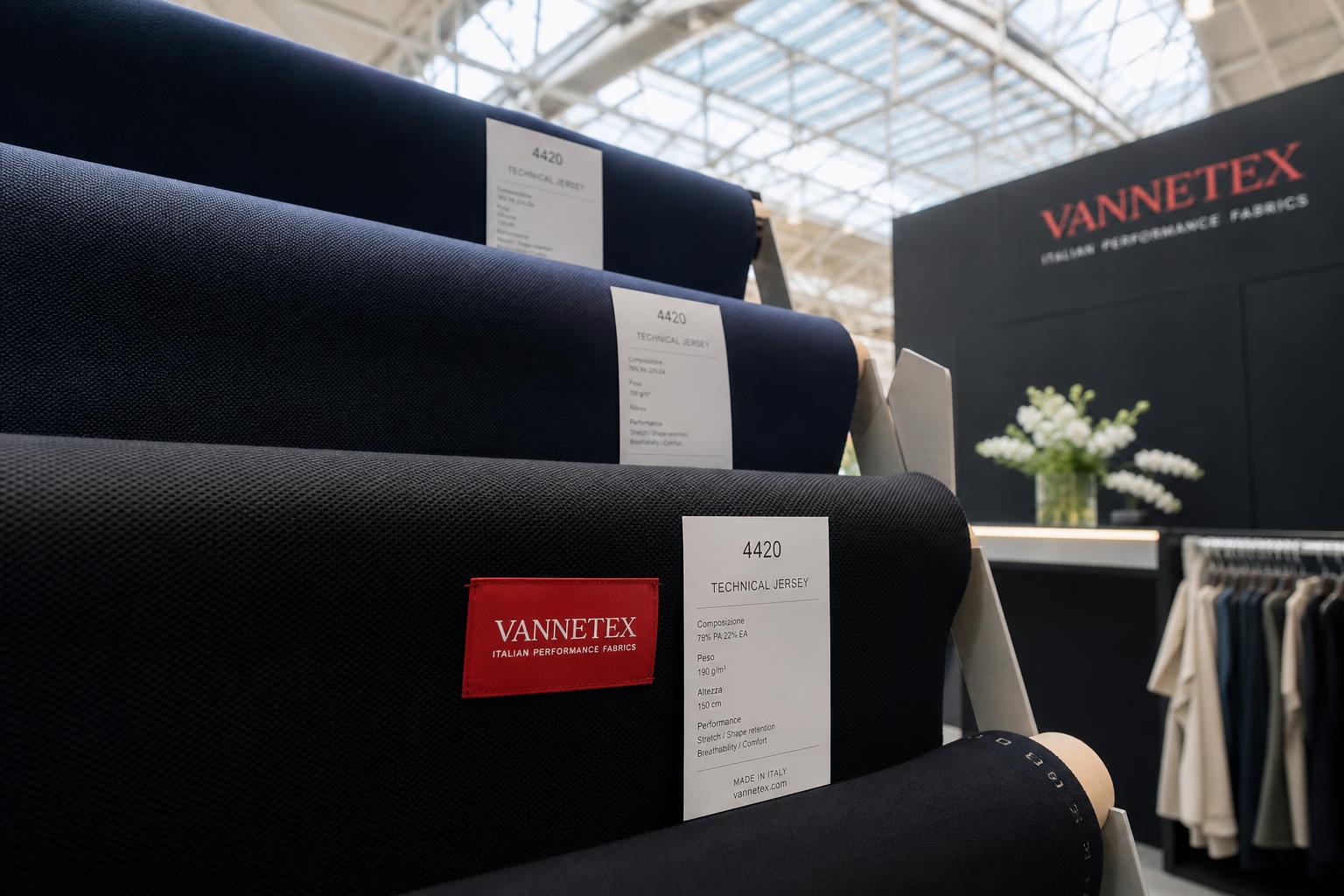
A Unique Milan In September, while passing by to say hello to a Veneto manufacturer of technical stretch jersey, I had to queue at the stand. Literally the queue, like at the supermarket on a Saturday morning. At a B2B trade fair for textiles, in front of the stand of a not-so-first-rate supplier. In front of me were seven guys between 28 and 35 years old, phone in hand, taking photos of data sheets and jotting down compositions with words like «78% PA + 22% EA» on their notepads. They were not the usual luxury or ready-to-wear buyers. They were founder of micro-brand activewear born in the last six months, with an urgency you could almost touch. When I finally spoke to the sales manager at the stand, he said something that made my ears perk up.
«Since HYROX came, we can no longer keep up with the demands.»
Sales manager, textile manufacturer from Veneto at Milano Unica
Twelve years in the industry have taught me to recognise these signs. When a consumer trend such as HYROX triggers a rush by founders towards technical fabrics, it means that the market is opening up a new window. And that will soon come to an end - because in twelve months' time those seven in the queue will be a hundred, and the first-mover advantage is something that cannot be recovered.
The months you have to position yourself
It is the realistic window within which an emerging brand can ride a niche wave like HYROX before the market becomes saturated with direct competition.
Over the past six months, I have received eight to ten virtually identical requests from aspiring activewear founders. I summarise them in an archetypal character - let's call him Marco - who is not a single person but the pattern of those who are trying to enter this niche today. Marco is 28-35 years old, former CrossFit now a HYROX competition member, has between 15,000 and 25,000 euro budget, six months of time, a very clear vision of what wants to produce (leggings, tops, shorts, technical sweatshirts) and zero answer to the most important question: «Why should my brand exist in an already saturated market?»
I am Corrado Manenti, founder of Be A Designer, Italy’s first independent design consultancy specialising in supporting emerging designers. For over twelve years, I have been guiding people like Marco, who come to me with an idea and help them develop it into a finished product ready for the market — to date over 200 fashion brands launched. I developed the Fashion Business Designer Canvas™ as a master's project in Textile Engineering and Processes at the Bergamo Polytechnic, and before I sat here I worked for over ten years in the chemical-textile laboratory of the family business, touring textile factories halfway around the world. Be A Designer is part of a group with a turnover of around 25 million euros in Italian fashion production, so when I talk to you about costs, MOQs and suppliers I am not improvising.
If you have been following me for some time, you know that I do not tell fairy tales. If you are on your first article here, welcome: this is the place where I tell it like it is, even when it is not comfortable to hear. In this guide I explain how to create a sportswear brand in 2026, taking HYROX - the phenomenon that is rewriting the rules of activewear - as a mirror to teach you how to recognise a growing niche before it becomes noise.
Creating a sportswear brand in 2026 does not mean «making sweatshirts and leggings with a logo». It means identify a growing sports sub-culture (HYROX is the example of the moment, but not the only one), building a Brand Code consistent before the product, choose technical Italian fabrics real (Carvico, Eurojersey, ECONYL®), starting with a capsule of 6-8 items under 15-25 thousand euro Made in Italy, and distribute it with strategy community-led (partner gyms + DTC) before thinking wholesale. The 6 phases of the BAD Method applied vertically to the activewear sector: Brand Design → Collection Design → Prototyping & Production → Shooting & Media → Strategic Coaching → E-commerce & Digital ADV. Realistic time frame: 4-8 months from idea to first sale.
HYROX, and why you should study it (even if you will never practice it)
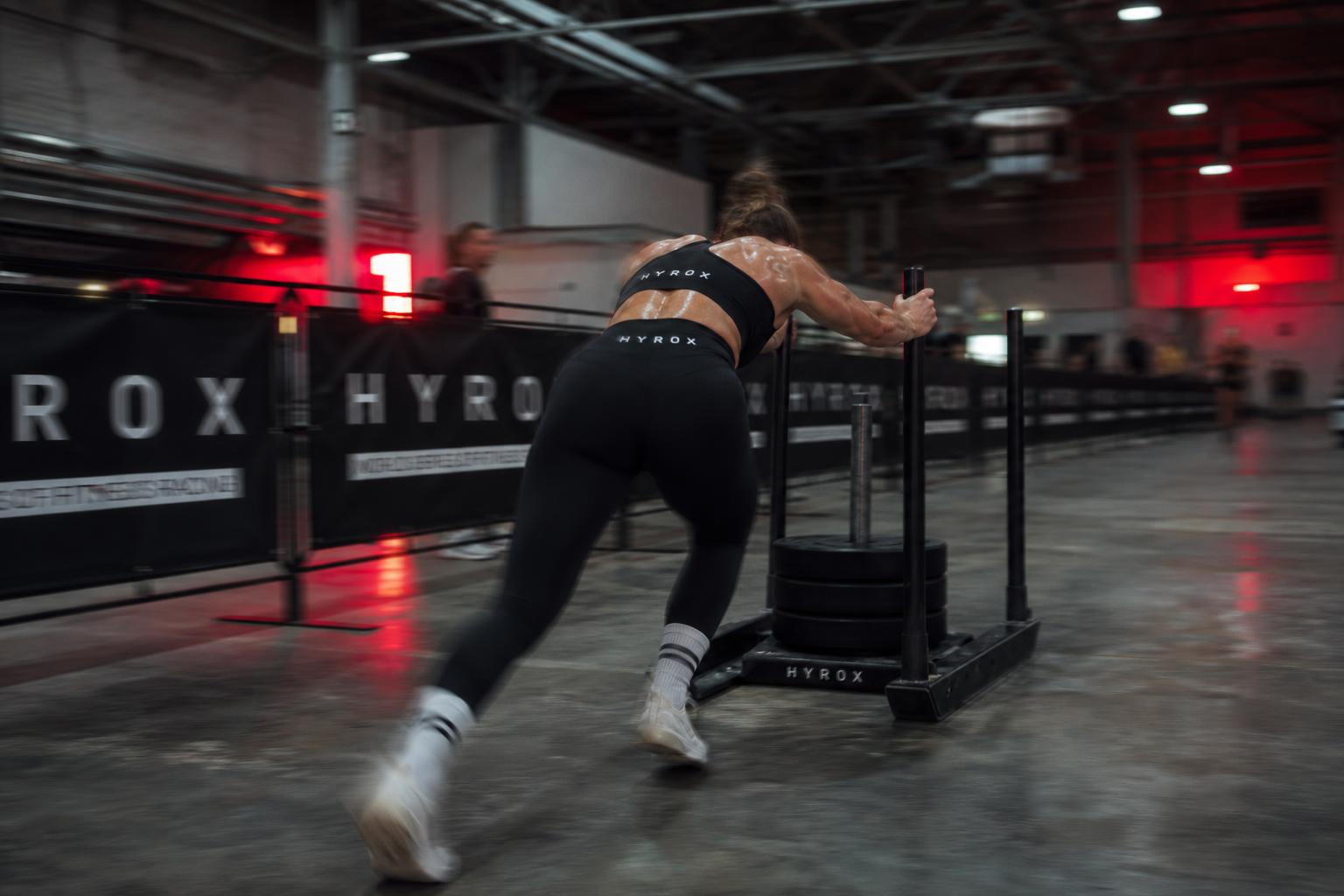
For those who don't know him: HYROX is a mass fitness competition that started in Germany in 2017 and became in a few years the consumer format fastest growing global functional sector. Each competition is standardised: eight one-kilometre rounds alternating with eight workout stations (sled push, burpees broad jump, sandbag lunges and other fixed stations). It takes place indoors, in fairgrounds and arenas, with thousands of athletes competing side by side without the filter of a dedicated gym.
What interests me, as a brand designer, is not the competition. È the cultural phenomenon. HYROX has had in a few years what CrossFit had built in ten: a global community that recognises itself through a shared language (times, stations, finisher line), a recognisable aesthetic, a set of rituals and a dress code unwritten but very clear. The partnership PUMA has signed as official apparel partner - with a co-branded capsule that has received significant media coverage - is no accident. It is a signal that big brands recognise the niche as a market.
When a giant like PUMA makes a move, the same thing always happens in fashion: a wave opens up. It suddenly becomes legitimate, on a mainstream level, to talk about a certain type of product, a certain target, a certain aesthetic. The niche stops being «that thing that fans do» and becomes a category. And every time such a wave opens up, it creates a temporary space called first-mover advantagethe competitive advantage of market entrants first becoming crowded.
HYROX is not the only niche with this trajectory. It is the most visible case from 2025-2026, but the principle is repeatable. Padel, hyrunning, run club, slow yoga, urban calisthenics, minimalist hiking: every year, sports sub-cultures are born with their own language. Learning to read them before the market is the real asset of anyone who wants to build an activewear brand today.
Marco's mistake (and it is the same as the 90% in the new activewear brands)
Back to our Marco-archetype. When one of these people arrived at the first confrontation, he already had a Pinterest moodboard, three candidate names for the brand, a draft logo and an estimate from a Turkish supplier for an initial production of t-shirts and shorts. He knew exactly what wanted to produce. What he did not know was why someone should have bought it instead of buying the same product from PUMA, Lululemon, Gymshark, Nike, Under Armour or one of the thousands of other brands already present in HYROX-affiliated gyms.
Marco was not wrong. He was wrong in the way he had set up the project. He had confused making a product with making a brand. They are two different professions. The product answers the question «what am I selling?». The brand answers the question «why do I exist, in a market that was not expecting me?». The first question is technical. The second is strategic. And without the second, the first does not sell.
In beachwear, where we have followed dozens of emerging brands, the pattern is the same. In menswear, the same. In streetwear, the same.
He who starts with the product produces stock.
He who starts with identity builds a brand.
The problem with emerging activewear brands is that the product itself is highly commoditised - a pair of technical leggings with the same textile composition can be found for 30 euros at Decathlon and 130 at Lululemon. The difference is not in the cotton. It lies in everything the product meanswho wears it, where they wear it, what it says about the wearer. Meaning is the real playing field.
That is why, before even talking about fabrics, suppliers, production, I forced Marco to fill in the first box of the Fashion Business Designer Canvas™: the Brand Code. Three questions, dry: To whom do you speak? What do you represent? What not are you? Without these three answers, every subsequent decision - fabric, price, packaging, channel - will be arbitrary.
The activewear audience 2026: three repeating buyer personas
To say «people who play sports» is not a buyer person. It is such a broad category that it is useless. When we work with an emerging activewear brand in my studio, we always start by identifying a specific primary profile, built on real behavioural data, not abstract assumptions. Three profiles are repeated more than others in the projects we follow.
The identity athlete-athlete (28-40 years old)
He is the backbone of the HYROX phenomenon, but also of CrossFit, trail running and competitive padel. He trains 4-6 times a week, already has a «serious» sports wardrobe, knows the differences between technical fabrics and can name them. He spends 80-180 euros on a piece if he perceives quality. He mainly buys DTC and at the gym. Search the brand membership of the disciplineHe wants to wear the recognition of the community he belongs to. He does not want «generic gym clothes».
The motivated neophyte (25-35 years old)
He entered the HYROX world (or your chosen niche) in the last 6-12 months. He has a more sensitive budget (50-100 euro per piece), is very influenced by Reel, TikTok try-on and UGC from the community. For him the brand is the symbolic gatewayWearing it means «I am part of this world». It buys in complete packages (top + leggings + sweatshirt) as soon as it has a salary. It is the segment most responsive to micro-influencer sponsorships and partnerships with gyms.
The hybrid «lifestyle» athlete (32-45 years)
Do sport three times a week but wear activewear outside the gym too: for coffee, taking the kids to school, smart working. He looks for versatile garments that work both in training and in everyday life. He spends 120-220 euro per piece, wants fabrics that last, clean design, fit that «doesn't scream sporty». This is the segment on which Lululemon has built its empire. In Italy it has grown enormously in the last three years.
You don't have to choose all three. Buyer personas serve to focus, not disperse. Your activewear brand will have a primary and at most one secondary. After going through this exercise, Marco realised that his heart was in the first person - the identity-loving athlete - but with the ambition to also speak to the motivated neophyte through entry-level pieces. From here on, every decision (colour palette, cut, fabric, price, channel) started to make sense.
The BAD Method applied to activewear: 6 steps
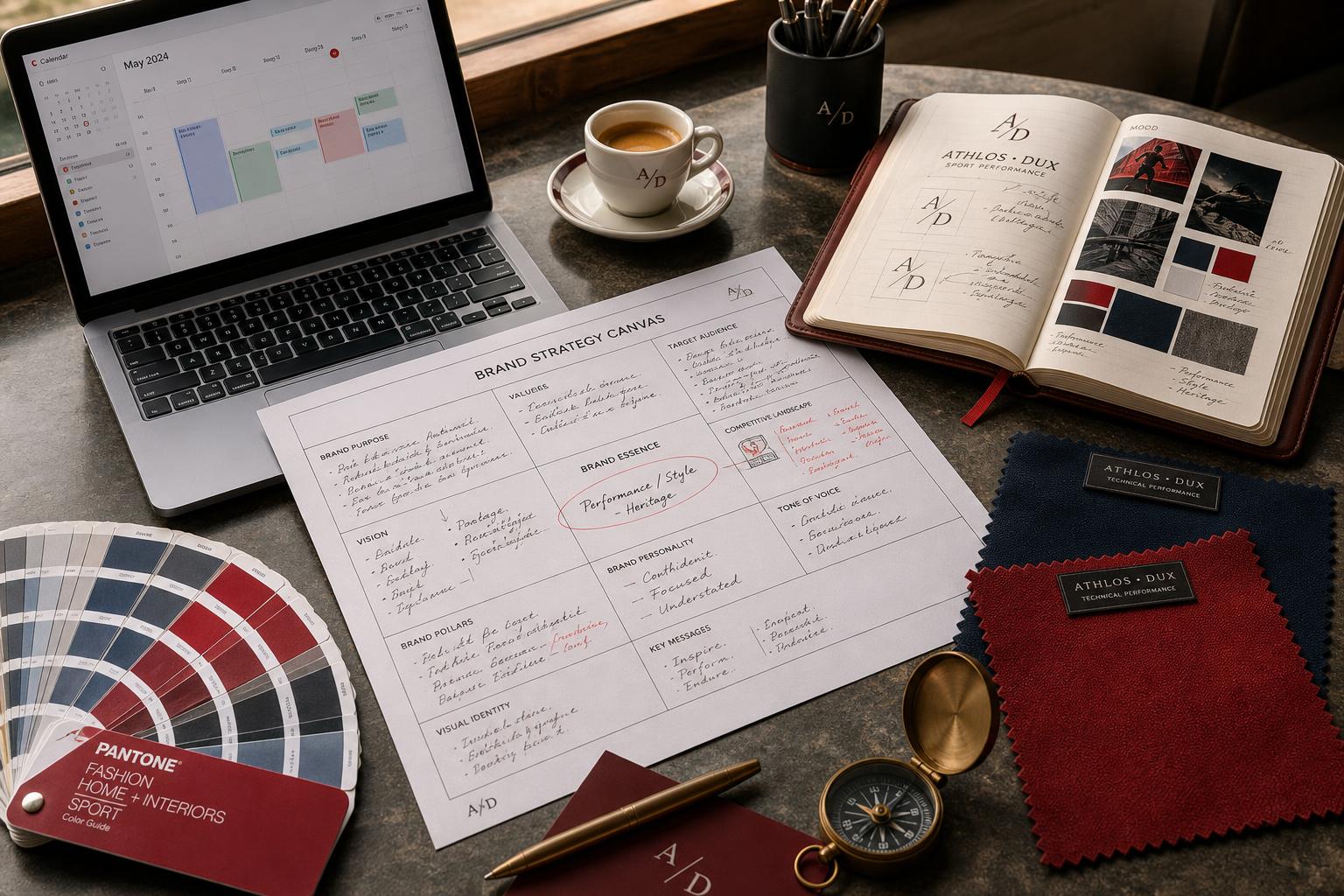
The method we use in our style office in Gallarate to build a fashion brand from scratch has six stages, and is the same one we apply - with technical variations - to beachwear, menswear, elegant womenswear, streetwear and activewear. It is not a «free creative» method: it is a structured path in which creativity has its place, but under the control of strategy.
1) Brand Design - who you are, what you represent, who you speak to
Compilation of the Fashion Business Designer Canvas™Brand Code (who you are), Positioning (where you stand in the market pyramid: value, mass, premium, luxury), Buyer Personas (the three we have seen above, declined on your brand), Editorial Manifesto (what you defend, what you criticise). Concrete outputs: brand identity document, colour palette consistent with positioning, claim, tone of voice. Time: 3-5 weeks studio work. Costs: 1,500-5,000 euro depending on complexity.
2) Collection Design - from moodboard to prototype
Definition of Pyramid™ CollectionThe 20% in the collection is entry-level (caps, socks, basic t-shirts) to acquire new customers, the 70% is the Massive Impact core (leggings, tops, shorts, technical sweatshirts - the products that pay the bills), the 10% is aspirational (capsules from Instagram, premium pieces with sartorial details). Choice of fabrics, suppliers, pattern-making. Output: complete data sheets, first prototypes in the workshop. Lead time: 6-10 weeks.
3) Prototyping & Production
Production of the final prototypes, fitting on real models (not just mannequins, especially in sportswear - movement counts), testing under conditions of use (sweat, washing, mechanical abrasion). Only afterwards do we go into contract production. Typical MOQs in Italian laboratories specialising in small quantities50-100 pieces per model. Time: 8-12 weeks from validation of the final prototype to delivery.
4) Shooting & Media
Professional lookbook, video content for social, materials for press kits. For an activewear brand, content is particularly critical: the product is sold on the move, not standing still. A single shooting session must produce assets for three to six months of communication. Costs: 1,500-3,500 euro for a basic shoot, 3,500-7,000 for a premium shoot with video.
5) Strategic Coaching
It is not a stand-alone phase: it is the umbrella that covers all the others. The founder of an emerging brand rarely has all the necessary skills - brand strategy, modelling, supply chain, digital marketing, logistics, fashion business taxation. Our role, as a style office, is to cover the gaps without making the brand dependent on us.
6) E-commerce & Digital ADV
Own site (I recommend WooCommerce for the medium to long term, Shopify for a fast start), integration with Instagram Shopping and - increasingly in 2026 - TikTok Shop. Collection launch funnel, email sequence, targeted advertising. For an activewear brand with an «identity athlete» buyer persona, partnerships with HYROX-affiliated gyms, CrossFit boxes and local communities often weigh more than pure paid advertising. For digital, ecommerce and fashion ADV we work closely with our sister agency Evolve Marketing.
Technical fabrics for activewear: what you need to know before you sign an order
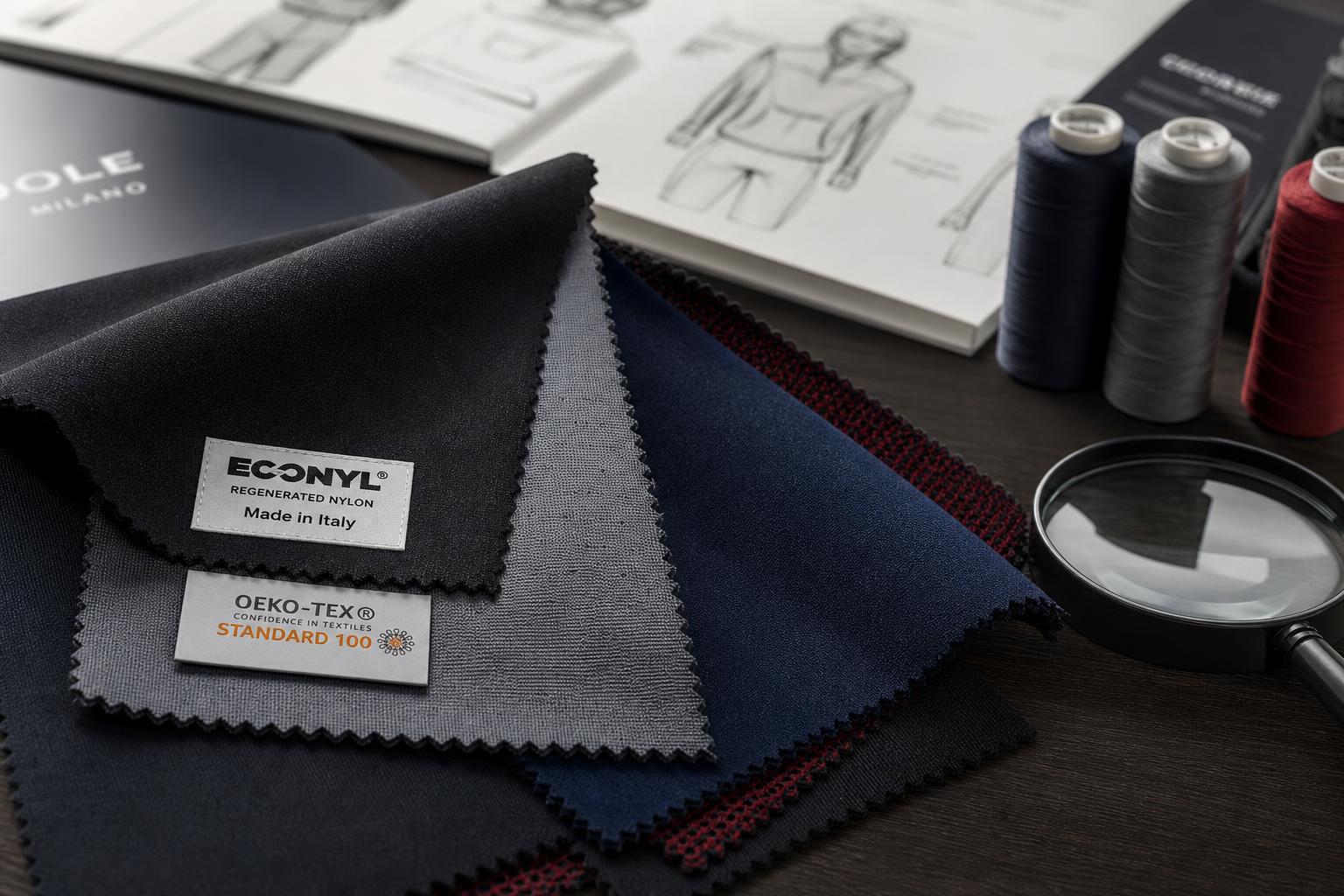
In the beachwear sector, I wrote an entire book on technical fabrics (you can find it here): the same logic applies to activewear, with specific declinations. In technical sportswear the dominant fibres are polyamide (nylon, abbreviation PA) and polyester (PL/PES), combined with elastane (abbreviated EA, commonly known as Lycra® or Spandex) to ensure elasticity and stretch-back. The typical proportion for a professional activewear garment is 78-85% of base fibre + 15-22% of elastane.
Italian textile districts for activewear
Italy is one of the world centres of textile excellence, with specialised districts which an emerging brand can access without being a colossus. The main ones for sportswear:
- Carvico (Bergamo) - world leader in warp-knitted stretch fabrics. Their range covers activewear, beachwear and shapewear with superior technical characteristics (chlorine, UV and sunscreen resistance for beachwear; oil and mechanical abrasion resistance for activewear). Revolutional™ Energy fabrics have a shaping effect designed specifically for functional fitness.
- Eurojersey (Caronno Pertusella, Varese) - manufacturer of Sensitive® Fabrics, technical fabrics with «second skin» effect, bi-elasticity, breathability and fast drying. Fashion-tech positioning, works with high-end brands.
- Aquafil (Trento) - yarn manufacturer ECONYL®, nylon regenerated from fishing nets, textile scraps and plastics. You can find it in Carvico's Vita fabrics and in many global sustainable collections (Stella McCartney, Prada Re-Nylon, Patagonia).
- Veneto (Treviso, Vicenza) - historical district of technical sportswear and industrial denim. For those actively looking for an Italian production partner we have a guide dedicated to sportswear manufacturers Italy. Concentration of tailoring workshops specialising in performance sportswear.
- Montebelluna (Treviso) - the world heart of specialised sports footwear. If your brand includes footwear, you can't miss it.
- Carpi (Modena) - the knitwear district. For technical sweatshirts, longsleeve and high quality knitwear, the Carpi workshops remain the European reference.
Certifications: without them, it's just marketing
If you want to position yourself as a sustainable or premium brand in 2026 - and in the HYROX/activewear «identity» niche you will want to do so - supply chain certifications are not optional. The three that your fabric supplier must be able to show:
- OEKO-TEX® Standard 100 - certifies the absence of harmful substances in the fabric. It is the minimum standard: without it, you cannot even talk about sustainability.
- GRS (Global Recycled Standard) - certifies recycled content. Necessary if you use ECONYL® or other regenerated yarns and want to communicate this.
- bluesign® - certifies the sustainability of the entire production process (water, energy, chemicals). It is the most rigorous of the three.
How much will it cost to create a sportswear brand in 2026
The number Marco had in mind - 18,000 euro - was not wrong in itself. It was a realistic budget for an entry-level Made in Italy capsule. What was wrong was the way he thought he would spend it: all on production. When we reallocated based on the BAD Method, the picture changed.
Here is a realistic reference for a activewear capsules of 6-8 garments (example: 1 leggings, 2 tops, 1 shorts, 1 technical t-shirt, 1 sweatshirt, 1 hoodie) in 50-100 pieces per model, made in Italy, emerging premium positioning:
| Entry | Realistic range (€) |
|---|---|
| Brand identity (logo, palette, tone of voice, poster) | 1.500-5.000 |
| Modelling (8 models × 100-300 €) | 800-2.500 |
| Prototyping + fitting + iterations (8 models × 300-800 €) | 2.400-6.500 |
| Technical fabrics for production (50-100 pcs × 8 patterns) | 3.000-6.000 |
| Small quantity contract manufacturing | 4.000-9.000 |
| Labels, packaging, hangtags | 500-1.500 |
| Shooting lookbook + content video | 1.500-3.500 |
| Working ecommerce site | 1.500-5.000 |
| Monthly launch ADV (3-6 months) | 1,500-5,000/month |
| Total launch capsules (entry premium) | ~15.000-35.000 |
The realistic budget for a serious start
Entry-level capsules of 6-8 garments produced in 50-100 pieces per model in Italy, emerging premium positioning. Below 15,000 euro the textile quality becomes compromised, the quantities do not economically support production.
The budget «I create my own activewear brand with 3,000 euro» does not exist. I hear this a lot, and every time it is a sign of someone who has never really produced for others. With 3,000 euros you make an influencer sample, not a brand. The realistic figure to start with seriously is between 15,000 and 35,000 euro. Below that, I advise you to wait and capitalise better.
Would you like to get in touch with our network of verified Italian suppliers for pattern-making, prototyping and activewear production? Find the database Easy Chain in our resources, or you can book a free consultation with my team to evaluate your project.
Activewear calendar: two seasons and a pre-season starting in autumn
Activewear, unlike beachwear, has two almost equal seasons - FW (Fall/Winter) and SS (Spring/Summer) - with sales spread throughout the year for the indoor portion (gyms, fitness clubs, home training). But the commercial planning remains out of phase with the end consumer.
- September-October: FW collection presentation to buyers, start of wholesale orders, launch events in partner gyms.
- November-January: closed wholesale orders, FW production, cold season consumer sales (Christmas peak).
- February-March: SS collection presentation to buyers, DTC push of the remaining winter collection.
- April-July: SS commercial peak, HYROX/CrossFit/padel competitions, peak of new gym memberships (January + May are the two peaks).
- August: low season - used for next collection design, retreat, content fall preview.
In the sports calendar, the two peaks of consumer purchases correspond to the gym membership renewal months (January post-natal, September return). The best brands in the industry synchronise their launches to these windows. PUMA does it. Lululemon does it. Gymshark does it. You should do it.
Distribution: community-led, before wholesale
The distribution model that has worked best in the emerging activewear brands I have followed over the last three years consists of three levels, in this order:
Direct-to-Consumer (DTC) as primary channel
Own ecommerce site + Instagram Shopping + TikTok Shop. Maximum margins (×3.5-5 on industrial cost), total control of brand experience, your own customer data. For an activewear brand under two years old, this is normally 60-80% of turnover.
Partnerships with gyms and local communities
The industry's true leverage. Partnerships with HYROX-affiliated gyms, CrossFit boxes, run clubs, yoga studios: clothes for sale in the gym, event sponsorship, internal community ambassadors. Conversion is much higher than cold advertising, because trust is pre-built by the relationship.
Selective Wholesale (from season two)
5-10 selected sports boutiques, never blanket. Standard multiplier wholesale (×2.5-3) with Italian costs is often unsustainable for an up-and-comer: better to use it as a channel for credibility and visibility, not as a revenue driver. Marketplace like Decathlon or Zalando: only after having consolidated the brand on DTC, never before.
The 5 mistakes I see repeated in new activewear brands (and how to avoid them)
Starting with the product instead of the brand code
Marco's mistake. One enters the print shop with graphics and logo before having answered «why do I exist?». Result: beautiful product that does not sell because no one understands to whom it speaks.
Trying to be «HYROX-only» too early
HYROX is a strong wave, but it is also specific. Building a brand on a single discipline without a broader identity makes you fragile if the discipline changes trajectory. Better: build a brand of functional fitness with HYROX as more visible tribu, not as the sole target.
Saving on fabric to save on unit cost
The activewear public has a refined technical sense of smell. They notice if your leggings lose elasticity at the tenth workout. Those extra 2-4 euros per piece on Italian fabrics (Carvico, Eurojersey) come back to you in retention and word of mouth.
Saving on fabric in an activewear brand is strategic suicide.
The public has a refined technical sense of smell. They can tell if your leggings lose elasticity by the tenth workout.
Communicating sustainability without certification
Saying «eco-friendly» without GRS, OEKO-TEX or bluesign® behind it is greenwashing. In 2026, the consumer (and especially the premium activewear consumer) recognises this. If you can't certify, don't communicate that theme.
Skipping modelling
I see emerging brands buying «standard» patterns online or repurposing existing ones. Sportswear requires movement-specific patternmaking: flat-lock seams, anti-shape cuts, correctly positioned removable cups, tested stretch-recovery. Investing 100-300 euro per garment in modelling is the difference between a product that lasts two collections and a brand that lasts.
Frequently asked questions on starting an activewear brand in Italy
How much does it really take to start with a Made in Italy activewear capsule?
A realistic budget for an entry-level capsule of 6-8 garments (1 legging, 1 shorts, 2 tops, 1 technical t-shirt, 1 sweatshirt, 1 hoodie) produced in 50-100 pieces per model in Italy is between 15,000 and 35,000 euro all inclusive (brand identity, pattern making, prototyping, fabrics, packaging, shooting, website, launch advertising for 3-6 months). Below 15,000 you can start but with compromised textile quality or quantities so low that production is not economically viable.
Do I have to produce in Italy or can I do it in Turkey/Portugal?
It depends on positioning. If you want to tell Made in Italy as a brand asset - and in the HYROX/activewear premium niche this is a strong argument - produce in Italy. If your positioning is mass-affordable, Portugal and Turkey have serious workshops at more competitive costs. What almost never works is producing in Asia for an emerging brand: MOQs are high (500-1,000 pieces per model), quality control requires expertise you don't have on your own, and the whole «technical quality» narrative is compromised.
How do I find the right HYROX gyms or communities to build partnerships with?
HYROX publishes a list of affiliated training partners on its official website, with a filter by country and city. The same logic applies to CrossFit (list of affiliate boxes), to run clubs in big cities (Strava has detailed maps), to calisthenics studios. The first step is not to sell: it is to start attending. The sports community immediately recognises who speaks its language and who is trying to sell them something.
How much does TikTok Shop weigh in 2026 for an activewear brand?
It is growing very fast, especially for the «motivated neophyte» segment (under 35). The format that works best is the try-on haul with real people in the gym, not the glossy shoot. For an emerging activewear brand in 2026, TikTok Shop should be considered as at least a secondary channel from launch, integrated with DTC and Instagram Shopping. The risk is to invest everything in it: algorithms change, and basing turnover on one platform is always fragile.
Should I start with man or woman?
Except in specific cases, I advise you to start with one genre and expand in the second collection. The modelling, fit and communication of womenswear and activewear menswear are different enough to double the initial effort. Those who start with both often do both wrong. Choose the genre that matches your primary buyer persona, optimise, then extend.
Is it better to make a «HYROX-only» brand or a broader functional fitness brand?
For an up-and-comer, the broader functional fitness brand - with HYROX as the most visible tribe of communication - is almost always the right choice. HYROX is a powerful yet young wave: tying 100% to a single discipline makes you fragile to trend changes. Build identity on functional fitness (HYROX, CrossFit, calisthenics, hyrunning, hybrid) and use HYROX as spearhead of communication is more resilient.
Is it time to leave?
The activewear founders we follow in the study who have seriously applied the BAD method in recent months have all heavily modified their initial plans. They have reduced the capsules from 12 items to 8 (some even to 6). They broadened the target from HYROX alone to broader functional fitness. They invested the first EUR 3,000-5,000 in Brand Code before even approaching a supplier. They selected Veneto workshops specialising in technical stretch garments. They allocated 2,000-4,000 euro per month in advertising for the first six months post-launch. The first capsules will come out between June and September 2026. They all followed a similar path, because the method is the same even when the starting points are different.
The perfect moment to leave does not exist. There is the moment when you decide to do it with a method. If you have been reading this far, it means that you already have an intuition - maybe about HYROX, maybe about another sports niche - that is just asking to be structured. This is no accident.
If you want a direct comparison on your project, you can book a free consultation with my team. It is not a sale: it is an honest conversation between people who share a passion for fashion and the way a brand comes to life. You can also find all the resources of our Method on the pages /resources/ e /our-method/. And if you are interested in learning more about how I build a fashion brand from scratch, I recommend my three books: «Do you also want to be a designer?», «The Stylist's Journey» and the new «How to Create a Swimwear Brand - Edition 2026».».
Good luck!
Corrado Manenti
Founder of Be A Designer













 Italian
  English
  French
  German
  Spanish


