
You can become a designer even without fashion school, but method is needed. Le 6 Steps of the BAD Method: 1) Brand Design (who you are, what you represent, who you speak to), 2) Concept & Design (moodboard, palette, choice of fabrics), 3) Prototyping & Production (modelling, prototypes, contract work), 4) Shooting & Media (lookbook, content video), 5) Strategic Coaching (operational support), 6) E-commerce & Digital ADV (online sales + scaling). Realistic timing: 4-8 months from the idea to the first saleable collection. Budget first launch: 8.000-50.000€ depending on positioning and number of pieces. The fashion school accelerate but it does not replace the entrepreneurial method: those who start with a clear idea and a structured path launch earlier and better.
How to become a fashion designer without fashion school: is it really possible? Here's how
When it comes to how to become a fashion designer, one often imagines a creative figure who spends his time between sketches and sewing machines.
For those who, like me, have been working behind the scenes in the industry for years, it is clear that the stylist is only the tip of the iceberg: is the face of the brand, the one who signs the collection, but behind every success there is an entire creative and production system.
“How to become a designer?” is the question I receive most often in my courses and consultations. In this comprehensive guide I reveal everything I have learnt from years of experience in the industry. You will discover not only how to become a designer without schooling, but also how to turn this passion into a real business.
Never before has the context been so favourable: in 2025, even those without an academic background have many more doors open for them to pursue this career.
The market has evolved profoundly: digital has broken down many traditional barriers, making the world of fashion accessible even to those starting from scratch.
In this guide I will discuss how to become a designer without schooling, without knowing how to sew on even a single button and, in some cases, even without knowing how to design, but with a clear vision, a well-defined strategy and the desire to communicate something authentic through fashion.
Stylist: what he does and origin of the term
To understand how to become a fashion designerit is essential to start with a fundamental question: who is a designer and what does he do? If you have read my article "The difference between a tailor and a designer", you will already have some ideas, but here I want to start from the basics, from the very definition of the term.
According to the Treccani dictionary:
"Stylist [sti-lì-sta] s.m. and f. (pl. m. -sti, f. -ste):
He who designs and creates the models of a collection of clothes, accessories or mass-produced industrial products.
This definition suggests that the role of the designer is closely linked to the concrete design and creation of models and collections. However, the reality of the industry is much more articulated. It is not necessary to be able to sew or draw by hand to become a fashion designerlike not even having attended a stylist schoolThe heart of this profession is the creative visionthe ability to tell a unique and recognisable style.
The designer is the one who defines the identity of a collection, choosing themes, colours, materials and shapes. He is a creative director who guides the team (pattern makers, tailors, graphic designers, photographers) in the realisation of his vision. Today, thanks to digital, the designer can express his creativity in many ways: through 3D design software, moodboard digital and social platforms that become showcases for one's style.
So, what a designer does? He creates, imagines and communicates. It is not just someone who physically makes a dress, but someone who tells a story through fashion. This is the key to become a fashion designer in 2025: mastering the language of style, interpreting trends and turning them into something unique and recognisable.
If your objective is become a designerdon't let yourself be held back by the idea that you only need technical skills. What counts is your vision, your creativity and your ability to turn an inspiration into a collection that leaves its mark.

From my book: Portrait of some of the Italian designers who have most influenced our imagination. Courtesy of Martina Riva @Smileys
The designer as the face and spokesman of the brand
In order to have clear ideas and not get confused between stylist, stylist, designer (I know all these anglicisms can be misleading) it is essential to understand the central role of the designerhe is not just a creator of clothes, but the public face and spokesman of a style, an identity and, above all, a brand.
As I told you, the stylist is just the tip of the iceberg, the guarantor that what we buy is not just a simple dress, but the expression of a philosophy, a way of life and a status symbol.
Often the name of the designer coincides with the name of the brand, becoming its symbol. Through the maniacal attention to detail that characterises the brand, the designer communicates a coherent and recognisable message, collection after collection.
Clearly I do not want to trivialise, become a designer is not easy: it is a long, demanding and often risky path. It takes time, perseverance and a well-defined strategy. The path can drain resources and energy, especially if one does not have a clear vision of the market.
But it all starts with an ideanot a simple creative intuition, but a differentiating business ideadesigned to satisfy the desires of a niche of passionate people, ready to buy your creations because they recognise themselves in your values and style. Remember: "A designer does not create clothes. He creates business models.
What are the key skills to become a fashion designer in 2025?
In 2025, the way of being a designer has changed profoundly. The advent of artificial intelligence, digital evolution and growing social awareness have transformed not only the fashion market, but also the very role of this profession. Today, for become a fashion designerit is not enough to create original collections: it is essential be entrepreneurs capable of navigating a complex, fast-paced and highly competitive market.
Creating an original collection is only the starting point (provided the initial idea is sound), but the real goal is positioning the brand in the marketsell it and, above all, generate profit. To achieve this, skills are needed that go far beyond creativity:
- Strategic planning: know when, how and with what resources to launch the collection.
- Cost management: avoid waste and maximise return on investment.
- Consistent message: create a recognisable style and communicate brand values with authenticity.
- Effective marketing: make the collection known to the right audience through the right channels.
- Knowledge of the target audience: understand who your ideal customers are and why they should choose your brand over others.
Today, however, these core competencies are intertwined with the new challenges of the global market. Future designers have to face a reality transformed by technology, artificial intelligence and new environmental and social sensitivities.
If your dream is to become a fashion designer, you need to start with concrete, strategic steps. Becoming a fashion designer without experience may seem impossible, but by following these steps, you can build a solid foundation.
1. Define your unique vision
Before asking yourself in detail how to become a fashion designer, clarify what your style is. Becoming a successful fashion designer always starts with defining a personal vision that sets you apart in the market.
Ask yourself: What do you want to communicate through your clothes? What story do you want to tell?
2. Study the market and your target audience
Becoming a fashion designer without knowing your audience is practically impossible. You need to understand who the people wearing your clothes are, what they are looking for, and how they feel.
Analyse your competitors, study trends, but above all, identify your unique space in the market.
3. Start with small experiments
Becoming a fashion designer requires practice and testing. Don't start with huge collections right away: experiment with a few pieces, test the market, gather feedback. This approach allows you to understand what works before making larger investments.
The designer between inventor and visionary
All stylists perform an operation, or rather, have an intuition: one must go beyond simply creating beautiful clothes: it is essential to understand why people buy clothes and what they seek through fashion. A designer's success depends not only on design, but on the ability to create an emotional bond between the brand and the wearerresponding to the deepest needs of the public, even in an era dominated by speed and disposable fashion.
Today we live in an era characterised by fast fashionwhere everything is fast, ephemeral and easily accessible. However, even in this hectic scenario, people are looking for more than just a garment: want to recognise themselves in what they wear, assert their identity and stand out. The new fashion needs are not only about possession, but about the sense of belonging, experience and meaning.
The question is simple: Why do we buy clothes?
We often hear common answers such as "Because I need them" o "Because I have nothing to wear". In reality, the reason is much deeper and psychological:
'We buy clothes because they make us feel good'

To better understand this mechanism, we can look at the Maslow's pyramid of needsthe famous theory of the American psychologist Abraham Maslow. This pyramid represents human needs in a hierarchical order, starting with the primary ones, such as food and security, to the more complex ones, such as self-fulfilment.
Although clothing satisfies essential needs such as protection from the cold or weather, the fashion belongs to the sphere of psychological and social needs (the middle level of the pyramid, shown in yellow).
We do not buy just out of necessity, but to express who we are: our style reflects our identity, our values and how we want to be perceived by others.
According to Freud, every purchase is guided by the subconsciousinfluenced by our ideal image and the values we wish to express. There is no randomness in shopping: we buy what makes us feel represented.
Can I become a designer without an academic background?
In 2025, in Milan alone, there will be 10,000 creative graduates who have completed their academic studies, yet those who have managed to create their own fashion brand that is recognisable and successful on the market can be counted on one hand.
Even with an accurate vision, most of the time lacks the financial strength and business language to be relevant.
You know who became a designer without ever having attended a fashion school? Giorgio Armani.
Exactly. Exactly Giorgio Armanione of the most iconic names in Italian fashion - if not the name par excellence - never studied at a fashion academy. He was not a tailor, he was not an academic designer, he did not come from the system. Yet, he managed to build an empire worth billions and redefining the very idea of elegance in the world.
Armani is considered by many to be thelast great Italian designer-entrepreneura living example that proves a fundamental point: you don't need a diploma to change the rules of the gamebut they are needed vision, identity, consistency and courage.
The example of Giorgio Armani, the designer without formal training
Who dreams of becoming a designer without school, can be found in Armani a guiding light. Here are his most valuable lessons for any self-taught individual who wants to enter the world of fashion:
Consistency pays: Armani has built a recognisable style, made up of sobriety, clean lines and neutral colours. He rejected excess, choosing the essential. He never changed to follow the market, but the market adapted to him.
Independence is powerFrom the very beginning, he wanted complete control of his brand, both creatively and economically. This allowed him to grow without distorting himself, becoming one of the very few designers to retain full command of his company.
You don't need to know how to sew to have a visionArmani was not a technician, but a visionary. He knew exactly what wanted to express and surrounded himself with professionals to turn his ideas into reality. The real value lies in the creative direction.
Thinking like entrepreneurs, not just creativesHe transformed his brand into an ecosystem encompassing fashion, beauty, furniture, hotels. Every young designer should learn to think strategically, not just aesthetically.
The unconventional path may be the right one: Armani studied medicine, worked as a window dresser, then in a fashion company. He came in through the side door, but was able to turn his uniqueness into a competitive advantage.
What you can learn from him if you're starting from scratch
If you ask yourself how to become a designer without school, Giorgio Armani is proof that it can be done - and do it great too. You don't need a diploma to have talent. You don't need a classroom to have vision. You just need to believe in it, work hard and build something with a strong identity.
In a world that changes at the speed of light, the real difference is made by those who they don't just follow the rules, they rewrite them. Just as Armani did.
And maybe one day, your name will be pronounced next to his.
Your journey to become a designer starts now
Did you find these tips on how to become a designer? If you are seriously considering how to become a designer and you want personalised support, remember that every great designer started exactly where you are now: with a dream, a vision and the determination to turn them into reality.
The route to how to become a designer has never been more accessible than today, thanks to digital technologies and the new opportunities offered by the global market. It is no longer just traditional technical skills that are needed: it requires vision, strategy and the ability to create authentic connections with the audience.
The fashion of the future will be created by visionaries like you, capable of interpreting changes in the world and transforming them into style. If you have the passion, the idea and the determination, how to become a designer is an achievable goal.
Your journey to how to become a designer of success starts today. Take the first step, define your vision and start building the future you have always dreamed of.
Turn your vision into reality with the BAD (Be A Designer) Method
If after reading this guide on how to become a designer you feel ready to take the plunge, but are scared of the technical complexity of the process, I have the perfect solution for you. With the BAD Method (Be A Designer)you remain at 100% at the centre of your brand - you are the designer, you are the creator, you are the face of the project - while our team of experts takes care of all the behind-the-scenes work.
To get the best out of our method you have two solutions:
1) ENROL IN OUR FASHION BUSINESS ACADEMY: The first online academy dedicated to the world of fashion and entrepreneurship, where you can independently learn the basics of creating your own project. Here you will find all the information you need to register for a special price
2) CREATE A COLLECTION WITH US: We will take your idea and turn it into something great, make your brand and products ready to be sold for you. You can book a free call with me and my team at any time by clicking HERE.
Here's how it works: We follow you step by step from your first idea to market launch. We start with your sketches and your vision to arrive at a finished, marketable product. Our office handles all the more technical steps that often hold back aspiring designers: professional prototyping, pattern development, production costing, supplier sourcing, photo shoot coordination, marketing strategy and digital positioning.
You retain total creative control - every decision goes through you - but you no longer have to worry about technical implementation. It is like having an entire style office behind you, without the fixed costs of a traditional company.
The result? Your brand is born already structured, professional and ready to compete in the market, while you can concentrate on what you do best: being the visionary designer of your project.
If, on the other hand, your need is only to find suppliers because you already have the project in hand and you need to produce your clothing collectionwe created a database which allows you to get in touch with our supply chain built up over 10 years.
You can find all the information here: EASY YARN
Are you ready to turn your passion for fashion into a successful brand? Book a free consultation and discover how the BAD Method can accelerate your path to how to become a designer success by removing all technical obstacles that stand between you and your dream.
How much does it cost to become a fashion designer? The real figures (2025)
“How much do I need to get started?” That's the question everyone always asks me. And you know what I say? “It depends on what you really want to build.”
Because, you see, the problem isn't finding the exact amount to invest. The problem is that Most people start with the wrong budget., spends money on useless things, and ends up burning through cash without even understanding whether the project can work. I've seen people invest £30,000 in a beautiful collection that never sold a single item. And I've seen others start with £3,000, test the market, understand what people want, and build something real.
The differenceIt's not about the money. It's in the strategy.

The fashion world is still perceived as “expensive”, accessible only to those with significant capital behind them. This was true twenty years ago. Today, with digital technology, pre-orders, on-demand production and new distribution methods, you can get started even with a limited budget. But only if you know what you're doing. Only if you start off in a smart way, not improvised.
Below you will find a clear and realistic overview of the three most common investment categories in 2025. But beware: these are not “recipes to follow to the letter”. They are real scenarios, based on dozens of projects that I have personally followed. Your situation will be unique, and your budget will depend on your strategic choices.
The mini market test: validate your idea before investing
This is the ideal range for those starting from scratch and wanting to see if the project really works. It is not yet the launch of a brand: it is a phase of smart test, designed for learning without taking too many risks.
With £3,000–£5,000 you can achieve 3–5 prototypes that represent your brand's DNA. Just a few well-designed pieces are enough to communicate its style. You will work with entry-level pattern makers or workshops, you will a simple shoot (even with emerging photographers) and you can start testing your first sales, often through pre-order or small limited productions.
This approach works because it allows you to gauge whether your audience is genuinely interested, without tying up capital in stock. Minimise waste, obtain useful content for social media and your website, and build your brand foundation without pressure.

Many designers used this phase to understand which garments worked best, which colours the public preferred, and which message was strongest. With this data — not assumptions — you can move on to the next step with much more confidence.
The mini-test is the stage where it is better to make small mistakes than big ones. And it's the smartest way to start.
Your first real collection: when you decide to get serious (£7,000–£13,000)
If you have validated the idea, sold the first prototypes and realised that there is an audience ready to buy, this is the right range. This is where it really happens. from test to brand.
With an investment of between €8,000 and €15,000, you can build a comprehensive and professional presence:
professional prototypes, developed based on actual sizes and fits
complete branding (logo, colour palette, font, visual identity)
editorial shooting and video content
lookbook to show to buyers and showrooms
e-commerce ready for sale
initial stock to commence ongoing sales
This band is the real deal. ideal balance pointIt's not a crazy investment, but it's solid enough to make your brand appear serious and credible. It's the moment when you stop looking like “someone who's trying” and start presenting yourself as a brand that knows what it's doing.
The public immediately notices this difference: not in terms of how much you spend, but in terms of the consistency. From photography to packaging, from texts to social media, everything conveys professionalism. And professionalism generates trust, which is the basis of any sale.
Many designers I follow choose this range precisely because they understand that it's not just about creating beautiful clothes: it's about building a brand ecosystem that makes the customer feel part of something. If you really want to sell — not “try to sell” — this is the most sensible investment you can make.
The structured brand: entering the market as a leader (€20,000–50,000)
This is the path for those who don't want to test the waters or start small. They want to present themselves as a brand from day one. complete and competitive, ready for trade fairs, showrooms, international buyers and trade press.
With a budget between €20,000 and €50,000, you can achieve:
a complete collection (8–20 items or more, with colour and size variations)
an experienced technical team: model makers, prototype makers, production managers
a marketing and positioning strategy solid and well-designed
a reliable supply chain, with selected and verified suppliers
advertising campaigns on Meta, Google, TikTok

It is the choice of those who want to be perceived as a professional brand right from the start, without any intermediate steps, but I won't hide it: it is even the riskiest route. This is because the investment is higher and the return can take time. I have seen both scenarios: those who, having everything ready, took off immediately... and those who burned through £35,000 in six months without selling almost anything because the idea did not meet a real market need.
How to reduce costs without compromising quality
I already know what you're thinking: “Okay, Corrado, but I don't have £15,000 to invest. What should I do?”
The truth is that the budget can be reduced by as much as 70%, if you work in a smart and modern way — without making cuts that make you look amateurish.
Pre-ordering has become the preferred method for emerging brands.
Instead of producing hundreds of pieces in the hope of selling them, sell the garments before you make them. This is the new frontier for emerging designers. Take orders, collect payment, and only then produce exactly the quantity sold. This way, you don't have to keep stock and end up with unsold items. What's more, you have a positive cash flow right from the start and immediate feedback on which styles, colours and sizes your audience prefers.
Take a look, for example Catheclisma, an Italian brand that is doing things the right way.
Founded by Caterina Grieco during the pandemic, the company has built its entire strategy around pre-orders: each collection is presented, customers place their orders, and only then does production begin.
This is how we work today, if you want to be economically sustainable and not just pay lip service to the idea. The on-demand production This is the evolution of pre-ordering. Each item is produced only when an order is received. It is ideal for small capsule collections or brands with a strong artistic identity and loyal customer base. Of course, delivery times are longer, but if you communicate this aspect well to customers as “made for you, on demand”, it can even become an added value.
The BAD method for creating your own brad
And then there is the BAD Method, which is what we have developed over years of working with hundreds of emerging designers.
Our method is designed to eliminate all the costly mistakes that cause newcomers to lose money.
How much money have I seen wasted on faulty prototypes that cost £200-300 each and had to be redone three times? How many times have I seen investments made in unreliable suppliers who delivered late or with poor quality?
In our office, we take the designer's vision and transform it into a marketable product, managing all the technical aspects that normally hinder those starting from scratch.
Let me give you a concrete example: Stelitano Design. When he came to us, he had clear ideas about the concept, but zero experience on the production side. Together we developed the collection from scratch., managed the entire supply chain, resolved every technical issue. Today, it has a structured, recognisable brand that sells. The advantage is having access to our supply chain, built up over ten years, with verified suppliers, reliable manufacturers and transparent costs.
The result? Our customers save up to 70% in unnecessary expenses and obtain a professional collection ready for sale, not an experiment to be corrected afterwards.
It's not a path for everyone, but if you want to get started without wasting time and money, it's the only way I know to do it really well.
Ultimately, the question is not “how much does it cost to become a fashion designer”. The question is: How much are you willing to invest to do it right, without wasting money on avoidable mistakes?
FAQ
📌 Is it possible to become a fashion designer without studying fashion?
Yes. Today, digital technology and external supply chains make it possible to build a brand without academic training.
📌 How long does it take to become a fashion designer?
2–3 years for initial results, 5–10 years to become established.
📌 How much does it cost to launch a collection?
From €5,000 per test, up to €50,000 for a complete brand.
📌 Do I need to know how to sew or draw?
No. You can delegate the technical side. What matters is the vision.
📌 How can I gain experience if I'm starting from scratch?
Mini capsules → feedback → social media → pre-order. This is the modern and sustainable way forward.

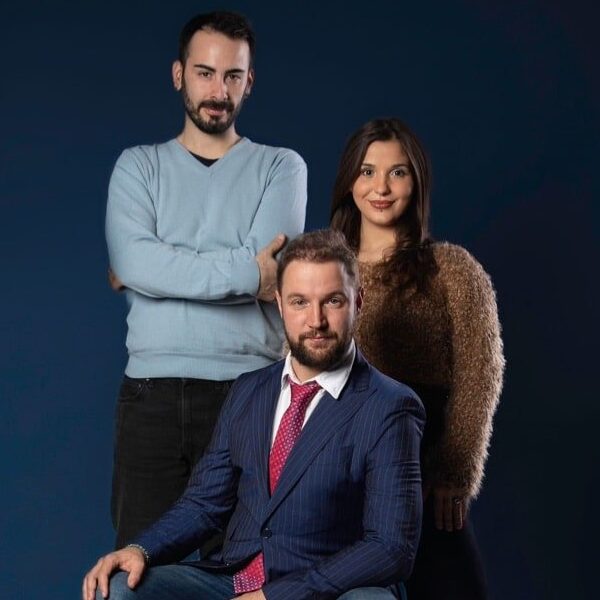
The author - Corrado Manenti
Corrado Manenti is founder of Be A Designer, Italy's first independent style office specialising in supporting emerging designers. For over 14 years, it has been accompanying those who want to transform a fashion idea into a brand on the market - over 200 brands launched to date. It has developed the Fashion Business Designer Canvas™ at the Bergamo Polytechnic. He is author of the books "Do you also want to be a designer?", "The Designer's Journey" and the new "How to Create a Swimwear Brand - Edition 2026".".
Be A Designer is part of a group with a turnover of approximately 25 million euro in the Italian fashion production sector. Head office: Viale Vittorio Veneto 8/D, Gallarate (VA). For digital, ecommerce and fashion ADV, we work with our sister agency Evolve Marketing. If you want a direct comparison on your fashion brand project, book a free consultation with my team.











 Italian
  English
  French
  German
  Spanish


Merci énormément à vous vous faites me croire que rien n'est perdu voulant faire des études en couture ,mes parents trouvaient que ce n'était pas à l' hauteur de leurs attentes j'ai dû convergé vers autre chose.Mais aujourd'hui je suis toujours tourmenté par la non réalisation de
mon rêve. Votre article est vraiment ... Les mots me manquent tout ce que je puisse dire j'avais besoin de ça pour y croire encore🙏🙏🙏
Beautiful article, indeed! I was inspired by what you wrote. I am an aspiring designer and hope to make my own brand one day too.