A few weeks ago, a girl came into our style office in Gallarate with a notebook full of sketches, a Drive folder with neat moodboards and a list of “suppliers” saved on her phone. Her name was - let's call her - Alessia. Twenty-five years old, a very clear idea of a women's streetwear brand, an initial budget of EUR 18,000 put away with two years of work in a communication agency. Determined. Prepared. Serious.
He opened the list for me. Three names at the top: Vesto Italiano, Griffati, B2B Brands. “Corrado, I've been searching for months. These are the best clothing suppliers in Italy. I wrote to them. One asked me for 500 euro minimum order, the other 200, the third sent me a huge catalogue of brands. But no one understands what I ask of them. I want to produce MY collection, not resell designer stuff. Where am I going wrong?”
She wasn't wrong. Google was wrong. Or rather: wrong was the semantics Google built around the word “clothing suppliers”. Because those three names at the top of its list - and practically all the first ten results that typing that keyword brings you to - are not brand suppliers. They are . wholesalers of designer stock. Companies that buy batches of garments already produced by third-party brands and resell them to retailers who want to fill the shelves of their physical shop or their e-commerce. Two worlds that do not touch.
Alessia was looking for the right street in the wrong part of town. And she is not the only one: in my daily consultations, I encounter this confusion at least twice a week. So many people lose months - and sometimes thousands of euros - because the first step of their journey starts with a wrong Google search that takes them to the wrong place.
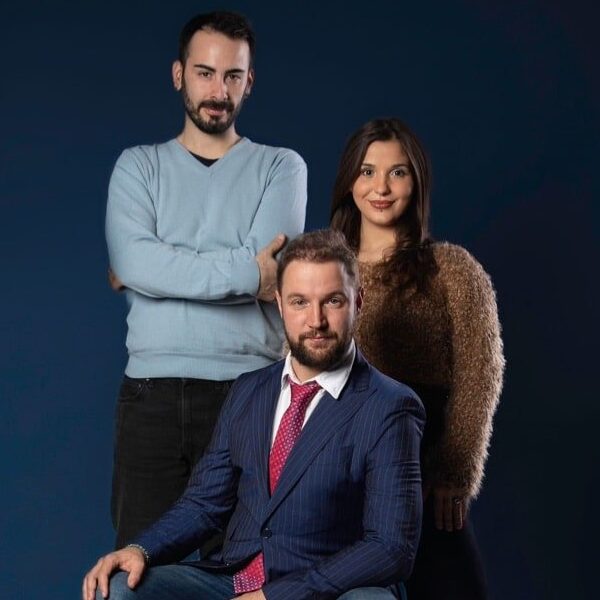
I am Corrado Manenti, founder of Be A Designer, Italy’s first independent style consultancy specialising in supporting emerging designers. For over 12 years, I have been working side by side with those who want to turn their passion for fashion into a viable business, and to date we have launched over 200 brands. I am part of a group with a turnover of around 25 million euros in the fashion manufacturing sector, which means that I know every single one of the real suppliers — those who actually produce the garments, using their own machinery in their own workshops — personally. I have known many of them for years. Some have become friends.
If this is the first article you read, welcome to Be A Designer: the home of up-and-coming designers. If you have been following me for some time, you know that I do not tell you fairy tales.
This guide was created for one reason only: to clarify once and for all where to look for suppliers if you want to produce your collection, which four types of suppliers you really need, where they are geographically concentrated in Italy, how to evaluate them, and why choosing the wrong workshop can cost you three times more than the money you thought you were saving.
No abstract theory. Just what I do every day in my style office.
The semantic confusion that is costing you time and money
Let's start with the point that jams the 90% of Google searches. When you type “clothing suppliers”, the search engine does not know who you are. It does not know whether you are a shopkeeper with a multi-brand boutique in the centre of Brescia, or an up-and-coming designer who wants to produce her first capsule. And it returns a SERP that favours the most commercial and most searched meaning: that of wholesalers.
Wholesaler = reseller of stock already produced by third-party brands, intended for retailers. Supplier by brand = a company that turns your idea into a physical product (cutting, stitching, finishing). They are two parallel worlds with opposite business models: one reasons in order minimums per value (EUR 500-5,000), the other in minimums per piece per model (10-100 pieces). Confusing the two is the first mistake that costs aspiring designers months.
Wholesaler means stock retailer. A wholesaler buys lots of garments of existing brands - often remainders, out-of-season, unsold samples - and resells them at a mark-up to retailers. The wholesaler does not produce anything. He does not sew. It does not cut fabric. It has no in-house designer. He has a warehouse full of boxes.
Supplier by brand means something completely different. It is a company - or more often a network of companies - that transforms your idea into a physical product. The brand supplier sews, cuts, embroiders, prints, irons, finishes. It has machinery, skilled workers, a technical department, racks of fabrics. It receives from you a drawing, a sketch, a data sheet, and returns a finished garment with your label sewn into it.
They are two categories of companies that live in parallel universes, have opposite business models, speak different languages. The wholesaler reasons in minimum order values (EUR 500, EUR 1,000, EUR 5,000). The brand supplier reasons in minimum order quantities per piece per model (10 pieces, 30 pieces, 100 pieces). The wholesaler sells you what he has. The supplier per brand makes you what you want.
As I write in the book "The Stylist's Journey: the first skill of an emerging designer is not designing a dress, it is knowing how to navigate the supply chain. And the supply chain, the real one, starts with understanding who you are talking to when you ask for a quote.
From here on, when you read “supplier” in this article, I am always talking about suppliers by brand. If, on the other hand, you are a shopkeeper who wants to fill your shop with garments already produced by third-party brands, this is not the right guide for you: search directly for “designer clothing wholesalers” and you will find what you need. If instead you want to creating a clothing brand yours, read on.
The four types of suppliers an emerging brand must know
There is a misconception that goes around a lot among those who approach the world of fashion for the first time. The idea is this: “I find ONE supplier, I send him my designs, he produces the collection”. As if a single company is enough to do everything.
Actually, to produce even one capsule of ten models, you need at least four different types of suppliers, who work in sequence and have to coordinate with each other. Sometimes the same company manages to integrate two or three of these functions - and then we speak of a “full package”, more on that later - but much more often the four links in the chain are separate companies, each specialising in its own piece of the supply chain.
Let's make it clear what they are, because if you don't distinguish these four actors you end up asking each one for things they don't do, and no one takes you seriously.
1. Fabric suppliers: where it all begins
The first link in the chain is the most undervalued. I often hear from aspiring designers in initial consultations that they have already decided on the workshop before they have chosen a single metre of fabric. It's like deciding who's going to build your house before you've chosen the land. It makes no sense.
The fabric is your product's 60%. It's a number I repeat over and over again to the guys who come through my style office, because it's reality. The fit, the fall, the durability, the feel on the skin, the way the garment ages - it all starts with the fabric. A cotton T-shirt at EUR 4 per metre and an Italian organic cotton T-shirt at EUR 18 per metre may look identical to the eye, but after three washes one looks like a rag and the other looks like it was bought yesterday.
Italy, in this, has a fortune that the rest of the world envies us. We have weavers that produce some of the most advanced technical and natural fabrics on the planet, concentrated in historic districts that have been working for decades for the world's luxury brands. I will mention a few that I know personally, to give you an idea of the level:
Carvico, based in Carvico in the province of Bergamo, is one of the world references for technical fabrics for swimwear and activewear. Its recycled microfibres are used by the world's most prestigious swimwear brands. Jersey Lomellina, in the province of Pavia, and specialises in high-end technical and elastic jerseys. Eurojersey, in Caronno Pertusella in the province of Varese, produces the famous Sensitive Fabrics, the stretch fabric you find on the garments of major fashion houses. Aquafil, with its factory in Trentino, and the company that produces ECONYL, nylon regenerated from fishing nets recovered from the oceans - you can find it in Prada Re-Nylon, Gucci, Burberry.
And then there is the entire Val Seriana for cottons, the Como area for silks, the Biella area for wools, the Prato district for recycled fabrics and carded fabrics. Textile Italy is a dense network, but it is made for large volumes. An emerging brand that arrives at the door of Carvico and asks for 30 metres of fabric risks being rebuffed politely. That is why there are the textile agents - figures who buy from these companies at industrial volumes and resell to emerging brands at smaller volumes, at a premium of 15-25%.
“Fabric is the first dialogue you have with your customer. Before he even sees your logo, before he even reads your tag, his body has already decided whether what he is wearing makes him feel good or not.”
- Corrado Manenti, The Stylist's Journey
Reference prices for textiles in Italy in 2026
These are the prices you pay in Italy from a textile agent or directly from a weaver for emerging brand quantities, i.e. between 30 and 200 metres. At industrial volumes, prices drop as low as 40%. At volumes below 30 metres, on the other hand, you go up towards the high end because the weaver has no margin to cut you small pieces.
2. The patternmaker and the style office: who translates your designs into production
Here is the passage that fashion books never tell with the clarity that is needed. You have your patterns, maybe you drew them on Procreate or by hand in a notebook. You look at them and think: “well, I'll send them to the workshop and they'll sew them”. Wrong.
A sketch is not manufacturable. A sketch is an artistic drawing showing how the garment should look on a person. In order to actually produce it, an intermediate step made by a specific professional figure is needed: the model maker. The modeller takes your pattern and transforms it into a pattern - the two-dimensional geometric shape of each piece making up the garment, with all measurements, curves, seam tolerances. Without a paper pattern, no garment workshop can sew your garment. Without a well-made pattern, the garment falls badly, pulls in the shoulders, squeezes in the back, does not fit.
Next to the modeller is the whole’design studio - a function that can be internal to your brand (rarely at first) or outsourced to a team like mine. The style office is responsible for developing the collection in a coherent way, choosing fabrics, drafting the data sheets (documents of 2-3 pages per garment telling the lab exactly how to produce), to prototype, to correct fits.
The good modeller cannot be found on Google. He is found by word of mouth, by hanging out with those in the industry. In our style office we have pattern-makers with twenty and thirty years of experience who have worked their way up through the ranks in luxury brands and who know exactly how to turn an idea into a productive pattern. A patternmaker like this makes the difference between a collection that dresses well and one that fills your customers' wardrobes with complaints.

Modelling and prototyping costs 2026
Skip this step at your own risk. It has happened to me more than once to meet emerging brands that had “saved” on paper patterns - maybe they had bought them on generic platforms for EUR 20 each - and found themselves with unsellable garments because the fabric did not fall as it should, the sleeves twisted, the collar did not close properly. That EUR 280 saved on the pattern had turned into EUR 4,000 worth of discarded garments. Tough love, but that's how it is.
3. The garment workshops: where the garment is physically born
The garment workshop is the heart of production. It is where your fabric, cut according to the pattern, is actually sewn together to become a garment. There are two big families of garment workshops in Italy, and understanding the difference is crucial.
I CMT laboratories (from the English Cut-Make-Trim) work only on cutting, sewing and finishing. You bring the fabric, you bring the pattern, you bring the accessories (buttons, zips, labels). They cut, sew, finish. The price you pay is only that of the workmanship. The CMT model is ideal when you have direct control of the upstream supply chain, when you know the fabric suppliers, when you can manage the logistics of materials. It gives you maximum flexibility and a more transparent cost, but puts the responsibility of coordinating everything on you.
I full package workshops (or “complete package”) takes care of everything: they buy the fabric, sourcing the accessories, production, finishing, sometimes even ironing and bagging. You send the pattern, the data sheet, specify fabric and colours, and receive the finished garment. The price is higher - the workshop charges a margin on the materials it buys for you - but the management burden for you is much lower.
For an emerging brand starting from scratch, the full package is often more sensible in the first year, because you do not yet have the relationships to manage the textile supply chain yourself. From the second year, when you start getting to know your fabric suppliers, you can switch to the CMT model and save 20-30% on production costs.
In both cases, the right laboratory must be chosen wisely. It is not a commodity. I have written about this in detail in an article on how to choose the packaging workshop right, which I recommend you read after this. Here I simply give you the reference numbers.
Reference prices for packaging in Italy in 2026
These are the prices of single package, so they do not include the cost of the fabric, the accessories, the pattern, the prototype. To this price you add your fabric fee (varies between EUR 3 and EUR 30 per garment depending on what you use) and you have the industrial cost of the finished garment. To go into the full figures of a contract manufacturing complete, there is a dedicated article on the blog.
4. Suppliers of accessories and trimmings: the detail that makes the brand
The fourth link is the one that the 99% of aspiring stylists underestimates. Buttons, zips, inner tags, tag labels, branded pins, loops, buckles, prints, embroidery, contrast stitching threads, visible zips, ribbons, dust bags, boxes, polybags.
Every single detail that is neither fabric nor stitching is an accessory or finishing touch, and each one has a dedicated supplier. The best zips in the world are made by Riri - a historic Swiss company - or the Italian Lampo. Corozo and mother-of-pearl buttons have specialised suppliers concentrated in the Varese area. Woven labels are made by specialised companies in Lombardy and Veneto. Printed tag labels and packaging are made in hundreds of small printing works throughout Italy.
That and the level of detail that distinguishes an amateur brand from a professional one. The end customer does not consciously recognise the difference between a Riri zip and an anonymous Chinese one - but you feel it, on the first pull. It makes a different noise, it flows differently. And the zip is the first thing the customer touches when opening a jacket.
In Brand Code - the 30-40 page strategy document that we develop in 6 consulting sessions with each brand that follows our method - we devote an entire section to iconic accessory elements: what buttons, what zips, what labels, what packaging. Because it is these details, repeated consistently on each garment, that build a recognisable identity.
The geography of the Italian supply chain: who does what, where
Here we enter a terrain where local expertise counts more than anything else. Italy is not a homogeneous country in terms of production. Every region, sometimes every province, has historical specialisations that have been consolidated over a hundred years of accumulated knowledge. Going to look for a Neapolitan tailor in Lombardy is like looking for a good pizza maker in Turin: he exists, but it is not his chosen land.
I summarise them for you, region by region, so that you know where to focus your search depending on the type of product you want to make.
Lombardy: high-end pret-a-porter and knitwear
Lombardy is the heart of Italian pret-a-porter. This is where most of the workshops working for the big luxury brands - Armani, Prada, Dolce & Gabbana - are concentrated and where you find the highest level of expertise for outerwear, structured garments, technical knitwear and women's pret-a-porter. The Milan-Varese-Como area is dense with workshops, pattern makers, weavers. And it is no coincidence that our style office is located in Gallarate, in the province of Varese: a strategic position that allows us to have all the key suppliers within an hour's drive.
Strengths: very high technical level, ability to handle complex garments, integrated textile network. Points of attention: prices are on average 15-25% higher than in the centre-south, and order minimums can be higher because the historical workshops are used to luxury brand volumes.
Tuscany: the home of leather goods
Florence and Tuscany in general are the world's leather district par excellence. In Santa Croce sull'Arno, in the province of Pisa, one of Europe's most important tanning districts is concentrated: here the hides are produced, which are then worked by Florentine craftsmen to become bags, shoes, belts and accessories.
If your brand has an important leather goods component - even just small accessories such as wallets, handbags, pochettes - you will find the best in Tuscany. The workshops are used to working with emerging brands even on small volumes, because the supply chain is very capillary and there are craftsmen specialised in every micro-niche.
Veneto: luxury footwear and sportswear
The Riviera del Brenta, between Padua and Venice, is Italy's most prestigious shoe-making district. Here Louis Vuitton, Prada, Chanel, produce a good part of their shoes. At the same time, Veneto is one of the strongest regions for technical sportswear: Diadora, Benetton, Stefanel have their roots here, and their expertise in technical fabrics and activewear is deep.
Emilia-Romagna: knitwear and underwear
Carpi, in the province of Modena, is Italy's historical knitwear district. This is where sweaters, cardigans, pullovers, and machine-made wool and cotton garments are produced. It is a district that has suffered greatly in the last twenty years from Asian competition but has been experiencing a renaissance in recent years thanks to emerging brands seeking verifiable Made in Italy.
Also in Emilia, between Carpi and Modena, there is an important concentration of workshops specialising in underwear, underwear e homewear. If your brand works in these categories, start here.
Campania: men's tailoring of excellence
Naples is the world capital of men's tailoring. Neapolitan jackets - with their soft shoulders without padded shoulders - are considered the absolute reference in luxury tailoring. Kiton, Cesare Attolini, Isaia: they are all Neapolitan brands, and behind them there is a network of workshops and tailors making world-class men's garments.
If your brand focuses on formal or smart casual men, Campania is the territory to explore. And not by chance when you search “clothing suppliers Naples” you find hundreds of results: the production density in the Neapolitan metropolitan area is very high.
Outside the canonical geography
Not everything takes place in the historical districts. There are excellent small production realities in Apulia (for summer garments and swimwear), in Marche (good medium footwear), in Lazio and Umbria (medium-high pret-a-porter). The mistake to avoid is thinking that “all companies are the same anyway”. They are not. Each one has a specialisation, a history, a type of customer it serves well. Your job is to find the one that fits your product, not to bend your product to the one you find first.
Italian manufacturing districts: summary
How to evaluate a supplier: the six criteria I use every day
When we evaluate a new supplier in our design department — and we do this at least two or three times a month, because the supply chain changes, companies close down and new ones emerge — we apply a six-point assessment grid. It’s not an exact science, but it’s the result of twelve years’ experience and hundreds of dealings with workshops. I’ll pass the whole thing on to you.
1. MOQ - minimum quantities
Each supplier has a MOQ (Minimum Order Quantity), i.e. the minimum quantity they agree to produce for you per model, per colour, per variant. It is the first filter, and often the hardest for an emerging brand.
I craft workshops smaller ones work from 10 to 30 pieces per model. They are perfect for those who start with a small capsule, but have production capacity limits: if your garment explodes on the market, they cannot follow you in volume. I semi-industrial contractors work from 30 to 100 pieces per model. They are the ideal compromise for a brand starting to grow, with good capacity and still reasonable costs. I industrial workshops They start from 100-500 pieces per model and go up to thousands. They are the choice of those who already have stable volumes and want to maximise value for money.
Supplier types and MOQs
A mistake I often see: going to an industrial workshop with a request for 20 pieces. They won't say no to you - sometimes, if they are fond of the person, they do a courtesy - but the unit price you will pay will be so high that you would be better off with a craft workshop from the start. Every company has its optimal customer size. Finding yours is half the job.
2. Constant quality over time
The first sample a lab produces for you is almost always well made. They take care, they spend time, they care about making a good impression. The problem is what happens at the third, fifth, tenth order. Some labs maintain the same level of quality for years. Others drop visibly after the first six months, when they realise that they have “hooked” the customer.
To assess quality consistency, the only method that really works is to ask for references and physically visit production. Go to the factory. Touch garments already produced for other customers. See how the departments are organised. A tidy, clean workshop, with workers who work with care, will almost always give you a consistent product over time. A messy workshop, with prints and fabrics piled up without criteria, will give you problems sooner or later.
3. Realistic delivery times
Always ask for production times before signing any agreement. And ask for them in writing. In 2026 the standard lead time for a full package production in Italy is 8-16 weeks from the approval of the data sheet to the delivery of the finished garment. Below 8 weeks, beware. Above 20 weeks, something is wrong with the organisation.
A serious lab gives you a precise timeline and sticks to it. If it tells you “3 months”, it means 12 weeks, not 14. If they overrun, they give you advance notice. Labs that constantly change dates without warning are a guaranteed disaster, because your collection launch depends on their delivery.
4. Quality of communication
It is a criterion that many underestimate, but for me it is in the top three. A supplier with whom communication is difficult - who answers after a week, who does not understand data sheets, who has to be chased - will cost you much more than the prices you have saved by choosing him.
Try making a detailed quote request. See how quickly they reply. See how they respond: with a professional PDF with a clear breakdown of costs, or with a one-line WhatsApp message? The way a company communicates to you in your first contacts is the way it will communicate to you for the next ten years. It never gets better.
5. Cost transparency
This is a watershed criterion. Serious suppliers give you an estimate with separate items: fabric cost, making-up cost, accessory cost, finishing cost, sample development cost, if any. You see each item. You understand where your money goes.
Suppliers who give you a single price per piece without any breakdown - “EUR 100 per garment, all inclusive” - are hiding something from you. Either they have a huge margin they don't want you to see, or they have budgeted low costs on cheap fabrics that you will never see until you open the box.
Always ask for the breakdown. And if they don't give it to you, change supplier.
6. Environmental and social certifications
In 2026, sustainability is no longer a nice-to-have, it is a requirement. The most important certifications to look for in a supplier are:
OEKO-TEX Standard 100 - guarantees that the fabric is free of substances harmful to health. And the minimum certification. If your supplier doesn't have it, off you go.
GOTS (Global Organic Textile Standard) - certifies the organic supply chain of cotton, from cultivation to processing. And the standard for brands that focus on “organic cotton” as a communication value.
GRS (Global Recycled Standard) - certifies recycled fabrics, from composition to traceability. If you use ECONYL, recycled fibres, regenerated polyesters, it is the certification that proves it.
bluesign - and the most rigorous certification in existence, because it assesses the entire production process (chemicals, water, energy, worker safety). The most attentive brands seek it out.
Certifications do not mean everything - I have known certified brands with dubious practices and suppliers without a seal who work impeccably - but in business dialogue and communication to the end customer they make a difference. And your target audience, in 2026, actively seeks them out.
Italy, Turkey, China: the truth without rhetoric
Sooner or later the question comes. And it always comes in consultations, usually around the third appointment, when the emerging brand has seen the Italian prices and got scared. “Corrado, but what if I produced in Turkey? I saw that it costs half as much”. Or “But China? Some say the quality is now similar to Italy.
I want to be blunt, because there is too much rhetoric on both sides on this issue. Whoever tells you that Italy is always the right choice regardless is selling you an ideology. Whoever tells you that China and Italy are now equivalent is selling you a lie. The truth is somewhere in between, and it depends on your positioning.
Producing in Italy: when it makes sense
Producing in Italy makes sense when your brand sells Made in Italy as a value. And I'm not just talking about the label: I'm talking about the ability to tell a story of supply chain, of artisan quality, of traceability, of proximity. If you communicate to your customer “my garment is made 40 km from where I live, in a workshop I know, with people I have met”, you are building a value that a Chinese or Turkish brand cannot replicate. And it is a value that the Italian consumer - and increasingly the European, American and Asian consumer - recognises and pays for with a premium of 30-80%.
The other reason why producing in Italy makes sense is the technical quality. Not for everything: for certain commodity products, Chinese quality is absolutely comparable. But for structured garments, tailoring, high-end knitwear, leather goods, garments with elaborate finishes, Italy has a technical and craftsmanship advantage that is almost impossible to replicate elsewhere. I wrote about this in detail in the article on Made in Italy for emerging brands, I recommend you read it.
Third advantage: the supply chain management. Producing in Italy means being able to go to the factory, check samples, correct problems on the run, have a human relationship with the lab. 500 km away you have control. 5,000 km away you have faith.
Producing in Turkey: when it makes sense
Turkey has become a serious manufacturing alternative for mid-range brands in the last ten years. It has good workshops, concentrated in Istanbul and the Denizli area, with strong skills in the denim, in the knitwear, in the basic urban. Prices are on average 30-40% lower than in Italy, timings are similar or slightly longer, logistics are manageable (direct containers, transit time about one week).
Where Turkey works: premium fast fashion brands, basic streetwear, jersey and knitwear, good quality denim. Where it doesn't work: high-end tailoring, luxury pret-a-porter, garments that require a strong Made in Italy identity.
Turkey's biggest problem is not the quality - that, for some products, is good - but the positioning. If your brand aims to sell a shirt for 180 EUR, producing it in Turkey is a strategic mistake even if the quality is perfect: the customer paying 180 EUR is looking for Made in Italy, not Made in Turkey. You are communicating the wrong positioning.
Manufacturing in China: when it makes sense (almost never for an emerging brand)
China has made enormous strides. Today, in certain factories in Guangzhou or Shenzhen, the technical quality is objectively world-class, especially on sports and technical garments. But - and here I must be brutal - for a emerging Italian brand with budgets of EUR 15,000-25,000, producing in China hardly makes sense. For three reasons.
First, the Chinese MOQ are high. Competitive workshops start at 500-1,000 pieces per model per colour. With emerging brand budgets, you either make a collection of two 500-piece models, or you are not in their threshold. And two 500-piece models are not a collection, they are a bet.
Secondly, the remote management and complicated. You need an agent on site to monitor production, and it costs money. You need in-person trips to solve problems, and they cost money. Differences in time zones, language, production culture create constant friction that takes time and energy away from your brand work.
Third, the communicative positioning. An emerging Italian brand aiming to stand out in the saturated fashion market cannot afford to communicate “made in China” at first. It loses authority. The supply chain narrative breaks down. And in the launch phase, when everything is played on credibility, losing authority means losing sales.
There are exceptions, of course. If you are doing performance trainers in a specific Chinese district, if you already have an established partner, if your volumes are high. But for the 95% of emerging brands coming to us, China is something we have a duty to advise against.
Italy vs Turkey vs China: quick comparison
“Your brand communicates at every touchpoint. The Made in Italy label is one of the most powerful touchpoints you have. Don't sell it out for 5 euro savings per garment.”
- Corrado Manenti, Do you also want to be a designer?
Trade fairs: where to meet suppliers live
There is one supplier search channel that is completely overlooked by those who only go online: the trade fairs. They are specialised events where suppliers exhibit in person, have dedicated stands, show their products physically, accept sales visits without formal appointments. For an emerging brand they are a gold mine, especially in the first two years.
I will point out four that I consider indispensable. Unique Milan is held twice a year (February and July) at Rho Fiera, and is the European reference fair for high-end fabrics. The most prestigious Italian weavers - cottons, wools, silks, jersey, denim - exhibit here and the average quality of the exhibitors is very high. Many weavers use Milano Unica as their only sales channel to meet new customers, so it is often the only gateway to that world.
Pitti Filati in Florence, also twice a year, and the world's leading trade fair for knitwear yarns. If your brand works with knitwear, pullovers, cardigans, jersey garments, it is definitely worth a visit. Micam in Milan, twice a year, and the reference for footwear - workmanship, components, accessories, and a place to meet top Italian manufacturers. White Milan, Finally, it is more of a brand business fair, but there are often supplier and contract manufacturing sections worth exploring.
How to approach a trade fair productively? Some practical rules I have learnt in my twenty years of trade fairs. Before you go, download the exhibitor map from the site, highlight the 20-30 that interest you most. Get there early in the morning - exhibitors are fresher, more willing to talk. Bring your brand's business cards (even simple ones), bring the printed Brand Code if you already have it, bring visual moodboards of the project. Don't ask for quotes right away: ask for fabric samples or catalogues, collect contacts, take notes on any interesting companies. Do the real commercial work later, by email, in time.
A well-attended trade fair is worth six months of Internet research. And it costs - entrance fees for aspiring trade visitors, hotels, transport - between EUR 300 and EUR 700 per fair. Less than the wrong supplier.
The data sheet: the document that makes the difference
I mentioned earlier the importance of the data sheet. I want to spend a section on it because it is literally the single document that separates the professional brands from the amateurs. And most aspiring designers don't even know what it is.
A technical data sheet and the document, usually 2-4 pages per garment, which contains all the technical information necessary for the workshop to produce the garment exactly as you intended. Without a technical data sheet, the workshop sews “by feel”, and the result depends on the inspiration of that day's garment. With an accurate data sheet, the workshop reproduces your garment piece by piece, batch by batch, with industrial consistency.
La technical data sheet and the 2-4 page document per garment containing a technical sketch (front/back/inside), size measurement table, fabric and accessory specifications (composition, grammage, Pantone, supplier, code), processing instructions (seams, stitches per cm, finishing) and critical notes. And the visual contract between brand and supplier: without a data sheet, the garment “does not yet exist”.
What does a well-made data sheet contain? The graphic representation of the head (front, rear and interior technical figure), the table of measurements by size (neck, shoulders, chest, waist, hips, crotch, inside leg, length, arm circumference, wrist width and so on - depending on the garment), the main fabric specifications (composition, grammage, Pantone colour, supplier, article code), the secondary tissue specifications if any (linings, elastics, contrasting parts), the complete accessories list (type of zip with make and model, type of buttons with supplier, internal labels and their position, tag labels), the processing instructions (type of stitching for each joint, stitches to the centimetre, any contrast stitching, rebinding, special finishes), any critical notes for production (tension to be maintained, delicate parts, reinforcement areas).
In our style office, each garment has a technical sheet compiled by a dedicated figure (the product developer), reviewed by the patternmaker, approved by the stylist, and shared with the workshop before each production run. It is not an operational detail. It is the visual contract between you and the supplier.
“If you can't describe your garment in a data sheet, your garment doesn't exist yet. There is an idea of a garment in your head, which you cannot get anyone to produce.”
- Corrado Manenti, The Stylist's Journey
Who does the data sheets? Either an in-house product developer (difficult for an emerging brand, costs EUR 2,500-4,000 per month salary), or the outsourced style office (our model, which allows you to have project-based expertise without the hiring commitment), or specialised freelancers (found on industry platforms, costs EUR 80-150 per board). Don't improvise. Don't ask your cousin who “knows how to draw”. The technical and technical board, indeed.
Contracts with suppliers: what to sign, what not to sign
A grey area that everyone avoids, until something goes wrong. Contracts with suppliers are often handled with simple order confirmations, email exchanges, verbal agreements. That's fine for the 90% of cases. But for the remaining 10%, the one where there is a problem - a faulty production, a serious delay, a non-payment of a deposit - without a written contract you are naked.
This is what you should have in writing, even if only in the form of an order confirmation signed by both parties. Exact product description with reference to the data sheet and approved sample number. Quantity per model per size per colour. Unit price and total price. Payment Terms (typically 30% down payment on order, 30% on approval of first production fabric garment, 40% on delivery). Delivery date precise, not approximate. Tolerance clause on quantity (industrial productions allow +/- 5-10% against the order for production variables). Quality control clauses and fault management. Place of jurisdiction in the event of a dispute.
You don't need a twenty-page contract. You need a two-page document signed by both parties that puts the critical points in black and white. An accountant or chartered accountant makes you a basic template with EUR 200-400, and you use it for all your suppliers.
The point is not to distrust the supplier. The point is to protect both parties. A serious supplier appreciates the written contract because it protects him too. A supplier who refuses to sign something is clearly telling you that he does not want to take responsibility, and that is a signal to be taken seriously.
Payments: how they work, what to expect
Linked to the topic of contracts is the topic of payments, which for beginners is often a cause for anxiety. How much do I pay in advance? What if the supplier disappears with the down payment? How much do I pay in the end? Should I pay in cash? By bank transfer?
The rules of the game, in Italian fashion production in 2026, are fairly codified. I hand you the standard pattern.
Pattern standard payments fashion production
Down payment on ordertypically 30-50% of the total. It is needed by the supplier to buy fabric, to block machinery, to organise production. All serious suppliers ask for it. If someone tells you “no down payment, pay everything at the end”, be suspicious: either they are such a desperate supplier that they will accept anything (low quality risk), or they are already doing the odd account (bankruptcy risk).
Interim payment: some suppliers request a second payment (20-30% of the total) upon approval of the Top of Production (TOP), the first mass-produced garment with production fabric that you have to approve before the entire run can proceed. And a sound practice that aligns incentives: the supplier wants your go-ahead, you see the actual product before paying the majority.
Balance on deliveryThe remaining 30-50% is paid upon receipt of the goods, after an input quality check. Some suppliers accept payment at 30 days from the date of invoice (rarer with the first order, more common when you have an established relationship).
Mode: bank transfer, always and only. Never cash beyond the legal threshold (EUR 1,000 in Italy). Never non-traceable payment methods. A written receipt for each payment, a correct invoice for each stage.
A style office tip: always keep a 10-15% of your production budget aside as unforeseen buffers. No production runs smoothly at 100%. There are almost always unforeseen extras (a fabric that costs more than budgeted, an accessory that has to be changed at the last minute, a small change to the sample book). Those who do not foresee the buffer end up with production halted due to lack of liquidity. Those who foresee it sleep soundly.
Easy Supply Chain: the 130+ verified suppliers
Weavers, pattern makers, workshops, accessory makers. Tested by us, used every day. For less than 100 euros you save months of research and thousands of euros in bins.
The five mistakes I see aspiring designers make
In daily consultations I always see the same mistakes. Always. Years later, with different people, with different brands, with different products, the mistakes are the same five. Let me list them for you, because avoiding them saves you months of frustration and thousands of euros.
Mistake number one: choosing a supplier only for price. Price is important, but it is one of six criteria. The cheapest supplier you find on the internet - the one who makes you 50 t-shirts for EUR 6 each - will almost always make you clothes you can't sell. Shoddy fabrics, crooked seams, misaligned labels. You save 200 EUR on production, you lose 2,000 EUR in returns and negative reviews. That's not a saving. That's commercial suicide in instalments.
Mistake number two: never visit the laboratory in person. I see. And inconvenient. Maybe the lab is in another region. Maybe you have a busy week. Go anyway. At least once, before signing an important order. You can tell a workshop by going inside, seeing how the workers work, touching the garments already produced, smelling the scent of the fabrics. Everything you don't see in a phone call you see in a visit. It's the opposite of “it's all the same”. It's not the same.
Mistake number three: testing the samples too little. You receive the first prototype, you try it on in front of the mirror, you find it pretty, you give the OK for production. Error. The prototype has to be washed. Three times. It has to be left in the sun. It has to be worn for a full day. It must be tested in real life. Only then do you find out if the fabric shrinks, if the colours fade, if the seams sag, if the inner labels scratch. If you discover a problem after the production of 300 pieces, that's 300 problems. If you discover it on the prototype, that's one problem.
Error number four: poorly made or non-existent data sheets. A technical sheet and document with which you tell the workshop exactly what you want. It includes: front and back technical sketch, measurements of each stitch (collar, shoulders, chest, waist, sleeves, length), fabric specifications (weight, composition, Pantone colour), accessory specifications (type of zip, number and type of buttons, inside label and tag), type of stitching, finishing required. If you just send a hand-drawn sketch to the workshop, they are already sewing from memory - i.e. haphazardly - and the result will be a surprise for everyone.
Mistake number five: not testing the supplier's scalability. Can the workshop that produces 30 pieces of the first capsule follow you when the order becomes 300? And when it becomes 3,000? Asking this at the beginning is not rudeness, it is strategy. If the answer is “sure, we can grow together”, fine. If the answer is vague, know that in six months you will have to start the supplier search from scratch. And there is nothing worse than changing labs when the collection is already launched.
Sustainability and supply chain: how to build true credentials
In 2026, the topic of sustainability can no longer be circumvented. The customer is looking for it, European legislation demands it (the ESPR Regulation and the Green Claims Directive come into force this year with concrete effects on brand communication), the trade press demands it. But the terrain is full of greenwashing traps that cost dearly when they are unmasked.
How do you build a truly sustainable supply chain, and not just declare it as such? Three practical principles that we apply in the brands we follow.
Principle one: real traceability. Know exactly where the cotton was grown, where it was spun, where it was woven, where it was dyed, where it was sewn. If you can reconstruct all these steps with company names and certifications, you have a traceable supply chain. If you can't, any claim of sustainability is fragile. Your customer, if he asks, must have a precise answer.
Principle two: supply chain certification, not product certification. An OEKO-TEX Standard 100 certification on the fabric is a good starting point but does not certify the sustainability of the supply chain. GOTS and GRS, on the other hand, certify the entire supply chain (from field to garment, from harvest to finished garment). If your claim is “organic cotton”, GOTS is not optional, it is necessary. If your claim is “recycled polyester”, GRS is not optional, it is required.
Principle three: data transparency. A truly sustainable brand publishes hard data. We do not “use environmentally friendly fabrics” but “73% of our fabrics is GOTS certified, 22% GRS, 5% is not certified and is in transition”. We do not “produce locally” but “all our laboratories are in Lombardy, within 80 km of our headquarters”. Specificity builds credibility.
In the BAD method, sustainability is addressed from the Brand Code onwards, with the definition of a target supply chain (which certified suppliers you want to use, what percentage, what timeline for improvement). We do not start from zero at 100% - this is often unrealistic - but we define a growth path that the brand can communicate honestly.
Greenwashing is the most dangerous trap for an emerging brand in 2026, because if you are exposed even once - and today's critical consumer communities easily unmask - your reputation collapses and cannot be rebuilt.
How much time is really needed: the realistic timeline
One of the most frequent questions I receive is “how fast do I launch?” And it is always underestimated in the expectations of starters. I give you the real timeline, the one I observe in the brands we follow.
From first idea at sample ready takes an average of 3-4 months. In this period the Brand Code is developed (6 weeks of intensive work), moodboards and creative direction are made, fabrics are chosen, main pattern patterns are developed, prototypes are produced, fits are corrected, and the sample book is finalised.
From sampling to finished production another 12-22 weeks are needed. It depends on the type of product, the complexity, the seasonality. The fashion industry works on a seasonal basis, and workshops have work peaks related to deliveries from big brands that you have to take into account.
From production to effective launch another four to eight weeks are needed for the shooting, the construction of the e-commerce, and the preparation of the launch campaign.
Brand launch timeline from scratch
In total, from the idea to the first item sold, we are talking about 8-12 months. Anyone who promises you much shorter lead times is either selling print on demand (which is not a brand) or cutting steps that you will later pay for. This applies to a first capsule. For a capsule collection slim, well-designed, the process can take - in the best cases - around 5-6 months, but rarely less.
As Corrado Manenti explains in his books, strategic patience is one of the most undervalued virtues of new brands. Those who burn out almost always burn their chances too.
The real problem: how do you find, in practice, all these suppliers?
So far I have explained who the suppliers are, where they are geographically located, how to evaluate them, what mistakes to avoid. But there is one question you are probably asking yourself now, after reading six thousand words of guidance: basically, how do I find them?
Legitimate question. And here the world divides into three possible paths.
Route 1: the do-it-yourself search
You rebuild your supply chain on your own. You arm yourself with patience, start writing to workshops found on Europages, Yellow Pages, Google. Go to sector fairs - Milano Unica for fabrics, Pitti Filati, MICAM for footwear, all concentrated between January-February and June-July. Ask for references from acquaintances in the sector. Start building a column.
It is a possible path. But it is long, full of bins, full of estimates that never reach you, full of workshops that don't answer you because your volumes are too small. On average, rebuilding a complete DIY supply chain takes 6-12 months of work - time that you are not investing in your brand, your marketing, your collection. And money you're spending anyway on travel, travel, thrown samples.
Route 2: Easy Supply Chain - the verified supplier database
Precisely to solve this problem, we have created Easy Chain. And a database of over 130 verified Italian suppliers by us, one by one, over the years. Weavers, pattern makers, garment workshops (CMT and full package), accessories suppliers, print shops, embroidery shops, label and packaging printers. Each with a card telling you: what they produce, MOQs, region, specialisations, direct contact.
We built it with a simple criterion: we only put in suppliers that we ourselves use or have used for the brands we follow. It is not a generic list downloaded from the Internet. It is the supply chain that we need in our daily work, shared with those who want to do it themselves.
The cost and less than 100 euro. I'll tell you without mincing words: and designed to give you in an afternoon what would cost you months of research and thousands of euros in duds. You can find it on Easy Chain.
Road 3: Be A Designer's turnkey service
For those who want to go even deeper, there’s the comprehensive programme. And our approach: 12 years’ experience, over 200 brands launched, a team of professionals (pattern-makers, designers, production technicians, marketing experts) who work on your project as they would for a luxury brand — with the difference that, when you’re an emerging brand, everything is consolidated into an affordable budget because we’re part of an industrial group that allows us to secure terms that an individual would never be able to obtain.
The course starts with the Brand Code (30-40 pages of strategy), continues with the development of the capsule collection, the selection of samplers, production with selected supply chain, shooting, e-commerce launch, the selling clothing online. You are followed step by step by people who have already done it dozens of times.
It is a larger investment - for an emerging brand, we are talking about EUR 15,000 to 25,000 in total for a well-structured capsule - but it avoids any avoidable mistakes and allows you to concentrate on your vision while we take care of the execution. The first contact is always a free consultation, without obligation.
Managing relationships with suppliers over time
Finding suppliers is one half of the job. The other half - the one nobody tells you about - is maintaining the relationship over time so that it works season after season, year after year. And this part is trickier than it sounds.

Italian suppliers, especially the artisan and semi-industrial workshops, work very much on a human level. This is not an Anglo-Saxon country where everything is resolved with rigid contracts and predefined SLAs. It is a country where the personal relationship weighs as much as the business agreement, sometimes more. The lab that knows you for three years, that knows how you work, that trusts you, reserves better times for you when you are in a hurry, passes you on to other customers when needed, warns you in advance if there is a problem. The lab that doesn't know you treats you like any other customer, and puts you in the queue at critical moments.
How do you build this relationship? Three practices that I always recommend to the brands we follow.
First: physical examination at least once a year. Not via email, not via Zoom. Go see the supplier, bring a coffee, sit for an hour and talk. Not to check, not to scold, but to cultivate. In that hour you find out things you would never have known otherwise: how other customers' production is going, what new processes they are testing, whether they have opened a new line, whether they have taken on new workers. And you build that human relationship that then becomes decisive in difficult times.
Second: pay on time and communicate in case of delay. This one seems trivial but it is not. Italian laboratories are used to customers extending their payment times well beyond the terms. If you pay per day, you are already in a virtuous minority. If you have to delay a payment - it happens, in the life of an emerging brand - warn in advance, explain why, agree on a new date. Transparency on payments builds trust like few other things.
Third: grow with the supplier when you can. If your brand grows and volumes increase, consider keeping the same supplier even when economically you could switch to a bigger one with lower prices. Supply chain stability is worth money. A five-year relationship with a reliable supplier is worth more than the 10% discount a new competitor would offer you. The supplier who grows with you is a strategic ally, not a variable cost.
Fashion is an industry where cycles change, but the supply chain remains. Collections change, seasons pass, fashions transform. But your suppliers, if you choose them well, can be with you for twenty years. Treat them accordingly.
The BAD method: how we build the supply chain for a brand from scratch
Let me tell you, concretely, how we proceed. Not out of boasting, but because it gives you a yardstick to evaluate any partner - us or anyone else - you choose to work with.
When a new brand arrives in our style office, the first thing we do is not choosing suppliers. The first thing is to build the Brand Code. Because without a clear strategy, choosing a supplier is like choosing a plane ticket without knowing where you want to go. The Brand Code defines target, positioning, aspirational product, aesthetics, pricing, channels, competition. From this document - which we do in 6 consulting sessions - all subsequent choices are derived.
After the Brand Code we build the Collection Pyramid10% Aspirational Product (the brand's most iconic, most expensive garment), 70% Massive Impact (the garments that generate the bulk of turnover), 20% Low Budget (the brand's entry-level garments, the cheapest and simplest). This tells you exactly how many pieces per model you need and in what price segment.
Only at this point do we activate the chain. And we follow a precise order: first fabrics (because everything else starts from there), then model makers (because without paper patterns nothing can be done), then packaging workshops (choosing the right one for the type of garment), then accessories and finishes (which often take a long time and have to be booked in advance). For each supplier we ask for at least three quotes, visit at least one of the three, and test two samples before signing.
This all sounds long and complicated. It is. But the difference between a brand that lasts two years and one that lasts twenty is played out at this stage. As I always write: the brand is built at workshop tables much more than on Instagram posts.
Frequently asked questions about clothing suppliers
How much does it really cost to produce my first capsule collection in Italy?
It depends on the complexity of the collection, but for a capsule of 8-10 models with production of 50-100 pieces per model, the complete industrial budget (fabrics + pattern making + prototypes + packaging + accessories) is between EUR 12,000 and EUR 20,000. To this figure add EUR 3,000-5,000 for the shooting, e-commerce and the first marketing campaign. Realistic total: EUR 15,000-25,000 for a well-structured launch.
What is the lowest minimum quantity I can produce with in Italy?
Smaller Italian handicraft workshops accept orders of 10 pieces per pattern per colour, with a minimum total of three to five patterns to make the workmanship economically sensible. Below these quantities, the unit price becomes so high that it is better to take refuge in the print on demand for the test phase and only move on to real production when you have validated the market.
Can I produce in Italy with a very low budget, like 5,000 euro?
With EUR 5,000 you can do a limited test - two or three models in small runs (30-40 pieces per model) - but not a real collection. I recommend you read our article on the contract manufacturing for small quantities to better understand what is realistic with that budget.
How do I know if an Italian supplier is really reliable?
Three reliable signs: has a website with clear references, responds to emails quickly (maximum 48 hours), accepts an on-site visit without problems. Three warning signs: prices too low compared to the market average, no VAT number verifiable on the company register, reluctance to show production.
What is the difference between CMT and full package?
The CMT (Cut-Make-Trim) workshop sews and finishes the fabric you supply, with the accessories you supply. The full package workshop manages everything: it buys the fabric, the accessories, produces, finishes and delivers the finished garment to you. The CMT costs less but requires you to manage the upstream supply chain. The full package costs more but saves you the whole sourcing part.
Is producing in Turkey really that cheap?
Turkey allows savings of 30-40% on packaging costs compared to Italy, with good quality on certain products (denim, basics, jersey). But you lose the “Made in Italy” value on communication. The choice depends on your positioning: if you sell premium fast fashion, it may make sense. If you aim for the medium-high segment, Italy always wins.
How often should I change supplier?
A good supplier lasts for years. In my style office there are suppliers we have been working with for ten years. The aim is to build a stable relationship of trust, not to change all the time. But if you notice a drop in quality, systematic delays or increasing communication difficulties, do not hesitate to explore alternatives before the problem becomes unmanageable.
Do I need a VAT number to buy from clothing suppliers?
Yes. Professional Italian suppliers only work with VAT numbers. This applies to both weavers and garment workshops. If you have not yet opened a VAT number, it is the first bureaucratic step to take before contacting suppliers. Opening a simplified VAT number for the clothing brand business costs about EUR 150-300 upfront and is completed in a few days with an accountant.
What if I want to start with print on demand to test and then move on to real suppliers?
And a valid strategy, as long as you know from the start that print on demand is only the test, not the brand. In our article dedicated to the print on demand for fashion I explain in detail when it makes sense and when it becomes a trap.
Can I visit all suppliers before choosing?
It is not necessary to visit all of them - that would be impossible - but it is strongly recommended to visit at least the main packaging workshop before ordering any significant production. A half-day visit gives you more information than twenty e-mails.
The next step
If you have come this far, it means that you really want to get it right. And it's already an important signal: most people who start a fashion brand never make the effort to understand how the supply chain works before spending money. You have done it. Bravo. Well done.
You now have two real possibilities in front of you.
The first: downloading Easy Chain and start exploring the database of our 130+ verified suppliers yourself. It is the cheapest way and gives you immediate access to real, tested, working contacts. At less than 100 euro, it is an investment that pays off with the first dud you avoid.
The second: book a free consultation with a member of my team. We talk about your project, we understand together which branch you need, we assess whether it makes sense for you to follow our complete method or whether you just need to do some one-off interventions. No pressure, no obligation. Just a conversation between people who share a passion for fashion.
And for those who want to go even deeper on a personal and entrepreneurial level, there is The Designer's Journey, my book that brings together fifteen years of experience in a structured journey of personal and professional transformation.
One thing I want to tell you, in closing. I saw Alessia return to our style office three months after that first conversation. She was holding her first sample book - eight models, produced in two different workshops between Varese and Bergamo, with OEKO-TEX-certified Italian fabrics - and she said something that touched me. “Corrado, I spent two years going round in circles looking for the wrong suppliers. In three months with you I really built my brand. I don't know how to thank you.” He doesn't have to thank me. He just stopped getting lost in a confusing SERP and started building in the right place.
Whenever I see an aspiring designer getting lost between wholesalers of designer stock and real suppliers, I think that my job - our job, the job of Be A Designer - is to act as a bridge between someone who has a dream and someone who has the hands to make it come true. You don't have to do it alone. There's no reason to.
Good luck!
Corrado Manenti
Founder of Be A Designer
Do you want to build your brand with the right supply chain?
Book a free consultation with the Be A Designer team. Let's talk about your project and work out together how to get it off to a good start, from the first supplier to the last garment sold.












 Italian
  English
  French
  German
  Spanish


