A week ago, during a consultation in our style office in Gallarate, something happened that has been happening to me with almost chronometric regularity for years now.
A girl - let's call her Sara, even though it's not her real name - sat in front of me with her portfolio under her arm, a recently completed IED degree and that look of mixed enthusiasm and terror that I recognise when I first meet her. She told me: “Corrado, I want to be a fashion designer. But I don't know what that really means. I've sent resumes to fifteen maisons, I've had two interviews that went badly, and now I'm wondering if maybe I should open my own brand. But where do I start? Also, what's the difference between fashion designer, stylist and fashion designer? My mother says it's all the same thing.”
I smiled, because I hear that question at least three times a week. And because behind that lexical confusion lies a much deeper confusion - confusion about what the real choice is that every aspiring fashion designer should face before even thinking about portfolio or CV.
I replied: “Sara, the difference between fashion designer, stylist and fashion designer in 2026 is minimal. They are practically synonymous, with some technical nuances. But the difference that will change your life is not that. The real question you need to ask yourself is another one: do you want to work INSIDE someone else's brand, or do you want to create YOUR own?”
She looked up. She had never asked herself that question. No one had ever asked it in five years of fashion school.
I am Corrado Manenti, founder of Be A Designer, Italy's first independent style office specialising in supporting emerging designers. For over 14 years I have been accompanying those who want to turn their passion for fashion into a profession - and to date we have launched over 200 brands. I have written two books on this path, "Do you also want to be a designer?" e "The Stylist's Journey, and I developed the Fashion Business Designer Canvas at the Politecnico di Bergamo, in the course of Engineering and Processes in the Textile Industry. I come from ten years of laboratory work in the family business - chemicals for textiles, finishing, printing, dyeing - and from my twenties onwards I have travelled halfway around the world to visit production realities from the inside, from the Como district to Thailand, where I worked on a project to study lotus fibre in collaboration with the Thai royal house.
If this is the first article you read, welcome to Be A Designer: the home of up-and-coming designers. If you have been following me for some time, you know that I do not tell you fairy tales.
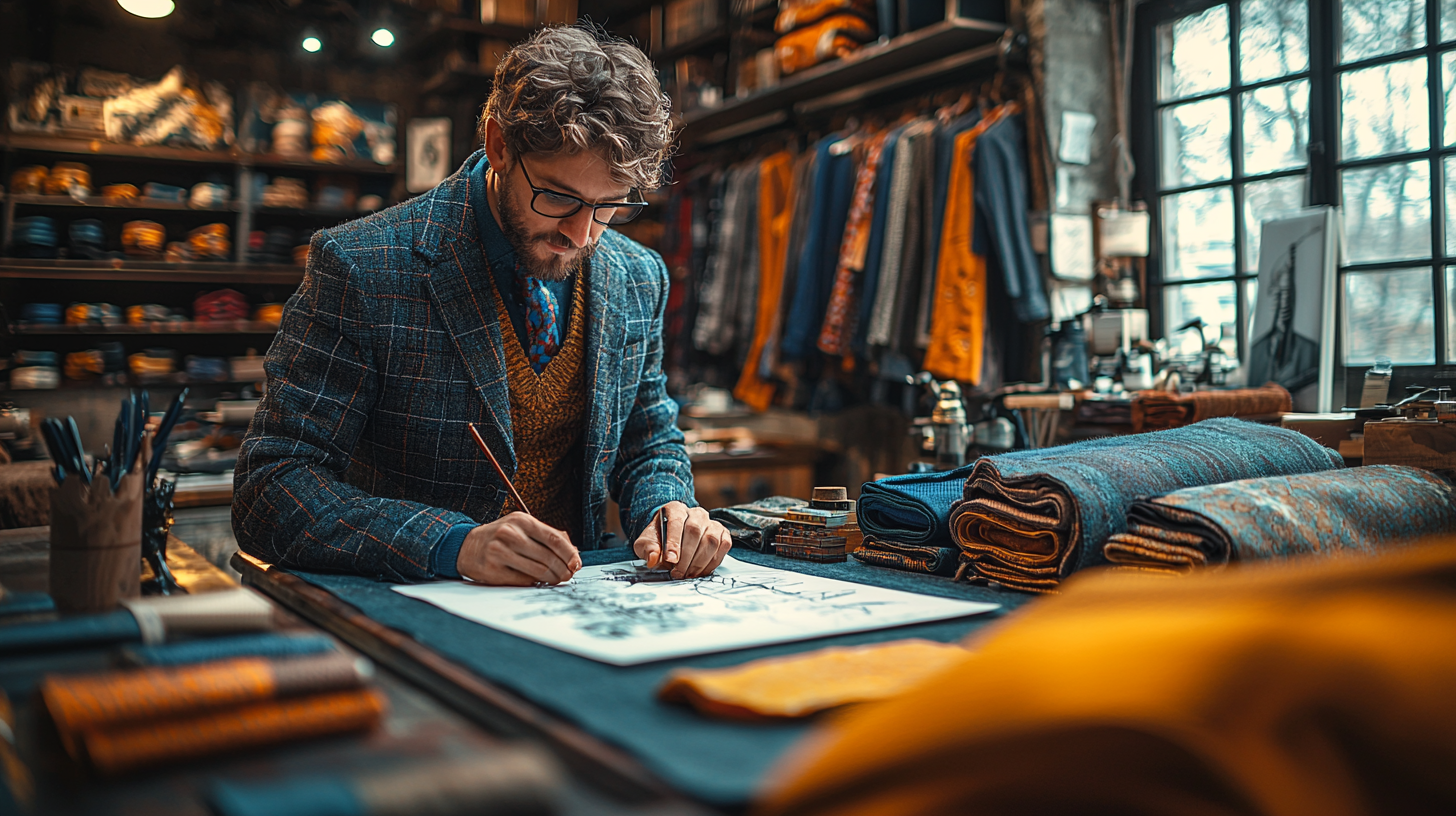
What you will find in this guide is not yet another encyclopaedic definition copied from Wikipedia. It is the perspective of someone who sees every week boys and girls like Sara - talented, trained, motivated - who find themselves at a crossroads that no one has ever clearly explained to them. And the guide that I would have liked to read, twenty years ago, before making certain decisions.
Because the question is not “how do I become a fashion designer”. The real question is: what kind of fashion designer do you want to be?
What a fashion designer really is
Let's start with the definition, because you need to have common ground before you build on it.
A fashion designer is a professional who designs garments and accessories and translates creative ideas into wearable products through a process that integrates research, technical design, choice of materials and production supervision. In 2026, he or she is also increasingly involved in marketing and brand positioning decisions.
The fashion designer does not only design: he defines an aesthetic, builds coherent collections, works with the production chain and - increasingly in 2026 - participates in the marketing and positioning decisions of the brand he works for.
That's the technical definition. But if you ask ten fashion designers what they really do in real life, you get ten different answers. Because the profession declines in profoundly different ways depending on the context in which you practice it.
A junior designer in a large fashion house spends eight hours a day doing trend research on WGSN, building mood boards, developing data sheets and following up on samples arriving from the workshops. A senior designer at a sportswear brand coordinates a team of five, decides on seasonal direction and communicates with merchandisers on production quantities. A freelancer working for small emerging brands manages two or three clients in parallel, travels between Milan, Prato and Carpi for fittings, does invoicing in the evening and looks for new clients at the weekend. And an entrepreneurial fashion designer - the one who founded his own brand - spends maybe 30% of his time designing and 70% doing everything else: marketing, sales, accounting, customer service, supplier relations.
Three people with the same job title, three completely different lives.
“The title fashion designer does not describe a single profession. It describes a skill - the ability to translate an aesthetic idea into a real product - that can be put at the service of three very different professional destinies.”
- Corrado Manenti, The Stylist's Journey
And it is on these three fates that everything is at stake.
Fashion designer, stylist, fashion designer: is there really a difference?
Before moving on, let's clear up the lexical confusion that wastes the time of so many aspirants.
In Italy, the terms fashion designer, designer e fashion designer are practically synonymous. They indicate the same professional figure. Nuances exist, but they are more of register than of substance.
Stylist and the historical Italian term. And the one the newspapers used when they talked about Armani in the 1980s. It has a classic, sartorial, slightly vintage connotation. When you hear “stylist” you think of the master who designs by hand in the Milanese studio, the pattern makers who bring him the prototypes, the creative director of the fashion house.
Fashion designer is the international term, imported from English, and is the dominant one today in professional contexts and schools. When a girl with a degree from IED or Marangoni introduces herself, she says “I am a fashion designer”, not “I am a stylist”. It sounds more contemporary, more global, more aligned with the current fashion business context.
Fashion designers and a literal translation that is mostly used in academic and formal contexts. You find it in university syllabuses, employment contracts, official documents. It means exactly the same thing.
There are also some technical nuances worth knowing. The designer in a narrow sense, in some Italian contexts, is associated with pure creative work - those who design, those who invent aesthetics. The fashion designer has a broader connotation that also includes the technical and production side. The model maker on the other hand, and a distinct figure: he who translates the design into a pattern, manages the sizes, does the industrial pattern-making. They are not synonymous.
But for the practical purposes of this article - and for the conversation you will have with recruiters, potential clients or yourself when deciding what to do with your life - fashion designer, stylist and fashion designer are the same thing. Use the one that sounds best to you. No one will judge you for your choice.
The real distinction, as I said to Sara, is not in the title. It is in how you decide to exercise it.
What a fashion designer does in daily practice
Forget the glossy images of Netflix documentaries for a moment. The real day of a fashion designer looks much more like that of a creative project manager than that of a bohemian artist with pencil in hand and inspiration falling from the sky.

A typical day in a structured fashion company starts with a team meeting. The creative director reviews the progress of the collection, the samples arrived the day before are discussed, the fittings to be done in the afternoon are decided. Then each person goes back to his or her desk and does his or her part: one develops the technical sheets for the workshop, one works on the colours for the coming season, one deals with the fabric suppliers by email, one prepares the presentation for the merchandisers who will decide how many pieces to produce for each model.
In the afternoon the prototypes arrive from the workshop. Fittings are made on the models, notes are taken, changes are defined. In the evening, before closing, we update the files shared with the patternmaker so that he can correct the pattern the next day.
This is the reality of the employed fashion designer in a medium-sized company. Lots of technical work, lots of organisation, lots of communication. The pure creative moment - the one where you design a new garment from scratch - takes up maybe 15-20% of the total time. The rest is process management.
The tasks change a lot depending on the level of seniority. A junior designer - the first rung of the career ladder, usually the first two or three years - spends most of his time supporting the more experienced designers: trend research, data sheet development, sample management, material storage. He draws little, executes a lot. And the real apprenticeship phase, the one where you learn how a fashion company really works from the inside.
A mid-level designer - usually between three and seven years of experience - starts having responsibility for entire product lines. He designs independently, manages suppliers, participates in strategic collection decisions. He is often the point of contact between the creative director and the operational departments.
A senior designer or a head of design co-ordinates entire teams, sets the seasonal direction, makes decisions that impact on turnover. He designs less than people think, communicates and directs much more.
At the top is the creative director o creative director, the figure everyone knows because he is the one the newspapers talk about. He decides the global vision of the brand, defines the identity season after season, and is the public face of the maison. But his days are almost entirely made up of meetings, decisions, trips, presentations to the press. Time on the drawing board is less and less.
As I often tell guys in consultations: the higher you go in the hierarchy, the less you design and the more you decide. The job changes in nature as you grow.
The three paths of the fashion designer: employee, freelancer, entrepreneur
And here we come to the central point of this article, the one that makes the difference between reading yet another generic guide and receiving information that can change your professional direction.
When you say “I want to be a fashion designer”, you are actually choosing - even without knowing it - between three very different fates. And the most paradoxical thing is that most fashion schools, even the most prestigious ones, train you for only one of these three destinies. That of the employee.

They teach you how to build a portfolio for recruiters. They teach you how to interview for maisons. They teach you how to fit into the existing system. But almost no one tells you that there are two other paths, completely legitimate, often much more remunerative and almost always more aligned with the true motivation that led you to enrol in a fashion school - the desire to create something of your own.
The three roads are these.
La first street and that of the employed fashion designer. You work in a fashion company - a fashion house, a ready-to-wear brand, a sportswear company - with a contract, a fixed salary, a team around you and a corporate structure that supports you. You are part of a system bigger than yourself, you contribute to the success of someone else's brand and grow within its hierarchy.
La second street and that of the freelance fashion designer. You are a freelancer, you work on projects, you have two or three clients in parallel, you manage your own agenda. You have freedom but also all the responsibility for your financial survival. Every month you start all over again looking for the next project.
La third street and that of the fashion designer entrepreneur. You create your own brand. You be the creative director, the merchandiser, the marketing manager, the administrator. At least in the beginning. The success or failure of the project is entirely up to you. It is the most difficult road, but also the one that - when it works - brings the most transformative results. It is the road that we at BAD call the way of the founder.
Each of these three paths has different pros, cons, requirements, salaries and routes. Let's look at them one by one with the real numbers of the Italian 2026.
The first way: fashion designer addict
This is the path most aspiring fashion designers imagine when they think of their career. It is the most structured, clearest, most predictable path. You know what you have to do to get there: a fashion school, a good portfolio, internship experience, networking. You know what awaits you once you are in: a defined career path, a monthly salary, paid holidays, paid contributions.
It is a legitimate and dignified path. But it should be approached with real numbers on the table, because there is often a significant gap between the romantic imagination and the reality of paychecks.
Real salaries of employed fashion designers in Italy in 2026
These numbers should be taken with caution. They vary a lot depending on the city - Milan pays more than Carpi, of course - the type of company - luxury pays more than fast fashion - and the type of contract - apprenticeship, fixed-term, permanent.
There is one fact that always strikes me when I put it on the table in my consultations: the average salary of an Italian fashion designer after ten years of career is lower than that of a good software engineer in his first year. It is a figure that should give pause for thought to anyone who chooses this path for purely economic reasons.
The typical career path
The classic path inside a structured fashion company has fairly defined stages. It starts with a internship - usually six months, paid between EUR 500 and EUR 1,000 per month if it goes well, free or on expense reimbursement if it goes badly. You move on to your first contract as junior designer, usually an apprenticeship or a fixed-term contract. After two to three years you become designer to all intents and purposes. Between the ages of five and seven years you get to senior or you make the leap to a position of lead designer o product manager. From there, the path bifurcates: those who remain in design become head of design o design director, those who want to move up further go through managerial positions of product o merchandising before aiming for the role of creative director.
Average time to get to a position of real responsibility: ten-twelve years. Average time to get to a creative director role: fifteen to twenty years, and we are talking about one in a thousand of those who try.
The skills required
A few things are needed to enter this road. A structured training - Although a university degree is not essential, most structured companies are looking for candidates with backgrounds from IED, Marangoni, Polimoda, NABA, Accademia Costume e Moda or equivalent. A professional portfolio - not beautiful drawings, but complete collections developed methodically. Knowledge of software - Adobe Illustrator and Photoshop are the minimum, but more and more people are asking for CLO 3D, Browzwear or other virtual prototyping software. Fluent English - not optional, and the number one requirement for positions in international maisons. Internship experience - at least one, ideally two or three, before hoping for a real contract.
And then, of course, the thing that nobody tells you openly: the network. Most of the interesting positions in Italian schools close before they are even published, through word of mouth, teacher recommendations, direct contacts. If you do not come from the “right” schools or do not already have a foot in the system, it is objectively more difficult to leave. Not impossible, but more difficult.
Pros and cons of the employee route
I pro are obvious: monthly salary, relative security, continuous on-the-job training, access to advanced business know-how, possibility to work with prestigious brands, professional network that builds over time.
I v. so are they: Italian salaries not particularly high compared to the cost of living in fashionable cities, often rigid hierarchies, creativity limited by corporate strategy, total dependence on the decisions of others, a real possibility of never making it to the top despite decades of work.
It is a path that makes sense if you seek stability, if you like being part of a structured system, if you want to learn the trade within established realities and if you are willing to accept the limitations that this path entails.
Where opportunities are concentrated in Italy
In 2026, the market for dependent fashion designer positions in Italy is geographically highly concentrated. The Lombardy - and Milan in particular - is home to around 60% of open positions: all the big luxury houses, contemporary pret-a-porter brands, and the creative hubs of international groups. La Tuscany - Florence and its district - concentrates opportunities in leather goods and luxury accessories, with companies such as Gucci, Ferragamo, Prada leather goods. The Veneto and an important hub for footwear and sportswear - the Riviera del Brenta and the Verona area have dozens of structured companies. L’Emilia-Romagna - and in particular Carpi and the Modena district - offers opportunities in women's ready-to-wear and knitwear.
Outside these four regions, opportunities become rare. This means that to follow the path of an employee you have to be willing to move. Milan, despite its high cost of living, remains the must-visit destination for those who want to build a career in Italian luxury.
The theme of recommendations and networking
I often hear from young people in consultations who are frustrated because they have sent fifty resumes without receiving a single reply. Their conclusion, almost always, is: “the system is closed, there is no room for the unsupported.”
Let me tell you frankly. The system is not closed. It's selective. And two different things. The maisons take dozens of junior designers every year, but they look for specific candidates - people with strong portfolios, previous internship experience, professional presentation. The cold CV sent by email has a very low response rate because it ends up in a box full of hundreds of other CVs.
The effective way into the employee's path is through the active networking. Showing up at Fashion Week events, attending workshops, contacting designers directly on LinkedIn with specific and competent messages, building relationships with teachers at fashion schools that have active networks. People who arrive at a fashion house usually get there because someone told someone else their name - not because they sent in their 300th CV.
This is a fact of the industry, and those who ignore it start with a handicap that no prestigious school can compensate for.
The second way: freelance fashion designer
The second path is that of the freelancer. A path that many choose after a few years as an employee, when they feel the need for more freedom and more direct control over the projects they work on. Others arrive there directly, perhaps because they already have a base of contacts or because they have not found space in the traditional circuit.
The freelance fashion designer works on a project basis. He typically offers his services to:
- Emerging brands who do not yet have an in-house style office and need to develop collections with external consultancy.
- Structured companies looking for specific expertise for one-off projects - capsule collections, special collaborations, new line launches.
- Consulting firms who subcontract design work and who in turn work for multiple clients.
- Privates who want to develop a customised garment or small collection.
Actual rates of the freelance fashion designer in Italy in 2026
Rates vary enormously depending on experience, type of client and the complexity of the project. To give you practical references based on what we see in the market.
A well-positioned freelancer, with five to ten active clients over the course of the year, brings home figures comparable to or higher than those of a mid-senior employee, with the advantage of freedom and the disadvantage of risk.
How to start a freelance career
The advice I always give in consulting to people who want to start freelancing is: don't start from scratch. The pure freelancer, with no client in his pocket, no network, no previous experience, has a very difficult life for the first two to three years. Most drop out before they reach a sustainable turnover.
The smartest way is to first do a few years as an employee or permanent collaborator in a company - even just two or three years - to build skills, contacts and a portfolio. Then, when you already have a few potential clients pulling your jacket or a first brand offering you advice, take the leap.
Practical steps for starting a freelance business:
- Open VAT registration - In the flat-rate scheme, if you are under EUR 85,000 in turnover, you pay a substitute tax of 5% for the first five years and then 15%. INPS contributions for separate management approximately 26%.
- Define your niche - Better to be the fashion designer of choice for emerging sportswear brands than to be “one of many” who does everything.
- Build the professional portfolio - non-student. Real projects, real photos, case studies with results.
- Personal branding online - Well-curated LinkedIn, presence on Instagram with one's work, possibly a personal website.
- Start with a network of three to five potential customers before leaving the security of the job.
Pros and cons of the freelance route
I pro: freedom of time management, possibility to work with different clients and varied projects, control over one's own rates, potential scalability of turnover, possibility to work remotely for international clients.
I v.: economic instability, possible empty months, management of all administrative and fiscal matters, professional isolation, continuous need to find new customers, absence of protection such as sickness and paid holidays.
It is a path that makes sense if you already have a few years of experience behind you, if you like running your business as a small enterprise and if you accept the risk of leaner months in exchange for freedom.
Freelancing as a bridge to entrepreneurship
There is one aspect of the freelance route that is worth emphasising, because it often escapes even those who tread it every day. The freelancer is a natural bridge to entrepreneurship. In working for emerging brands you learn how the fashion business really works from the inside. You see their decisions, mistakes, strategies that work and those that fail. You accumulate know-how that no school can give you.
Many of the fashion designer-entrepreneurs we accompanied to BAD went through a conscious freelancing phase first. They used that phase not only to pay the bills, but to training in the field before launching your own brand. And it is a smart strategy: it reduces the risk of the entrepreneurial leap, it allows you to accumulate start-up capital, and it gives you market visibility.
If you see this as a transitional path, treat it as such. Choose clients not only for the pay but also for what they will teach you. Observe how they work. Document everything. Build your future brand mentally while you build theirs physically.
The third way: fashion designer entrepreneur (the founder's way)
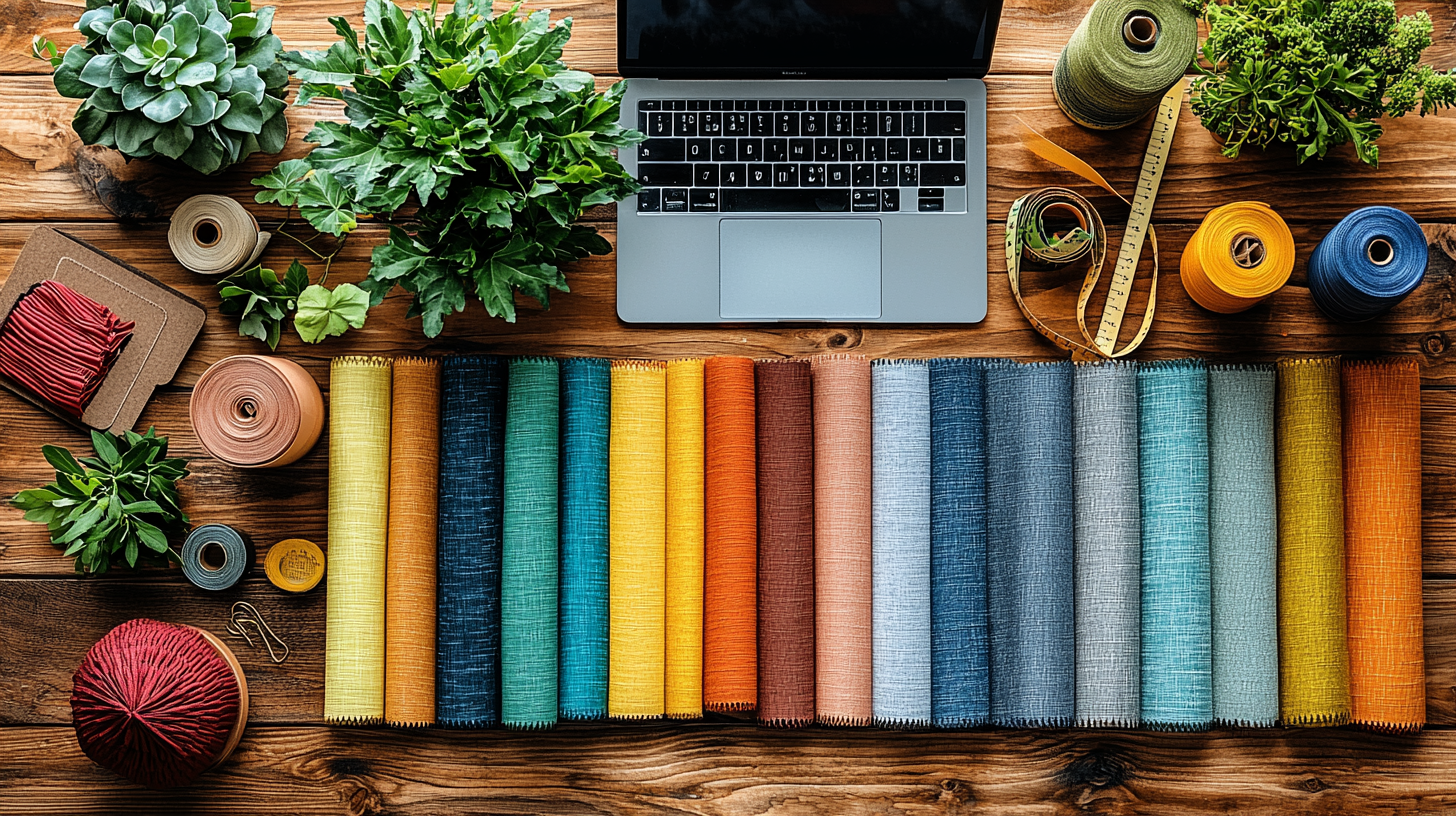
And here we come to the third road, the one that - I have to be honest - is the one we see growing the fastest in 2026. The road of the fashion designer entrepreneur, the one who decides not to work for someone else's brand but to build his own.
And the hardest road of the three. I am telling you this clearly, without any motivational brochure filters. It requires skills that fashion schools do not teach, start-up capital that you often do not have, risk tolerance that few really have.
But it is also the way that - when it works - produces results that the other two cannot even come close to. I am not just talking about money, although the numbers are often very interesting. I am talking about personal fulfilment, total creative control, building an asset - the brand itself - that is worth something over time. And an asset, not just an income.
And the road that we at BAD have chosen to serve for the past fourteen years. The founder's road.
What changes compared to the other two
The fashion designer entrepreneur is not simply a fashion designer who has opened his own company. He is a new, hybrid figure who combines three different skills: the creative competence of the traditional designer, the entrepreneurial competence of the startup founder, the marketing and sales competence that allows the brand to truly exist in the market.
The three skills must co-exist, at least at the beginning. You can't just be the creative and delegate the rest to someone else - you don't have the money to do that. You can't just be the entrepreneur and delegate the design to a freelancer - you lose the soul of the brand. You have to keep the three hats together, at least for the first two to three years.
This changes everything. The day of the fashion designer-entrepreneur, especially at the beginning, is divided very differently from the employee. The time spent designing is a small part of the total - maybe 20-30%. The rest is marketing, sales, supplier management, accounting, customer service, social media, product photography, e-commerce.
And it's a difference that many people don't realise until they come up against it. They think “I'll open my own brand, finally I can do what I love”. And then they discover that they only do for the 20% what they love and for the 80% everything else. Most of those who fail, fail because of exactly this: they didn't realise that being a fashion designer entrepreneur means being an entrepreneur before being a designer.
The real numbers of the fashion designer entrepreneur
The starting budget
How much is needed to get started? I say this clearly, because completely misleading information is circulating on this point.
To start a clothing brand in earnest in 2026, the realistic minimum budget of 15,000-25,000 euro. Below this figure you do not make a brand, you make an experiment - maybe a good one, but not a brand. Between 25,000 and 50,000 euro you have a solid structure to get off to a good start. Above 50,000 you start having resources to do some serious marketing from the first year.
I have written about this in detail in the article on how much does it cost to create a brand. And essential reading before making any decision.
“A fashion brand does not launch with four thousand euros scraped together with difficulty. It is launched with serious capital, a clear strategy and the knowledge that it will take at least three years before seeing real returns. Those who start with less already start behind.”
- Corrado Manenti, The Stylist's Journey
Those who choose this path
We see very different profiles coming into BAD who choose the path of entrepreneurship. There is the 30-year-old employed fashion designer who has worked five years in fashion houses and now wants to build something of his own. There is the entrepreneur from another sector who wants to enter the fashion industry with his own brand. There is the young graduate who jumps straight to the founder's road without going through the employee route. There is the fashion enthusiast who has always had a dream and finally has the resources to realise it.
Different profiles, different motivations, but one thing in common: they all decided to build their own brand instead of building someone else's.
And the choice that, for those with the right structure, makes the most sense of all. To learn more about how to actually create a brand, a useful reference is the guide article how to create a clothing brand, which is the most complete starting point.
The three critical stages of the fashion designer entrepreneur
Having accompanied more than two hundred brands in their early years, I have seen the same three critical phases repeat themselves again and again. These are not theories: they are concrete moments when projects either grow or stop.
La first critical phase and the one from concept to the launch of the first product. It lasts on average six to twelve months. It is the most fragile phase because you have to make dozens of decisions without yet having received any feedback from the market. Who is your customer? What price do you set? What fabric do you choose? How do you communicate? Every decision multiplies possible mistakes, and many brands die here, even before they are really born. The solution, as I always repeat, is to work first on the Brand Code - the strategic document that transforms a thousand doubts into a system of coherent decisions.
La second critical phase comes after the first launch, over the next twelve to twenty-four months. And the “what now?” phase. You have the brand alive, you have sold the first pieces, but the numbers are still not enough to self-finance. And the moment when many founders burn out - because they have run out of initial enthusiasm, the savings are gone and the results are smaller than they expected. Those who get through this phase do so with patience, method, and - often - with a second round of conscious investment.
La third critical phase comes after two to three years, when the brand has found an initial stable set-up but has to decide how to scale up. Hire or stand alone? Open physical shops or remain purely digital? Internationalise or consolidate the Italian market? Increase collections or reduce them? Every decision here has a huge impact on the future of the brand. And this is where founders often call in strategic advice again - after wanting to do everything themselves in the early years.
Knowing these three stages in advance does not avoid them, but allows you to face them with the right mindset. It is the difference between those who get scared when the difficulty comes and those who recognise it as an expected stage.
The most common mistake of the fashion designer entrepreneur
The most common - and also the most costly - mistake is putting product before brand. A guy in consultancy comes in, opens his portfolio, shows me ten beautiful models he has developed over months of creative work. Then I ask him: “Who is your customer? Why should she buy from you instead of another brand? What promise do you make to the world?” Silence.
And a silence that costs money. Because if the product exists before the brand, you risk having produced things that nobody wants, in the wrong way, at the wrong price, for an audience that does not exist. And all product development work has to be rewritten.
The correct method - the one we always apply at BAD - reverses the order. First you build the brand, then you design the product. First you know who you are, then you decide what you do. First you define the why, then you develop the what. And that is the method of those who come to market with products that answer real questions, not products that seek a market.
How to become a fashion designer without university
One of the questions I receive most often in consultations is: “Corrado, can I become a fashion designer without going to fashion school?”
The short answer is: yes, on some roads. The long answer requires going back to the three roads we mentioned.
On the road to the employee in structured maison, formal training is almost always required. Not because you only learn skills at school - many are better learnt in the field - but because recruiters of structured companies filter resumes on the basis of formal criteria. Without a recognised school in the curriculum, it is objectively more difficult to get even to the first interview. Not impossible, but much more difficult.
On the road to the freelance, school counts less. The portfolio counts much more, the concrete experience, the clients you can bring in. If you build a reputation, nobody will ask you where you studied.
On the road to the fashion designer entrepreneur, fashion school counts for very little. Your customers - those who will buy your garments - do not care at all where you studied. What matters is that the product is beautiful, well made, well told. What matters are concrete skills: the ability to conceive a collection, knowledge of materials and the production chain, the ability to build a recognisable brand, business and marketing skills.
All these skills can be acquired outside traditional schools. Through books, specific courses, direct experience, mentorship. I have written a dedicated article on this specific topic - how to become a designer - which explores alternative routes to classical schooling. I recommend reading it if this path interests you.
What I always say in consulting: fashion school is a shortcut, not a necessary condition. And a valuable shortcut to the employee route. For the other two paths, there are alternative routes that are often more effective, because they are more focused on the practical result.
The skills you need to build if you go the alternative route
If you choose not to follow the formal route, you have to replace it with a structured self-training course. It is not enough to watch YouTube tutorials and read articles online - you need a serious plan.
The first pillar and technical training. Even outside traditional fashion schools, there are intensive courses, online courses and workshops that allow you to acquire the basic practical skills: technical drawing, fabric knowledge, pattern-making basics, use of Illustrator and CLO 3D. There are some excellent ones, even under EUR 2,000 total. The important thing is to avoid the generic ones and choose practical courses with teachers who come from the industry.
The second pillar and experience in the field. It means doing internships, collaborations, assistances - even unpaid ones, at first - with design studios, model makers, small brands. Every month spent in a real working environment is worth more than six months of theoretical lessons. Look for companies that open their doors to apprentices, work hard, learn the trade with dirty hands.
The third pillar and training on the business of fashion. It is here that traditional fashion schools have huge gaps - they rarely teach how to build a brand, how to sell, how to communicate. Those who follow alternative routes have the advantage of being able to fill this gap with specific resources: books such as “The Fashion Designer's Journey”, courses such as those at the Fashion Business Academy, podcasts, interviews with founders. This and the training that - especially for those who choose the path of an entrepreneur - really makes a difference.
The fourth pillar and network building. Without a school to bridge you with the industry, you have to build the network yourself. It means attending trade fairs, events, presentations. It means contacting people on LinkedIn in a professional way. It means attending places where professionals meet - Pitti in Florence, White and MICAM in Milan, the fashion weeks. And patient work, but it works.
Famous Italian fashion designers: ten short case studies
Italy has produced more iconic fashion designers than any other country in the world. Knowing their stories is not an exercise in erudition: it is a way of understanding the different trajectories possible in the profession. Let's look at ten names, with the lesson that each one offers to those who want to build something in fashion today.
1. Giorgio Armani. The master par excellence. He started as a window-dresser at Rinascente, then designer for Nino Cerruti, and founded his own brand at the age of forty in 1975. The lesson: there is no maximum age for founding a brand. Armani built his empire from a simple structure, focused on a precise aesthetic - the unstructured jacket that revolutionised the way men dress. Focus, consistency, patience.
2. Gianni Versace. The stylistic opposite of Armani: maximalism, colour, opulence, sensuality. He founded the fashion house in 1978 and built a completely recognisable aesthetic in just a few years. The lesson: a strong aesthetic identity is a huge asset. When your clothes are recognisable at first glance, you have already won half the positioning battle.
3. Domenico Dolce and Stefano Gabbana. The creative duo who founded Dolce & Gabbana in 1985, with a small consultancy business for other brands behind them. The lesson: complementarity between partners can be an enormous strength. Domenico comes from Sicily with deep sartorial roots, Stefano from Milanese visual culture. Together they have created something that neither of them would have created alone.
4. Valentino Garavani. He studied in Paris, worked for Jean Desses and Guy Laroche, and opened the Valentino maison in Rome in 1959. He built a sophisticated women's haute couture identity, recognisable by the “Valentino red”. The lesson: training in the right places, even abroad, counts as a long-term investment.
5. Miuccia Prada. He took over the family leather goods business in 1978 and turned it into one of the world's most influential fashion houses. He launched Miu Miu, revolutionised intellectual pret-a-porter. The lesson: taking an existing company and transforming it can be just as powerful as founding a new one.
6. Pierpaolo Piccioli. Valentino's creative director after Maria Grazia Chiuri, he has built a vision of contemporary, inclusive haute couture with a strong focus on colour and social sensitivity. The lesson: the creative director of an existing fashion house can be just as authorial as a founder.
7. Alexander Michael. He transformed Gucci from 2015 to 2022 with a maximalist, gender-fluid, deeply eclectic aesthetic. After Gucci, he moved on to Valentino. The lesson: even within established maisons you can be completely disruptive.
8. Marco Zanini. Creative director of Schiaparelli, then of Halston, an international profile who has worked with the biggest names in fashion. The lesson: the career of the “travelling” creative director is a possible trajectory for those with international skills and networks.
9. Massimo Giorgetti. Founder of MSGM in 2009, he has built a contemporary ready-to-wear brand that has become a reference for young Italian fashion in just a few years. The lesson: you can build a successful contemporary brand even in recent times. Not everything has been done yet.
10. Francesco Risso. Creative Director of Marni since 2016. He brought an artistic and experimental approach to the brand. The lesson: contemporary fashion rewards a strong authorial personality, the ability to build a coherent world that goes beyond the individual garment.
The stories of these ten names are very different. Some founded their own maisons, others led existing maisons, and still others built completely new brands. But there is a common thread linking all these trajectories: the construction of a recognisable aesthetic identity. Without a strong identity, none of these careers would have existed.
And a point I often come back to in my consultations: before everything else - before the product, before marketing, before e-commerce - comes clarity about one's aesthetic identity. This is what we at BAD call the Brand Code, the 30-40 page document we produce in the first six counselling sessions with each new client. It is not a theoretical exercise: it is the foundation on which everything else is built.
The new generation of Italian fashion designers
Alongside the big historical names, a new generation of Italian fashion designers emerged in 2026 that deserves attention - especially if you are at the beginning of your journey and are looking for models that are closer to contemporary reality than those of the established fashion houses.
There are the founders of independent brands born in the last ten years that have built loyal communities through digital: brands such as MSGM, Attico, Marco Rambaldi, Sunnei, GCDS have shown that it is possible to build a relevant Italian fashion project even without the budgets of the big fashion houses. Their common lesson is the intelligent use of Instagram and fashion weeks to build cultural relevance before sales volumes.
There are the emerging entrepreneurial fashion designers in the contemporary segment, brands founded by people between 28 and 38 years old who have built up interesting volumes in contemporary Italian pret-a-porter. Many are clients of our consultancy, many others build interesting stories in parallel. The common trait and a clear vision of the niche they occupy - they do not try to please everyone, but speak precisely to a specific audience.
Then there are the creator-designer - people who started as content creators on Instagram or TikTok and then launched their own fashion brand. And a completely new category, unthinkable ten years ago, which in 2026 is producing more and more structured projects.
The lesson to be learned from these new generations: the profession of fashion designer is more open than it seems if you only look at the fashion houses. Alternative routes exist, they work, they produce results. What is needed is vision, method and patience.
The skills the fashion designer needs in 2026
The profession has changed profoundly over the last ten years. The skills required of a fashion designer in 2026 are much broader than those needed by my colleagues in 2015. And they will continue to evolve rapidly.
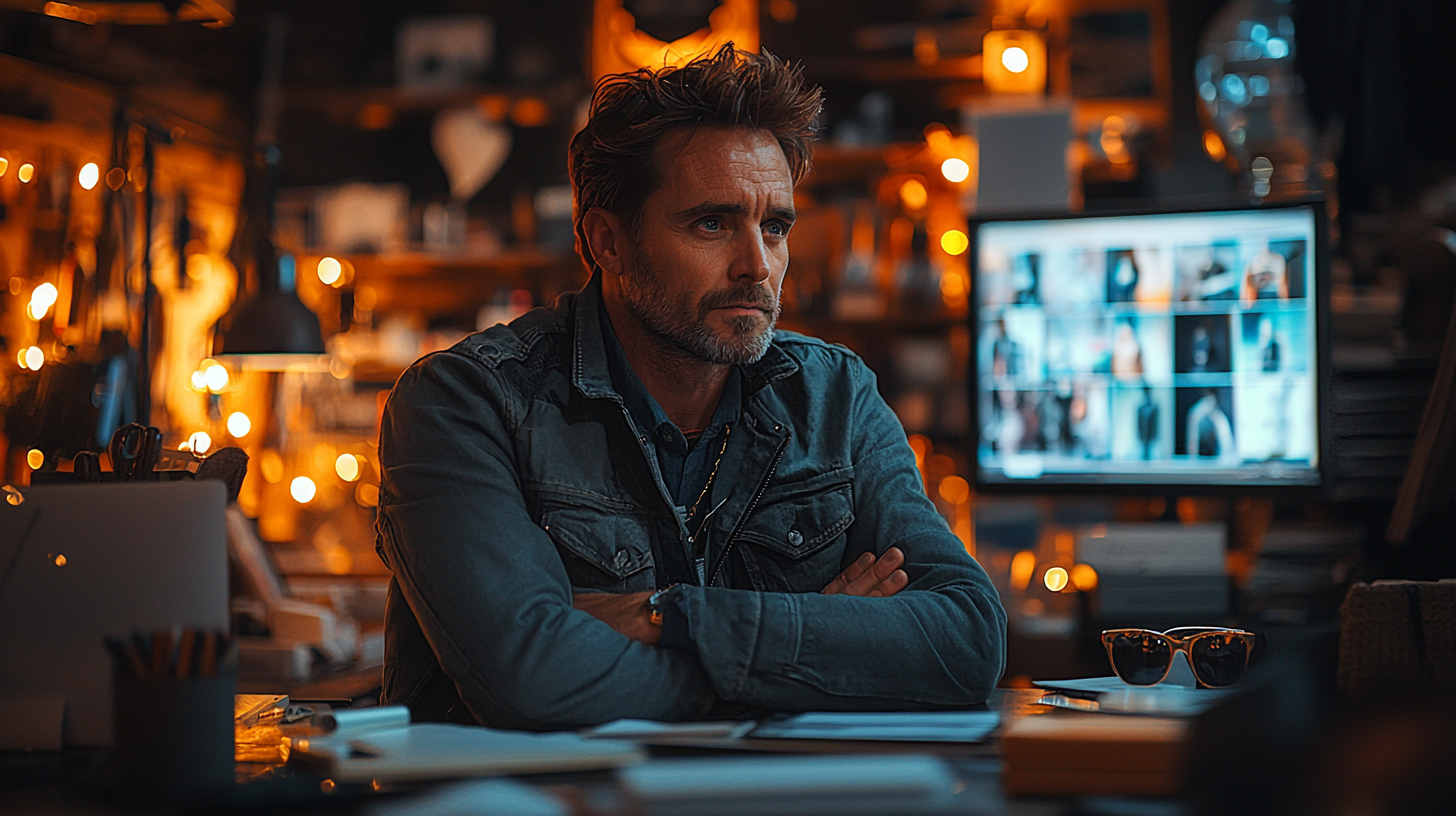
Skills are divided into four large families. I list them with the sincerity of one who discusses them every day with those who want to enter the profession or reinvent themselves.
Technical and creative skills. They are the historical basis of the trade and will never disappear. Drawing skills, knowledge of the human body and garment construction, knowledge of fabrics and treatments, the ability to develop a data sheet, understanding of production processes. On these skills, good fashion schools still teach well. It is here that natural talent meets the discipline of the trade.
Digital skills. They have become essential and are no longer negotiable. Adobe Illustrator and Photoshop are the minimum wage. CLO 3D, Browzwear and other virtual prototyping software are increasingly in demand - some companies have already eliminated physical prototyping altogether for the early stages of development. E-commerce knowledge - Shopify, WooCommerce, product catalogue management. Advanced Photoshop and video editing basics for social content. Generative artificial intelligence tools - Midjourney, DALL-E, fashion-specific tools - which today greatly accelerate the mood board, conception and visual prototyping phases.
The fashion designer of 2026 who does not know how to use at least some of these AI tools is at a clear competitive disadvantage. Not because AI will replace creativity - it won't - but because it allows you to do in two hours what used to take two days. Those who don't use them work slower than those who do.
Business skills. They are the difference between those who survive and those who prosper, especially in the ways of the freelancer and entrepreneur. Understanding of the business model of a fashion brand, knowledge of margins and marginalities, ability to build a business plan, understanding of product costing, knowledge of the production chain and real costs. For the employed fashion designer they are important to grow into senior roles. For the freelancer they are essential not to work at a loss. For the entrepreneur they are simply the condition for survival.
And one of the reasons I built the Fashion Business Designer Canvas during my master's degree at the Politecnico di Bergamo: to give fashion designers a tool to think about the fashion business as systematically as they think about design. They are not two separate worlds, they are two sides of the same trade.
Marketing and storytelling skills. In 2026, a fashion brand does not sell because the product is beautiful. It sells because it tells a story that customers want to get into. This means that the fashion designer - especially the entrepreneur or freelancer - needs to know how to build a brand identity, how to tell a story on Instagram, how to communicate via email, how to work with creators and influencers, how social commerce works, how to position oneself in contemporary cultural discourse.
These are skills that fashion schools rarely teach. They are learnt in the field, with targeted readings, direct experiments, mistakes along the way.
Among these four families, technical and creative skills are still considered the “heart” of the trade. But in 2026, the real competitive advantage lies in the ability to integrate all four. The single-skilled fashion designer - the one who can only draw, or only do business - struggles. The one who can move all four levers, even at a basic level, has much greater possibilities.
The skills that nobody teaches you and that make the difference
Then there are some transversal skills that no training programme talks about but which are decisive for the career of any fashion designer, in any of the three paths.
La negotiating skills with suppliers. If you don't know how to negotiate prices, timing, payment terms, you leave significant sums on the table every month. In freelancing and entrepreneurship this expertise is worth tens of thousands of euros per year.
La emotional management of rejection. The job of the fashion designer - in all three paths - is made up of many “no's. No from recruiters, no from customers, no from buyers, no from the media. Those who have not learnt how to handle rejection without psychologically breaking down, soon give up.
La ability to communicate verbally. In presentations, in meetings with suppliers, in pitches to buyers, in interviews, you have to be able to talk about your work in a clear and engaging way. It is a skill that you train like a muscle, and one that is rarely taught in fashion schools.
La operational discipline. The fashion designer who produces results is not always the most creatively talented, but almost always the most operationally disciplined. He meets deadlines, documents processes, manages time well. These “boring” skills are what separate those who make a career from those who are always at the beginning.
In our method, we dedicate specific time to these soft skills during consultations. Because without these, even the most beautiful brand gets nowhere.

The BAD method for those choosing the entrepreneurial path
If after reading this far you feel that the path that really calls to you is that of the fashion designer entrepreneur - the founder's path - this section is for you. I will explain how we at BAD work with those who choose this path, and why our approach is different from anything else you will find on the market.
The BAD method has four sequential phases. They are not optional, they are not skipped, they are not reversed. Each one prepares for the next, and each one solves specific problems that, if ignored, will cause the brand to fail further down the line.
Phase 1: Brand Design. And the founding phase, the one in which we build the Brand Code - the 30-40 page strategy document that defines who you are as a brand, where you stand in the market, who you talk to, why they should listen to you. The Brand Code is the result of six consulting sessions and is the only thing that separates a serious brand from an experiment. Without Brand Code, every subsequent decision - which fabric to choose, how to communicate, where to sell - becomes arbitrary. With Brand Code, every decision follows a clear logic.
Phase 2: Collection Design. Once the brand knows who it is, we build the first collection with the Collection Pyramid - the framework that divides the collection into three levels. At the top is the’Aspirational (10% in the collection), which includes the Aspirational Product - the iconic piece that defines the brand's aesthetic and lets the press do the talking. At the centre is the Massive Impact (70%), the commercial heart that generates the turnover. At its heart is the Low Budget (20%), the entry-level products that welcome new customers.
It is a framework that works because it solves a structural problem: most of the first collections consist only of creative pieces (Aspirational) - beautiful but unsaleable - or only of commercial pieces (Low Budget) - saleable but indistinguishable from other brands. The pyramid balances these two extremes.
Phase 3: Marketing. Defined brand and designed collection are useless if nobody discovers them. In the marketing phase we structure the launch plan: visual identity, naming, e-commerce site, content strategy, social plan, advertising plan, PR activities. Each element is consistent with the Brand Code defined in the first phase.
Phase 4: Operations. The last piece of the puzzle is the production and logistics part. Selection of suppliers, definition of the production calendar, sample management, organisation of fulfilment, customer service. And this is where Easy Chain, the database of over 130 verified Italian suppliers that we make available to those who want to enter the supply chain without having to start from scratch.
For those who do not yet have complete clarity on which path to choose - employee, freelancer or entrepreneur - we have structured an introductory course called The Designer's Journey. It is a course designed precisely to deal methodically with this decision, and to give the first concrete skills to those who choose the entrepreneurial path. The same approach you will find in the Fashion Business Academy, our online training school dedicated to the fashion business.
“The successful fashion designer-entrepreneur is not the one with the greatest creative talent. It is the one who has had the courage to treat his passion as a serious profession, with the same rigour as an architect designing a building or an entrepreneur building a company. The difference between dreaming and realising is in the method.”
- Corrado Manenti
For those who want to understand concretely what it means to work with us, the first step is always the same: a free consultation with a member of our team. One hour of conversation, no obligations, no aggressive selling. Just to understand where you are, where you want to go, and whether our path is right for you.
On specific topics of operations and production, we have developed dedicated in-depth articles. For those who want to understand how small-volume production works, the article on contract manufacturing and the starting point. For the selection of suppliers, the clothing suppliers by brand. For the first structured launch, the in-depth study on capsule collection.
Do you want to build your fashion brand?
A one-hour conversation with the BAD team to find out if our method is right for you. No obligations, no aggressive selling.
Frequently asked questions about being a fashion designer
What exactly does a fashion designer do?
A fashion designer designs garments and accessories. Concretely, he/she develops the concept of a collection, does trend research, chooses fabrics and materials, designs garments, develops technical data sheets for production, follows samples, does fittings on models, supervises final production. Depending on the seniority level and type of company, he/she also participates in marketing, merchandising and brand positioning decisions.
What is the difference between fashion designer and stylist?
In Italy the two terms are practically synonymous. Stilista is the historical Italian term, fashion designer is the international term most used today in professional contexts. The nuances are minimal: stylista sometimes indicates a more artistic and less technical figure, fashion designer a more complete and business-oriented figure. But for practical purposes the two words indicate the same profession.
How much does a fashion designer earn in Italy?
It depends on seniority and the type of career. A junior employee earns 22,000-28,000 euro gross per year, a mid-level 30,000-40,000, a senior 40,000-60,000, a head of design 65,000-90,000, a creative director 80,000 to over 150,000 euro. A well-established freelancer makes 40,000-90,000 euro gross per year. An entrepreneurial fashion designer with an established brand can earn widely varying figures depending on the success of the brand - from nothing in the first few years to millions in successful cases.
How to become a fashion designer without university?
You can, especially if you choose the freelance or entrepreneur route. For the employee in structured fashion houses, formal training is almost always required. Concrete skills - design, knowledge of materials, fashion business - can be acquired through books, specific courses, direct experience, mentorship with professionals in the sector. The important thing is to build a solid professional portfolio and a network of real contacts in the industry.
How much does it cost to become a fashion designer?
For classical training in schools such as IED, Marangoni, Polimoda, NABA, we are talking about 8,000-15,000 euro per year for three or four years. For alternative paths - specific courses, books, mentorship - you can do it with much smaller sums. For those who choose the path of the entrepreneur, in addition to training, a start-up capital is needed for the brand: the minimum realistic budget is 15,000-25,000 euro.
Which are the best fashion schools in Italy?
The historically most recognised schools are the Istituto Marangoni (Milan), the IED (multiple locations), Polimoda (Florence), NABA (Milan) and the Accademia Costume e Moda (Rome). They all have different strengths: Marangoni and Polimoda are more luxury-oriented, IED and NABA are more oriented towards contemporary pret-a-porter, Accademia Costume has a strong sartorial and theatrical tradition.
Is the fashion designer a growing profession?
Yes, but it changes profoundly. Employee positions in the big fashion houses remain few and far between. Instead, opportunities for specialised freelancers working with emerging brands are growing, and - above all - the number of emerging brands founded by fashion designer entrepreneurs. The founder route is the fastest growing in 2026.
Can I work as a fashion designer remotely?
To some extent yes, especially in the creative and design phases. The part of physical prototyping, fitting, fabric selection still requires physical presence. For the freelance and entrepreneurial fashion designer, the flexibility is greater - but regular trips to Italian production districts are still required.
Who are the most famous Italian fashion designers?
Historical names include Giorgio Armani, Gianni Versace, Domenico Dolce and Stefano Gabbana, Valentino Garavani, Miuccia Prada. More contemporary figures include Pierpaolo Piccioli, Alessandro Michele, Marco Zanini, Massimo Giorgetti (MSGM), Francesco Risso (Marni). Each represents a different trajectory in the profession - founder, creative director of existing maisons, founder of contemporary brands.
Should you open your own brand or work as an employee?
It depends on your goals. The employee offers stability, structured learning, access to established brands but with limits on salary and creativity. Freelancing offers freedom and potentially higher turnover, with the risk of instability. Entrepreneurship offers maximum personal fulfilment and potentially much higher financial returns, with the higher risk and the need for an initial investment of 15,000-25,000 euros. There is no absolute right answer: there is the right answer for you.
How long does it take to become a fashion designer?
The employee route: three-four years of fashion school + one or two internships + two-three years as a junior. You get to a role of real responsibility after eight to ten years in total. For the freelance route: less time if you already have experience, two-three years to build up a stable clientele when you start from scratch. On the entrepreneur's way: six to eighteen months to launch the first brand, two to three years to reach economic sustainability.
The choice that changes everything
Sara - the girl I told you about at the beginning - came back to me after two weeks. She had spent those days really looking at herself in the mirror, without the filters of the expectations of those around her. The answer she found was not the one she had expected to find when she came to counselling.
He told me: “Corrado, I don't want to be an employee. I thought so because that's what everyone always told me to do. But I actually want to build something of my own. I don't know what yet, I don't know when yet, but I know that's the way.”
I replied, “Good. Now that you know what you really want, we can start working on it.”
And that is the moment when the real journey begins. Not when you enrol in fashion school, not when you send out your first CV, not when you finish your portfolio. It starts the moment you stop asking “how do I become a fashion designer” and ask yourself the real question: “what kind of fashion designer I want to be”.
The three paths I have told you about in this article are all legitimate. None is better than the others. The employee route offers stability and structured training. The freelance route offers freedom and flexibility. The entrepreneur route offers total fulfilment and potentially higher returns, in exchange for an initial investment and higher risk.
What changes everything is the choice awareness. Know which path you have taken, and why. Don't suffer a direction because that's what you've always been told to take, but actively choose your own.
If you feel called by the way of entrepreneurship - the way of the founder - know that you don't have to do it alone. We at Be A Designer have been working with exactly that for fourteen years: with people like you who have decided to build their own brand instead of building someone else's. Our method is designed to accompany you step by step, from the definition of the Brand Code to the launch of your first collection.
The first step is always the same, and costs nothing: a free consultation with a member of our team. An hour together, no pressure, no aggressive selling. Just a conversation between people who share a passion for fashion and want to see if the journey together makes sense.
The fact that you made it to the end of this article already says something about you. Most people who search for “fashion designer” on Google close the page after two hundred words. You have read this far because you are really looking for a structured answer, not slogans. And the first sign that you have the right mindset for whichever of the three paths you choose.
Remember the only really important thing: the choice is not between being a good fashion designer and not being one. The choice is between being the fashion designer of someone else's brand e be the fashion designer of your brand. Both are decent choices. One, however, is much closer to the true motivation that led you to dream this job.
If that motivation is “to create something of my own that stays” - and not “to get into someone else's system” - then you know where to look.
Good luck!
Corrado Manenti, Founder of Be A Designer







 Italian
  English
  French
  German
  Spanish


